

Why the Repair Shop Visit Feels Intimidating - and How to Change That
For many drivers, the auto repair shop is one of the few places where they hand over a significant asset, agree to costs they cannot fully verify, and hope for the best. That dynamic is not inevitable. Most mechanics are skilled professionals doing honest work - but the knowledge gap between technician and customer can make it hard to know what is reasonable and what is worth questioning.
The good news is that you do not need automotive expertise to be an informed customer. You need to know how estimates are structured, which questions are fair to ask, and how to interpret the answers. Whether you are dealing with a routine service or an unexpected repair bill, the steps below give you a practical framework for navigating the conversation with confidence.
What you will need
If you also manage home maintenance, the same habit of proactive scheduling applies - our annual home maintenance calendar shows how staying ahead of small issues prevents costly surprises, a principle that translates directly to vehicle ownership.
How to Work Through the Estimate Step by Step
Written repair estimate form
Documents the itemized cost of labor and parts before any work begins, serving as your reference if the final bill differs.
Vehicle owner's manual
Lists manufacturer-recommended maintenance intervals, helping you verify whether a suggested service is actually due.
Maintenance logbook or digital notes
Tracks past services so you can quickly identify what has already been done and avoid paying for duplicate work.
Describe the symptom clearly before the shop diagnoses anything
When you drop off your vehicle, describe what you are experiencing - not what you think the cause is. Say "There is a grinding noise when I brake at highway speeds" rather than "I need new rotors." Mechanics are trained to trace symptoms to their root cause; giving them accurate observations rather than assumptions leads to a faster and more accurate diagnosis.
Request a written, itemized estimate before authorizing work
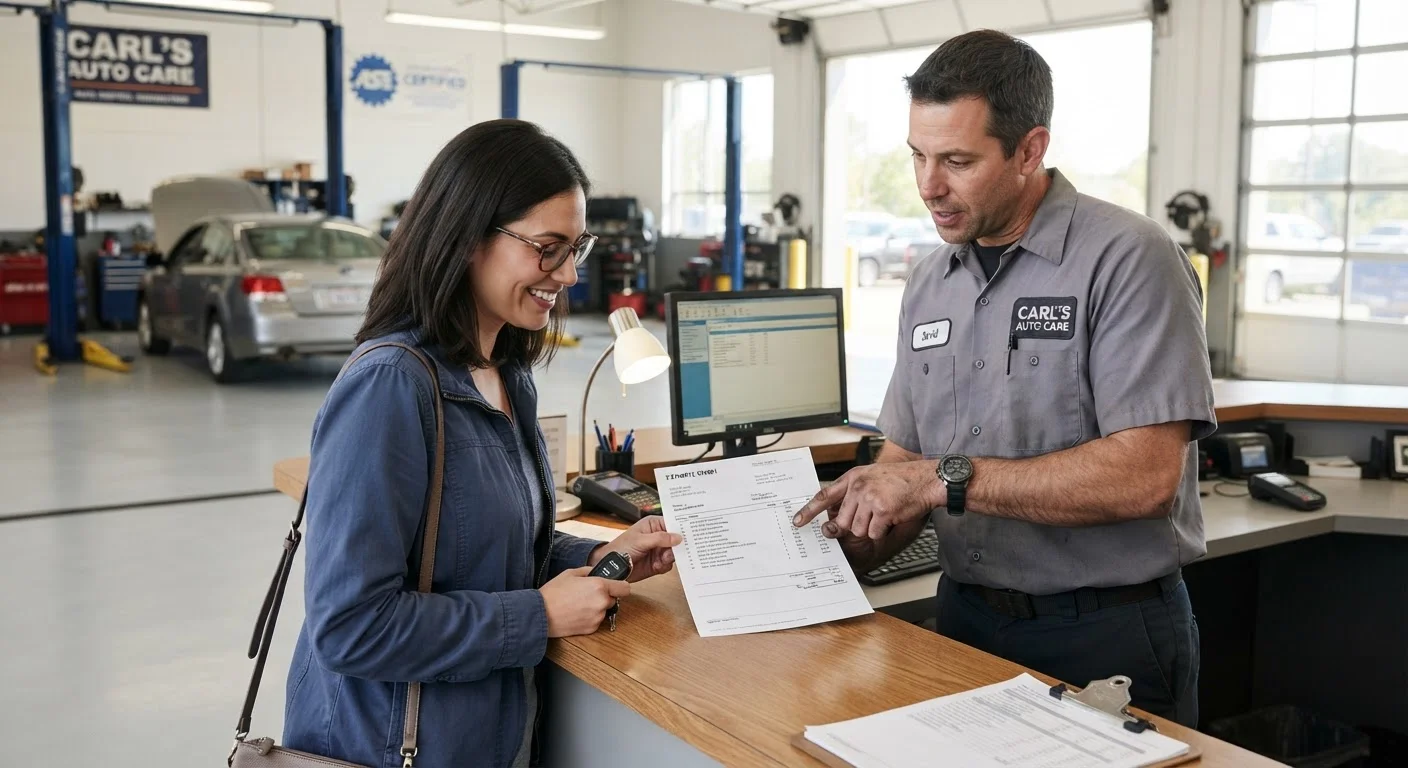
Once the shop has diagnosed the issue, ask for a written estimate that breaks out labor hours and parts costs separately. An itemized format lets you see exactly where the money goes and makes it easier to ask specific follow-up questions. Confirm whether the estimate is binding or whether it may change - and if it can change, ask under what circumstances the shop will contact you first.
Understand how labor costs are calculated
Most shops price labor using a flat-rate guide - a standardized time estimate for a given repair - rather than actual hours worked. This means a job listed as 2.0 hours costs you 2.0 hours of labor whether it takes the technician 90 minutes or 2.5 hours. Ask the shop what their hourly labor rate is and how many hours they are estimating for each repair line item. This is not a confrontational question; it is a routine one.
Ask about the type of parts being used
Parts used in repairs fall into a few categories: OEM (Original Equipment Manufacturer - made or specified by your vehicle's manufacturer), aftermarket (made by a third party, varying widely in quality), and remanufactured (used parts rebuilt to a functional standard). Ask which type the shop is recommending and why. For critical safety components like brakes or steering parts, it is reasonable to ask about the quality and warranty of aftermarket options. See our first-time car owner's roadmap for more on navigating these kinds of decisions early in your ownership experience.
Prioritize when the estimate includes multiple recommended repairs
A thorough inspection may surface several issues at once. Ask the mechanic to distinguish between what is safety-critical and needs immediate attention, what is important but can be scheduled, and what is simply a maintenance suggestion. Not everything needs to be done in the same visit. Understanding this breakdown helps you make informed financial decisions without ignoring genuine risks. For context on commonly deferred items, see our article on car maintenance drivers routinely put off.
Get a second opinion on large or unexpected repairs
For repairs that are unexpected or that will cost several hundred dollars or more, getting a second estimate from another qualified shop is a reasonable and common practice. Most reputable mechanics will not take offense. If you have a diagnosis in hand from the first shop, share it with the second - this helps them evaluate the same issue rather than starting over. Keep in mind that a significantly lower quote is not always better; ask what accounts for the difference.
Always Get the Estimate in Writing
Many U.S. states require shops to provide a written estimate before starting repairs if the cost exceeds a set threshold. Even where it is not legally required, a written estimate protects both you and the shop. Never authorize work based solely on a verbal quote - if costs rise during the repair, a reputable shop should contact you before proceeding.
Watch for Pressure to Decide on the Spot
A trustworthy shop will give you time to review an estimate and ask questions. If you feel pressured to approve expensive repairs immediately, it is reasonable to ask for a short window to consider your options or seek a second opinion. Urgency is only justified for genuine safety-critical issues, and a good mechanic will explain exactly why.
Keep a Simple Vehicle Maintenance Log
Bringing a brief record of recent services - oil changes, tire rotations, brake work - helps your mechanic see the full picture and avoids duplicate recommendations. A notes app on your phone works fine; there is no need for a formal system. This habit also pays off at resale time.
Repair costs can add up quickly, particularly when multiple issues surface at once. If you are working within a budget, it may help to review general strategies for managing unplanned expenses - the budgeting basics hub covers practical frameworks for tracking spending that apply equally well to vehicle repair planning.
This article is for general informational purposes only and does not constitute professional mechanical or financial advice. For safety-critical repairs, always consult a qualified, licensed mechanic. Costs, regulations, and warranty terms vary by location and provider.
The content on this site is for informational purposes only and is not a substitute for professional advice. Always consult a qualified professional for guidance specific to your situation.