

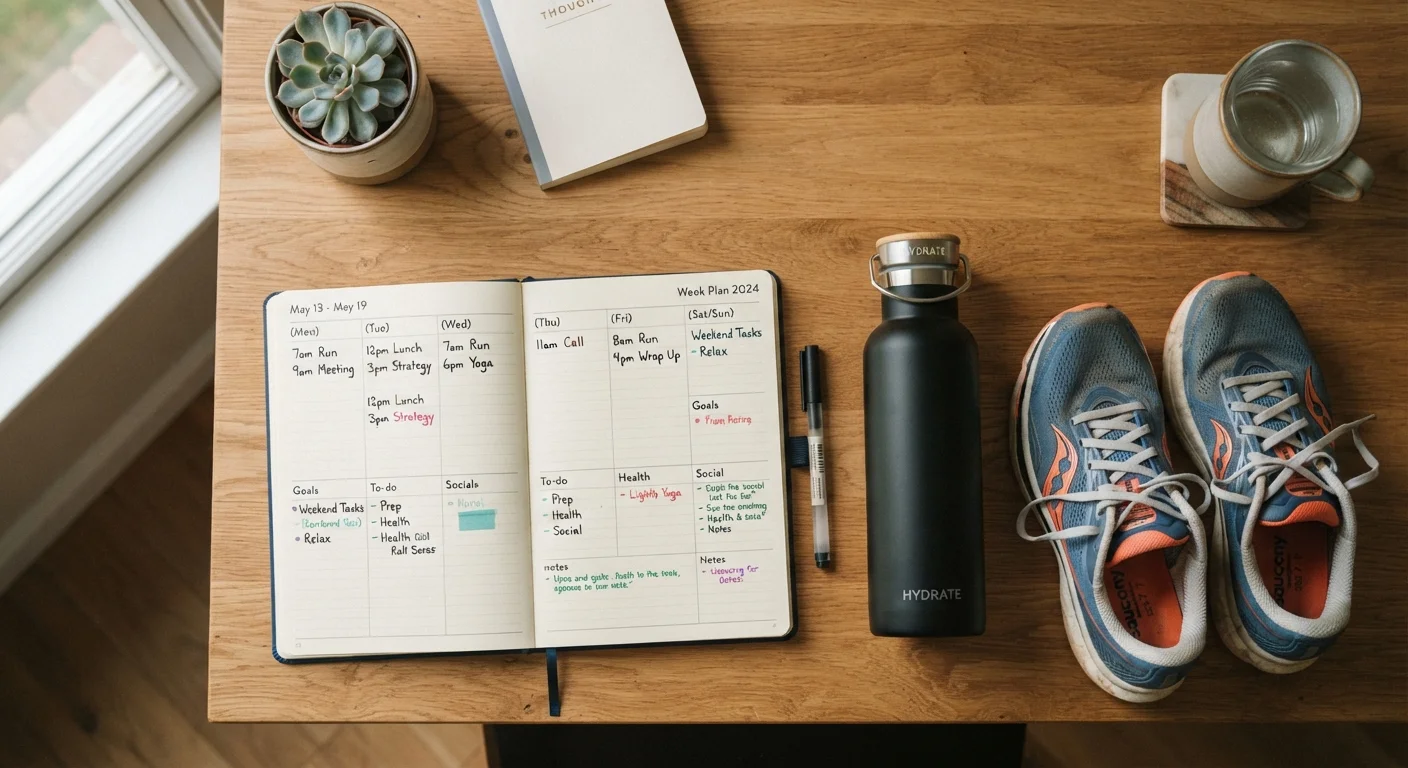
Why Most Workout Schedules Fall Apart
The most common reason people abandon workout routines isn't lack of motivation - it's that the schedule was designed for someone else's life. Aspirational plans that demand an hour of exercise six days a week may look effective on paper, but they collapse against real-world demands: irregular work hours, family obligations, and the natural variation of human energy levels.
Research consistently shows that consistency over intensity is the stronger predictor of long-term fitness gains. A moderate routine you repeat for months produces better outcomes than an aggressive one you quit in three weeks. The goal of schedule-building, then, is to design something durable - not something impressive.
Before you map out any days or times, it helps to understand the trade-offs of working out every day, so you can set a frequency that's genuinely sustainable rather than inadvertently overtraining.
What You'll Need Before You Start
Building a schedule doesn't require equipment or a gym membership, but a few inputs will make the plan far more functional.
What you will need
Weekly calendar or planner
Used to visually block workout days and identify consistent time windows in your existing schedule.
Fitness tracking app or notebook
Helps log completed workouts and monitor progress over time without relying on memory.
Resistance bands or bodyweight plan
Provides a low-cost strength training option for home-based workout days.
Step-by-Step: Building Your Weekly Schedule
Follow these steps in order. Each one builds on the last, so resist the urge to skip ahead.
Audit your available time honestly
Open your calendar and identify every recurring commitment for a typical week. Then look for windows of at least 20-30 minutes that are genuinely open - not theoretically open. Mark three to five of these windows as candidate workout slots.
Most adults can realistically sustain three to four workout sessions per week. Physical activity guidelines from major public health bodies generally recommend at least 150 minutes of moderate-intensity aerobic activity per week for adults, spread across multiple days.
Choose a balanced mix of workout types
A well-rounded weekly plan typically includes three categories:
- Cardiovascular exercise - walking, cycling, swimming, jogging. Supports heart health and endurance.
- Strength training - bodyweight exercises, resistance bands, or weights. Builds and maintains muscle mass, which becomes especially important with age. See how to structure effective home strength workouts if you're working without a gym.
- Flexibility or recovery-focused movement - stretching, yoga, or light walking. Supports mobility and reduces soreness between harder sessions.
You don't need equal amounts of each. A common structure for beginners is two cardio sessions, one or two strength sessions, and one active recovery or flexibility session per week.
Schedule rest days deliberately
Rest days should be placed intentionally, not left as whatever's left over. For most people, at least one full rest day between intense sessions is appropriate. A common beginner-friendly pattern is: workout, workout, rest, workout, workout, rest, rest.
Rest doesn't mean sedentary - light walking or gentle stretching is fine. What you're avoiding is additional stress on muscles and connective tissue that are actively repairing.
Write the schedule into your calendar as appointments
Once you've chosen your workout types and rest days, block the time in your calendar exactly as you would a meeting or medical appointment. Label each block with the type of workout - not just "exercise" - so there's less decision-making required when the time arrives.
Vague intentions fail; specific commitments stick. "Tuesday 7am - 25-minute walk" is far more actionable than "exercise this week."
Build in a planned flexibility option
Life will disrupt your schedule. Rather than letting a disrupted day derail the whole week, build a backup option into the plan from the start. This might be a shorter 15-minute version of any workout, a walk during a lunch break, or a bodyweight session that requires no equipment and minimal space.
Having a pre-decided fallback removes the mental friction of figuring out what to do when your original plan isn't possible. Consistency across months matters far more than any single session.
Nutrition Supports Your Schedule Too
How you eat around your workouts affects your energy, recovery, and consistency. You don't need to count calories to eat well - the plate method and similar frameworks offer practical ways to structure meals that support an active lifestyle without added complexity.
Staying on Track Over Time
Even a well-constructed schedule will face friction. Life gets busy, motivation fluctuates, and some weeks simply won't go to plan. That's normal - and expected.
A few practices that support long-term adherence:
- Track completions, not perfection. A simple checkmark on days you exercised reinforces momentum without shame-spiraling over missed days.
- Protect your rest days. Skipping a rest day to "make up" a missed workout often backfires. Rest days are when adaptation happens - treating them as optional undermines the whole system.
- Review monthly, not weekly. Small adjustments every four weeks keep the plan aligned with your changing schedule and fitness level without constant tinkering.
- Pair workouts with existing habits. Exercising immediately before or after something you already do - morning coffee, a commute, a lunch break - reduces the activation energy required to start.
Quality sleep is also a significant factor in workout recovery and consistency. If you're finding it hard to wind down after evening exercise, building a realistic wind-down routine can help signal your body that it's time to rest.
When to Consult a Professional First
If you have a chronic health condition, are recovering from an injury, are pregnant, or have been largely sedentary for an extended period, speak with a qualified healthcare provider before beginning a new exercise program. A physician or certified exercise professional can help you identify appropriate starting points and any contraindicated movements for your specific situation.
This article is for general informational purposes only and does not constitute medical or fitness advice. Consult a qualified healthcare or fitness professional before beginning a new exercise program, especially if you have an existing health condition.
The content on this site is for informational purposes only and is not a substitute for professional advice. Always consult a qualified professional for guidance specific to your situation.