

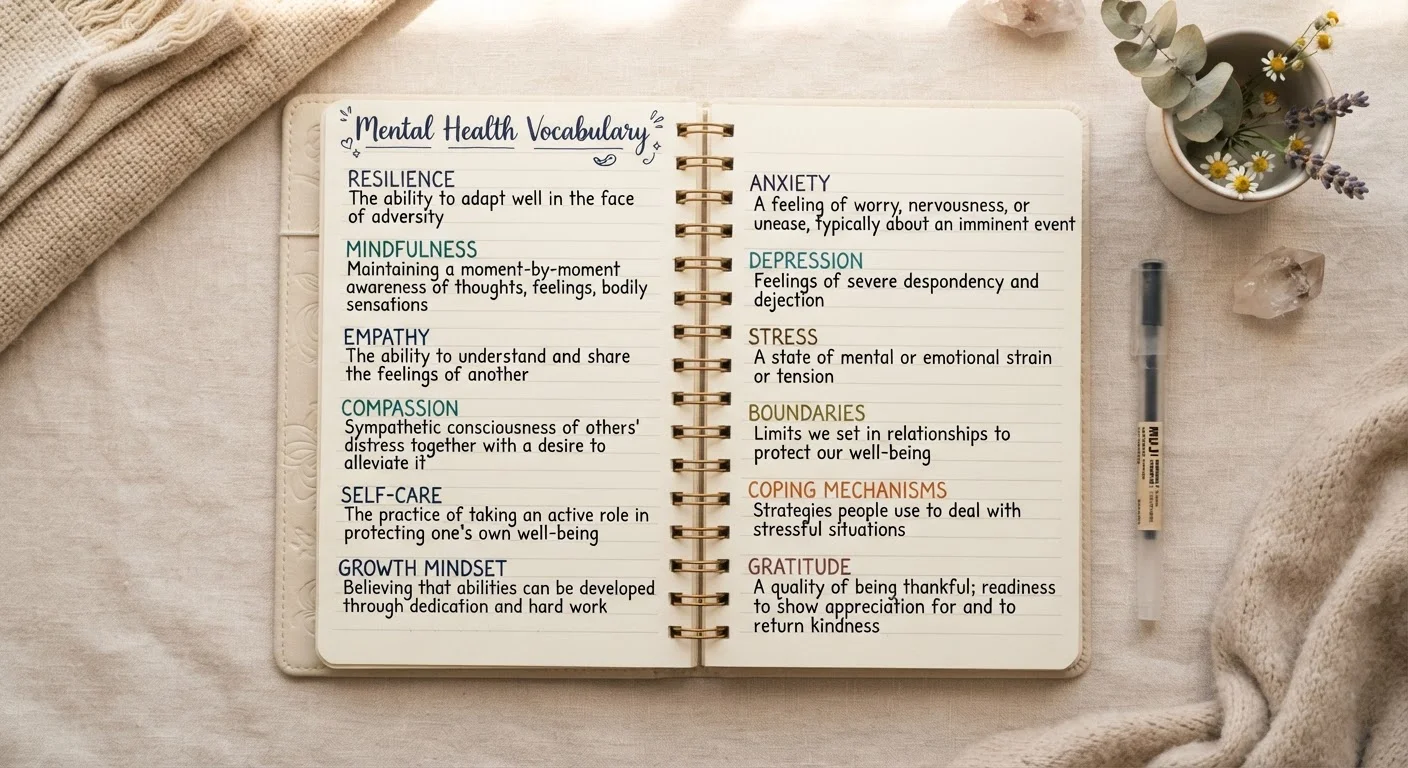
Why Mental Health Vocabulary Matters
Mental health language shows up everywhere - in therapy waiting rooms, online wellness content, insurance forms, and conversations with friends. Yet many of the most commonly used terms are misunderstood, misapplied, or used interchangeably when they mean distinct things. Knowing the difference between affect and mood, or between psychosis and simply being upset, can help you understand what a clinician is communicating, follow a diagnosis more clearly, and reduce the stigma that still surrounds these topics.
This reference is organized to be looked up as needed rather than read front to back. It covers terms that appear regularly in clinical settings, mental health media, and everyday conversation - defined in plain English without jargon layering on more jargon. For a comparable reference in another domain, see Personal Finance Terminology Every Budgeter Should Know.
Core Clinical Terms
These are the terms most likely to appear in clinical documentation, provider conversations, or a formal diagnosis. Understanding them helps you engage more confidently with your care team.
If you're trying to understand the differences between therapy, counseling, and psychiatry - and which type of provider uses these terms in practice - see our companion piece: Therapy, Counseling, and Psychiatry: Understanding the Differences.
At a Glance: Mental Health in the U.S.
Context matters when learning about mental health. The statistics below reflect how common these experiences are across the American population - reinforcing that seeking information and support is a widely shared need, not an exception.
Terms That Are Often Misunderstood
Several mental health terms are used loosely in everyday speech in ways that can create confusion or unintentionally minimize real experiences:
- "OCD" is frequently used colloquially to mean being neat or organized. Clinically, obsessive-compulsive disorder involves distressing, intrusive thoughts and repetitive behaviors that can significantly impair daily life.
- "Bipolar" is sometimes used to describe someone with shifting moods. As a diagnosis, bipolar disorder involves distinct episodes of mania or hypomania and depression, with specific duration and severity criteria.
- "Triggered" has both a clinical and a colloquial meaning. In trauma contexts, a trigger is a stimulus that activates a trauma response - not simply something someone finds unpleasant.
- "Anxiety" describes a normal emotional experience as well as a clinical condition. Understanding when anxiety crosses into a diagnosable disorder involves factors like duration, intensity, and functional impairment. Our article Understanding Anxiety: What It Is, What It Isn't, and When to Seek Help covers this distinction in detail.
Using clinical language precisely isn't about being pedantic - it's about communicating clearly and treating these conditions with the seriousness they deserve.
This article is for general informational and educational purposes only. It is not a substitute for professional mental health evaluation, diagnosis, or treatment. If you have concerns about your mental health, please consult a licensed healthcare professional.
The content on this site is for informational purposes only and is not a substitute for professional advice. Always consult a qualified professional for guidance specific to your situation.