

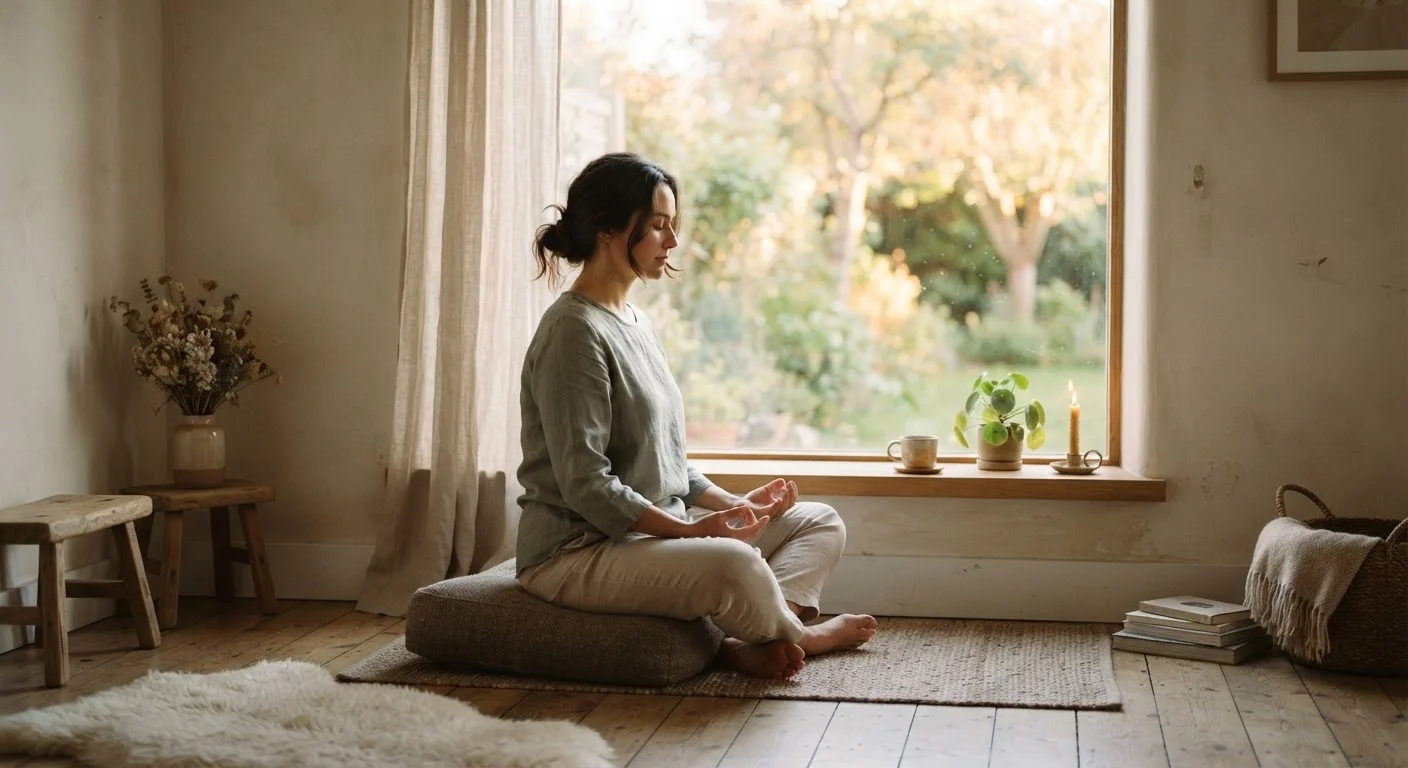
Option A
Mindfulness Meditation
The awareness-based, longer-term stress management practice.
Best for: People seeking to build a sustained relationship with their thoughts and emotions over time.
Option B
Breathing Exercises
The fast-acting, body-based technique for immediate calm.
Best for: People who need a quick, discreet way to lower stress in real-time situations.
How Each Approach Works
Mindfulness meditation and breathing exercises both reduce stress, but they engage the body and mind through different mechanisms. Understanding those differences helps you choose - or combine - them effectively.
Mindfulness meditation is a mental training practice. It involves deliberately directing attention - usually to the present moment - and observing thoughts, feelings, and sensations without judgment. Most beginner practices focus on the breath as an anchor, but the goal is cultivating awareness itself rather than controlling physiology. Research, including studies associated with Mindfulness-Based Stress Reduction (MBSR) programs developed at the University of Massachusetts Medical School, suggests that consistent practice can reshape how the brain responds to stress over time.
Breathing exercises (also called breathwork or respiratory regulation techniques) work primarily through the body. Slow, controlled breathing activates the parasympathetic nervous system - often described as the "rest and digest" state - which counteracts the fight-or-flight stress response. Techniques like diaphragmatic breathing, box breathing (inhale, hold, exhale, hold in equal counts), and the physiological sigh (double inhale through the nose followed by a long exhale) have been studied for their rapid effects on heart rate and cortisol. For a broader view of how chronic stress affects the body, the physiological basis becomes even clearer.
| Criterion | Mindfulness Meditation | Breathing Exercises |
|---|---|---|
| Primary mechanism | Attention training and awareness | Nervous system regulation |
| Time to noticeable effect | Weeks of consistent practice | Minutes per session |
| Typical session length | 10-45 minutes | 2-10 minutes |
| Best for acute stress | Less immediate | Highly practical |
| Best for long-term resilience | Strong evidence base | Emerging evidence |
| Equipment needed | None | None |
| Learning curve | Moderate - benefits from guidance | Low - quick to learn |
What the Evidence Shows
Both practices have credible scientific support, though the strength and scope of evidence differs.
Mindfulness meditation has been studied extensively in clinical settings. Meta-analyses published in peer-reviewed journals consistently find moderate improvements in perceived stress, anxiety, and depression among people who practice regularly - typically defined as daily sessions over eight or more weeks. The effect sizes are meaningful but not dramatic, and researchers note that consistency matters more than session length.
~30%
Average reduction in perceived stress
Meta-analyses of Mindfulness-Based Stress Reduction programs typically report roughly 30% average reductions in perceived stress scores among participants.
5 min/day
Effective daily breathwork dose in research
A 2023 Cell Reports Medicine study found measurable stress and anxiety reductions with just five minutes of daily structured breathing practice over one month.
Breathing exercises have a shorter but growing evidence base. A 2023 study published in Cell Reports Medicine compared mindfulness meditation to structured breathwork and found that both reduced self-reported stress, but breathwork produced slightly greater reductions in anxiety over a month-long trial. Importantly, all participants practiced for just five minutes a day, suggesting breathwork may be particularly effective at lower time commitments.
It is worth noting that most research uses self-reported outcomes and involves motivated participants, so results may not perfectly predict outcomes for everyone. As with other stress management approaches, individual response varies considerably.
This content is for general informational purposes only and is not a substitute for professional mental health advice. If you are experiencing persistent or severe stress, anxiety, or related symptoms, please consult a qualified healthcare provider.
Practical Considerations: Time, Access, and Habit
Beyond efficacy, everyday logistics often determine which practice people actually stick with.
Mindfulness meditation typically asks for a consistent daily commitment - most structured programs suggest 20-45 minutes, though evidence supports benefits from shorter sessions as well. It rewards patience: many people report that noticeable shifts in stress reactivity take several weeks to develop. Free resources, including guided audio sessions through libraries and public apps, make it accessible without cost barriers.
Breathing exercises, by contrast, can be completed in two to ten minutes and require no learning curve. A person can use box breathing during a stressful meeting or practice a slow exhale while waiting in traffic. This immediacy makes breathwork a strong companion to other wellness habits. For context on how movement-based practices compare, see how physical activity influences mood and stress.
These Practices Work Well Together
Mindfulness meditation and breathing exercises are not competing options - many practitioners and clinicians recommend using both. Breathwork can serve as an entry point into mindfulness awareness, and mindfulness training can deepen the attentional quality of a breathing practice. Starting with two to three minutes of structured breathing before a seated mindfulness session is a common approach endorsed by wellness researchers.
Many people find that using breathing exercises as a short-term tool while building a longer mindfulness habit is a practical starting point. Neither approach requires perfection - irregular practice still provides some benefit over no practice at all. For those navigating stress in a professional context, evidence-informed strategies for workplace stress may offer additional structure.
The content on this site is for informational purposes only and is not a substitute for professional advice. Always consult a qualified professional for guidance specific to your situation.