

Why Structure Works Better Than Tracking
Calorie counting is one tool in the nutritional toolkit, but it is not the only one - and for many people, it is not a sustainable one. Research consistently shows that food decisions are shaped by habit, environment, and convenience far more than by deliberate calculation. Frameworks that reduce cognitive load tend to outperform systems that require constant monitoring, particularly over the long term.
The plate method is a structured visual approach developed and promoted by organizations including the USDA and the American Diabetes Association. Rather than assigning numbers to food, it asks a simpler question: what proportions are on your plate? This shift from precision to pattern is not a compromise - it reflects how behavior change actually works in everyday life.
Pairing a structured approach to eating with a consistent fitness routine creates a foundation for overall wellbeing that is easier to maintain than either approach alone. Understanding what goes into the food you choose is also worthwhile - our guide to reading ingredient labels explains how to interpret packaged food information without guesswork.
This Is General Nutrition Information
The guidance in this article is educational and not a substitute for personalized medical or dietary advice. If you have a chronic health condition, food allergy, or specific nutritional needs, consult a registered dietitian or your healthcare provider before making significant changes to your diet.
How to Apply the Plate Method Step by Step
The following steps walk through how to construct a balanced meal using the plate method. These apply whether you're cooking at home, assembling a meal from a cafeteria line, or ordering at a restaurant. You'll need no equipment beyond the plate in front of you.
What you will need
A standard dinner plate (9-10 inches)
Used as a visual guide to portion out the three main food zones without any measuring.
Your hand
A portable portion reference - a palm for protein, a fist for grains, and two open hands for vegetables.
A registered dietitian
Provides personalized nutrition guidance for individuals with specific health goals or medical conditions.
Divide your plate into three visual zones
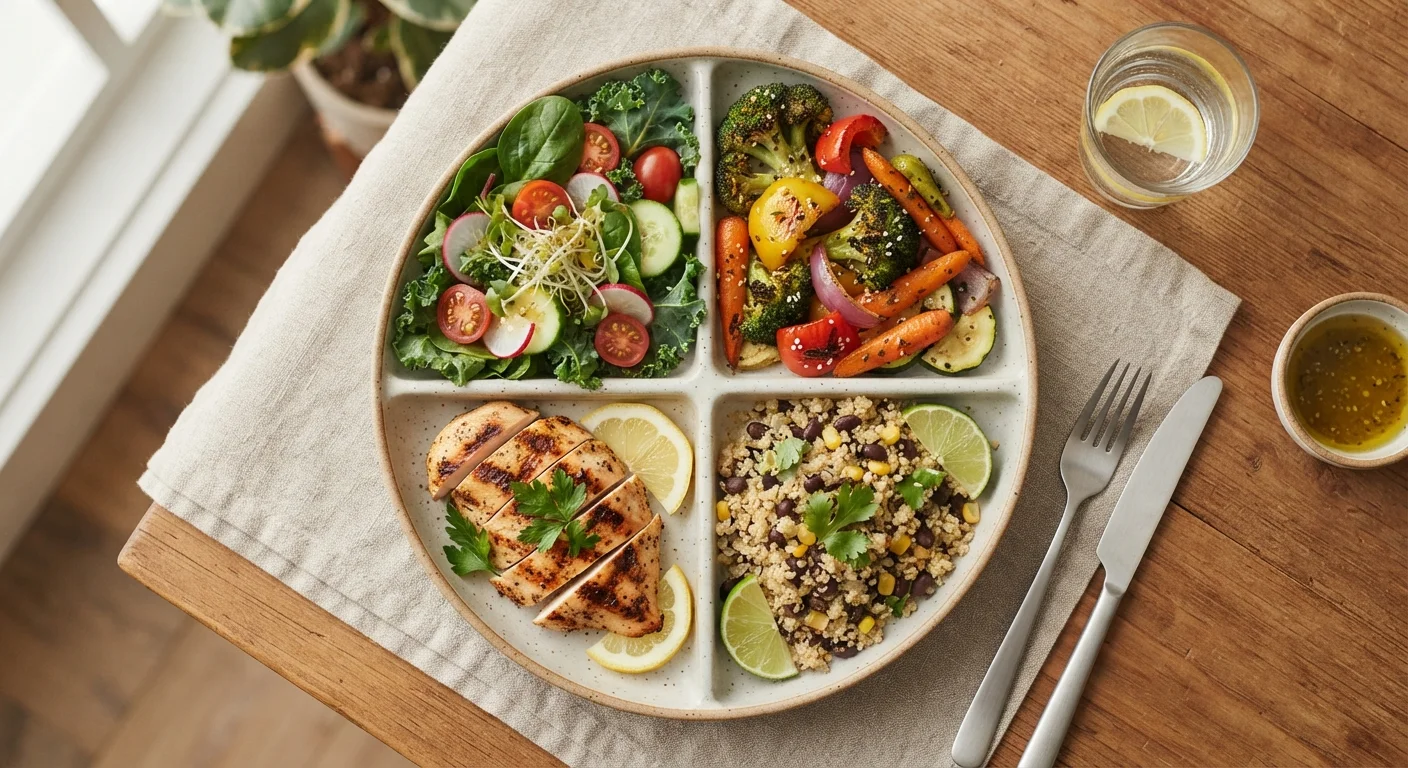
Before you serve any food, mentally divide your plate in half, then split one of those halves in two. You now have three sections: one large half and two smaller quarters. This visual split is the foundation of the plate method, a framework widely used by nutrition educators and public health organizations to encourage balanced eating without precise measurement.
Fill half the plate with non-starchy vegetables
The large half should be dominated by non-starchy vegetables: leafy greens, broccoli, peppers, zucchini, tomatoes, cucumbers, mushrooms, cauliflower, and similar options. These foods deliver fiber, vitamins, minerals, and water content with relatively low caloric density, meaning they add volume and nutrition simultaneously. Variety in color is a useful proxy for a broader range of nutrients. See our guide to increasing vegetable intake for practical strategies if this section consistently feels hard to fill.
Reserve one quarter for lean or plant-based protein
One of the two smaller quarters should contain a protein source. Options include poultry, fish, eggs, legumes (beans, lentils, chickpeas), tofu, tempeh, or lean cuts of meat. Protein supports muscle maintenance, satiety, and a range of metabolic functions. Choosing minimally processed sources most of the time - rather than highly processed deli meats or fried proteins - generally aligns with broader dietary guidance from major health bodies.
Use the remaining quarter for quality carbohydrates
The final quarter is for energy-dense carbohydrate sources, ideally whole or minimally refined: brown rice, quinoa, whole wheat bread or pasta, oats, sweet potatoes, or other starchy vegetables like corn and peas. Whole grain and high-fiber carbohydrate sources digest more slowly than their refined counterparts, which supports steadier energy levels. This quarter is not about eliminating carbohydrates - they remain a primary fuel source - but about choosing denser, more nutritious forms when you have the option.
Add healthy fats in moderate amounts
Fats are not represented on the plate itself, but they are an essential part of a balanced meal. A drizzle of olive oil, a few slices of avocado, a small handful of nuts or seeds, or a modest serving of full-fat yogurt all supply unsaturated fats that support nutrient absorption and cardiovascular health. Because fats are calorie-dense, moderation is the operative word - but removing them entirely tends to reduce meal satisfaction and can actually impair the absorption of fat-soluble vitamins (A, D, E, and K).
Choose a beverage that doesn't undermine the meal
Water is the default recommendation from virtually every major dietary guideline. Unsweetened beverages - plain water, sparkling water, unsweetened tea or coffee - add hydration without added sugars. Sugary drinks, including many fruit juices and sweetened coffees, can add significant calories without contributing meaningful satiety or micronutrients. This doesn't mean an occasional glass of juice is harmful, but building the habit of pairing meals with water is one of the highest-return, lowest-effort dietary adjustments most people can make.
Make It Work Across Any Cuisine
The plate method translates well beyond a standard American dinner. A stir-fry can fill half the pan with vegetables, a quarter with tofu or chicken, and a quarter with brown rice. A burrito bowl follows the same proportions. Focus on the ratios, not the specific foods.
Plate Method Has Limits for Some Conditions
People managing diabetes, kidney disease, or other conditions that require precise nutrient control may need more individualized guidance than the plate method provides. Always work with a qualified healthcare professional if your condition involves specific dietary restrictions.
This article is for general informational and educational purposes only and does not constitute medical or dietary advice. Always consult a qualified healthcare professional or registered dietitian for guidance tailored to your individual health needs.
The content on this site is for informational purposes only and is not a substitute for professional advice. Always consult a qualified professional for guidance specific to your situation.