

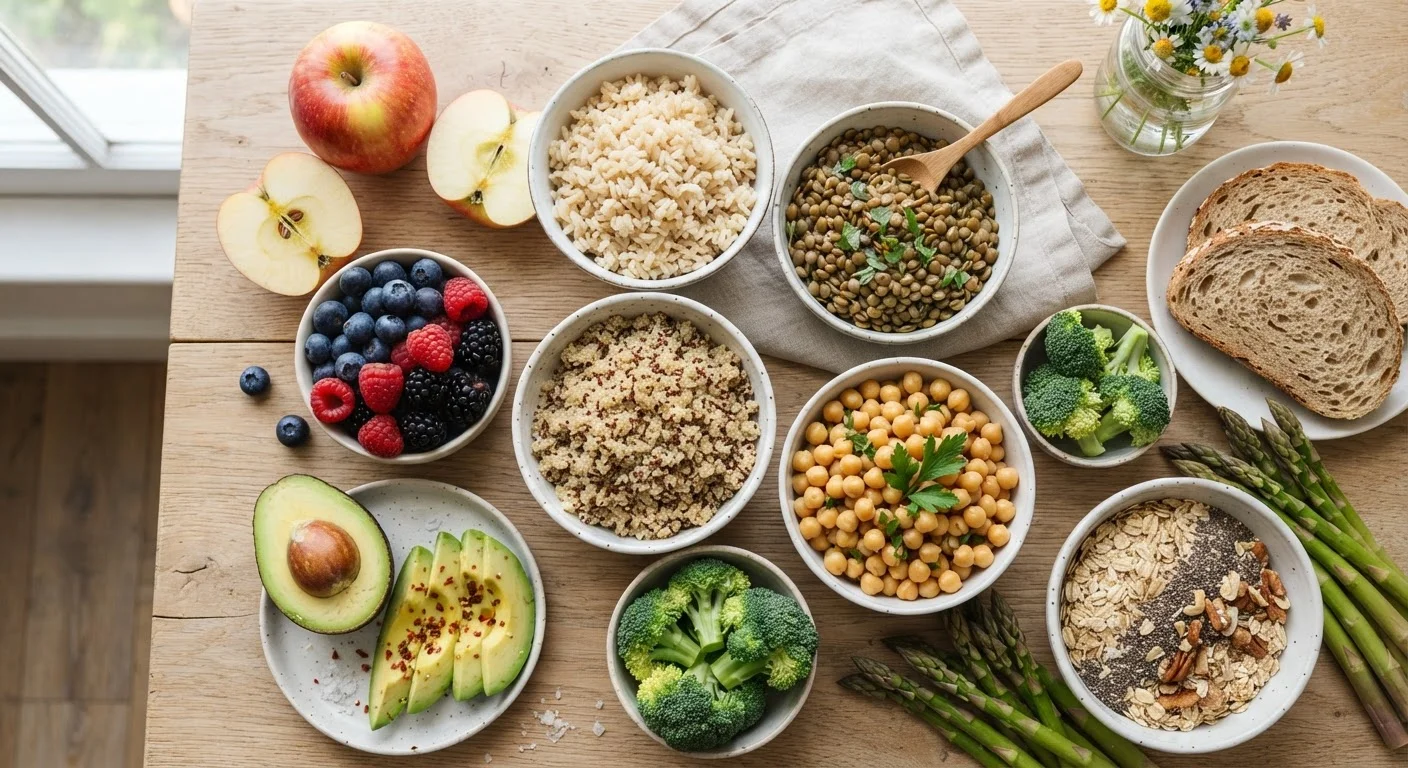
The Scale of the Fiber Gap
Dietary fiber is one of the most thoroughly researched nutrients in nutrition science, yet it remains one of the most consistently under-consumed. Data from large national dietary surveys, including the NHANES, consistently show that the average American adult consumes around 10-15 grams of fiber daily - well under the general recommendations of approximately 25 grams for women and 38 grams for men.
This shortfall is sometimes called the "fiber gap," and it is not a minor rounding error. It reflects a fundamental pattern in the modern American diet: heavy reliance on ultra-processed foods that have had much of their original plant fiber removed or replaced during manufacturing. White bread, packaged snacks, sugary beverages, and refined grains dominate many eating patterns, crowding out the whole fruits, vegetables, legumes, and grains that naturally deliver fiber.
~10-15g
Average daily fiber intake for U.S. adults
Based on NHANES dietary survey data, average American adult fiber consumption is roughly half or less of general recommendations.
95%
Americans falling short of fiber recommendations
Research published in nutrition journals estimates that the vast majority of U.S. adults do not meet established daily fiber targets.
7-8g
Fiber in a half-cup of cooked lentils
Legumes are among the most fiber-dense foods available, making them one of the most efficient ways to close the daily gap.
Understanding why fiber matters - and which foods deliver it most reliably - is a practical starting point for making better everyday choices.
What Fiber Actually Does in the Body
Fiber's reputation is often reduced to "keeps you regular," but its physiological roles extend well beyond digestive comfort. Research links adequate fiber intake to a range of meaningful health benefits:
- Gut microbiome support: Soluble fiber acts as a prebiotic, providing fuel for beneficial gut bacteria. A diverse, well-fed microbiome is associated with stronger immune function and reduced systemic inflammation.
- Blood sugar regulation: Soluble fiber slows the digestion and absorption of carbohydrates, helping to moderate post-meal blood sugar spikes - a dynamic relevant to both general metabolic health and diabetes risk management.
- Cholesterol reduction: Certain soluble fibers, particularly beta-glucan found in oats and barley, have well-documented effects on lowering LDL ("bad") cholesterol levels.
- Satiety and weight balance: High-fiber foods tend to be more filling per calorie, which can help people naturally regulate their overall food intake without strict restriction.
- Bowel regularity: Insoluble fiber adds bulk to stool and accelerates movement through the colon, reducing constipation risk.
These are not emerging or contested findings - they represent decades of consistent evidence reviewed by major health organizations. That context makes the fiber gap particularly worth addressing. Always consult a healthcare professional for guidance tailored to your individual health conditions.
Food-First: Reliable Sources of Dietary Fiber
Closing the fiber gap doesn't require specialty products or dramatic dietary overhauls. It primarily requires shifting toward whole, minimally processed plant foods - a change that many people find easier to sustain when approached gradually rather than all at once.
Go Gradual to Avoid Bloating
If you're significantly increasing fiber intake, add new high-fiber foods one at a time over several weeks rather than all at once. Pair every increase with additional water throughout the day. This approach allows your digestive system and gut bacteria to adjust comfortably.
Here are some of the most fiber-dense food categories to incorporate:
- Legumes
- Lentils, black beans, chickpeas, kidney beans, and split peas are among the highest-fiber foods available. A half-cup serving of cooked lentils delivers roughly 7-8 grams of fiber alone.
- Vegetables
- Artichokes, Brussels sprouts, broccoli, carrots, and sweet potatoes are standouts. Non-starchy vegetables also add volume and micronutrients with relatively few calories.
- Fruits
- Raspberries, pears, apples (with skin), and avocados are particularly high in fiber. Whole fruit, rather than juice, preserves the fiber content.
- Whole grains
- Oats, barley, quinoa, farro, and whole wheat products provide both soluble and insoluble fiber. Choosing whole grain versions of bread, pasta, and rice is a practical upgrade for many households.
- Nuts and seeds
- Chia seeds, flaxseeds, and almonds offer meaningful fiber contributions alongside healthy fats and protein.
It is also worth separating fact from fiction around plant-based eating - our coverage of common nutrition myths addresses several misconceptions that sometimes discourage people from increasing plant food consumption.
Practical Ways to Increase Fiber Without Disruption
One of the most common obstacles to increasing fiber intake is digestive discomfort when the change happens too quickly. The gut microbiome needs time to adapt to a higher-fiber environment, and flooding the system suddenly can cause bloating and gas. A gradual approach - adding one or two higher-fiber foods per week over several weeks - typically allows adjustment without significant discomfort.
Fiber Supplements: A Partial Solution
Products containing isolated fibers like psyllium husk or inulin can help some individuals reach their intake targets, particularly those with certain digestive conditions. However, they are not equivalent to whole food sources, which deliver fiber alongside vitamins, minerals, antioxidants, and phytonutrients that work together synergistically. If you are considering fiber supplements, speaking with a healthcare provider or registered dietitian first is advisable.
A few other strategies that tend to work well in practice:
- Swap, don't just add: Replace refined grain products with whole grain versions rather than simply eating more overall. This keeps total calories stable while increasing fiber density.
- Front-load fiber at breakfast: Oatmeal, whole grain toast, or fruit can establish a fiber foundation early in the day, making it easier to meet daily totals.
- Use legumes as partial protein substitutes: Adding lentils or beans to soups, salads, and grain bowls provides fiber alongside plant protein.
- Keep fruit accessible: Simple environmental nudges - a bowl of fruit on the counter, sliced vegetables ready in the fridge - increase the likelihood of choosing fiber-rich options.
- Drink enough water: Fiber draws water into the digestive tract, so increasing intake without adequate hydration can worsen constipation rather than relieve it.
Eating patterns involving structured approaches to food timing - such as those explored in research on intermittent fasting - can still include plenty of fiber-rich foods within eating windows, provided food quality is prioritized.
This article is for general informational purposes only and does not constitute medical or dietary advice. Consult a registered dietitian or qualified healthcare professional for guidance tailored to your individual health needs.
Frequently Asked Questions
General guidelines from health authorities suggest adults aim for roughly 25 grams per day for women and 38 grams per day for men, though individual needs vary. Most Americans consume closer to 10-15 grams daily. A qualified healthcare provider or registered dietitian can offer personalized guidance.
Dramatically increasing fiber very quickly can cause bloating, gas, and digestive discomfort. Increasing intake gradually over several weeks helps the gut adapt. Very high intakes may also affect absorption of certain minerals, so balance and variety matter.
Fiber supplements can help some people reach their intake goals, but they generally deliver only one type of isolated fiber and lack the vitamins, minerals, and phytonutrients found in whole foods. Whole food sources are the preferred approach for most people.
Legumes (lentils, beans, chickpeas), certain vegetables (Brussels sprouts, artichokes, broccoli), whole grains (oats, barley, quinoa), nuts, seeds, and fruits such as pears, apples, and raspberries are all excellent sources of dietary fiber.
Cooking softens the cell walls of vegetables but generally does not dramatically reduce total fiber content. Some cooking methods may shift the ratio of soluble to insoluble fiber slightly, but cooked vegetables remain a valuable fiber source.
The content on this site is for informational purposes only and is not a substitute for professional advice. Always consult a qualified professional for guidance specific to your situation.