

When Electrical Symptoms Are More Than a Nuisance
Most homeowners don't think much about their electrical system until something goes wrong. A light flickers, a breaker trips, an outlet stops working - and it's easy to dismiss these as minor quirks of an aging house. But electrical issues can escalate quickly, and some symptoms point to conditions that carry genuine fire or shock risk.
This isn't meant to alarm you - it's meant to help you recognize which warning signs require a licensed electrician's visit rather than a wait-and-see approach. Electrical work in the U.S. is regulated by local building codes and the National Electrical Code (NEC), and many repairs legally require permits and licensed professionals. If you're weighing whether to call a pro or handle something yourself, our overview of DIY electrical work offers a useful framework.
Below are the key warning signs that mean it's time to pick up the phone.
Breakers that trip repeatedly
A circuit breaker is designed to trip when a circuit draws more current than it can safely handle - that's the protection working as intended. But if the same breaker trips again and again after resetting, it's signaling a persistent problem: an overloaded circuit, a short circuit, or a ground fault somewhere in the wiring.
Repeatedly resetting a tripping breaker without finding the root cause is not a solution - it's masking a symptom. A licensed electrician can trace the fault and determine whether the circuit needs repair or whether your panel needs upgrading to meet your home's actual load.
A repeatedly tripping breaker is a symptom, not a nuisance - find the cause before it becomes a hazard.
Flickering or dimming lights
Occasional light flicker when a large appliance like a washing machine starts up is relatively normal - motors draw a surge of current on startup. But lights that flicker constantly, dim without explanation, or flicker across multiple rooms suggest a more serious issue: loose wiring connections, a failing circuit, or a problem at the service panel.
Note that smart bulb disconnections have their own causes - if your smart lighting system is the issue, troubleshooting smart light failures may help first. But widespread or persistent flickering in standard fixtures warrants an electrician.
Flickering across multiple rooms is rarely a bulb problem - it often points to wiring or panel issues.
Burning smell or discolored outlets
A burning smell near an outlet, switch, or panel - even intermittently - is a serious warning sign that should not be ignored or attributed to dust burning off. Scorched or discolored outlet covers, or outlets that are warm to the touch, indicate that arcing or overheating is occurring behind the wall.
These conditions are direct fire hazards. Stop using the affected outlet immediately, avoid resetting any related breaker, and call a licensed electrician the same day. If you smell burning and cannot identify the source, treat it as an emergency.
A burning smell from any outlet or switch is a same-day call to an electrician - no exceptions.
Outlets that don't work or feel loose
Dead outlets are sometimes caused by a tripped GFCI (ground fault circuit interrupter) outlet elsewhere on the circuit - pressing the reset button on a nearby bathroom or kitchen outlet can restore power. But if an outlet stays dead after checking GFCIs and the breaker panel, there's a wiring problem that needs professional diagnosis.
Outlets that feel physically loose - where plugs don't hold snugly - can cause arcing as the connection intermittently makes and breaks contact. This is a fire risk and should be repaired, not worked around by using a different outlet.
A loose outlet isn't just inconvenient - intermittent contact creates arcing conditions that can start fires.
An outdated or undersized electrical panel
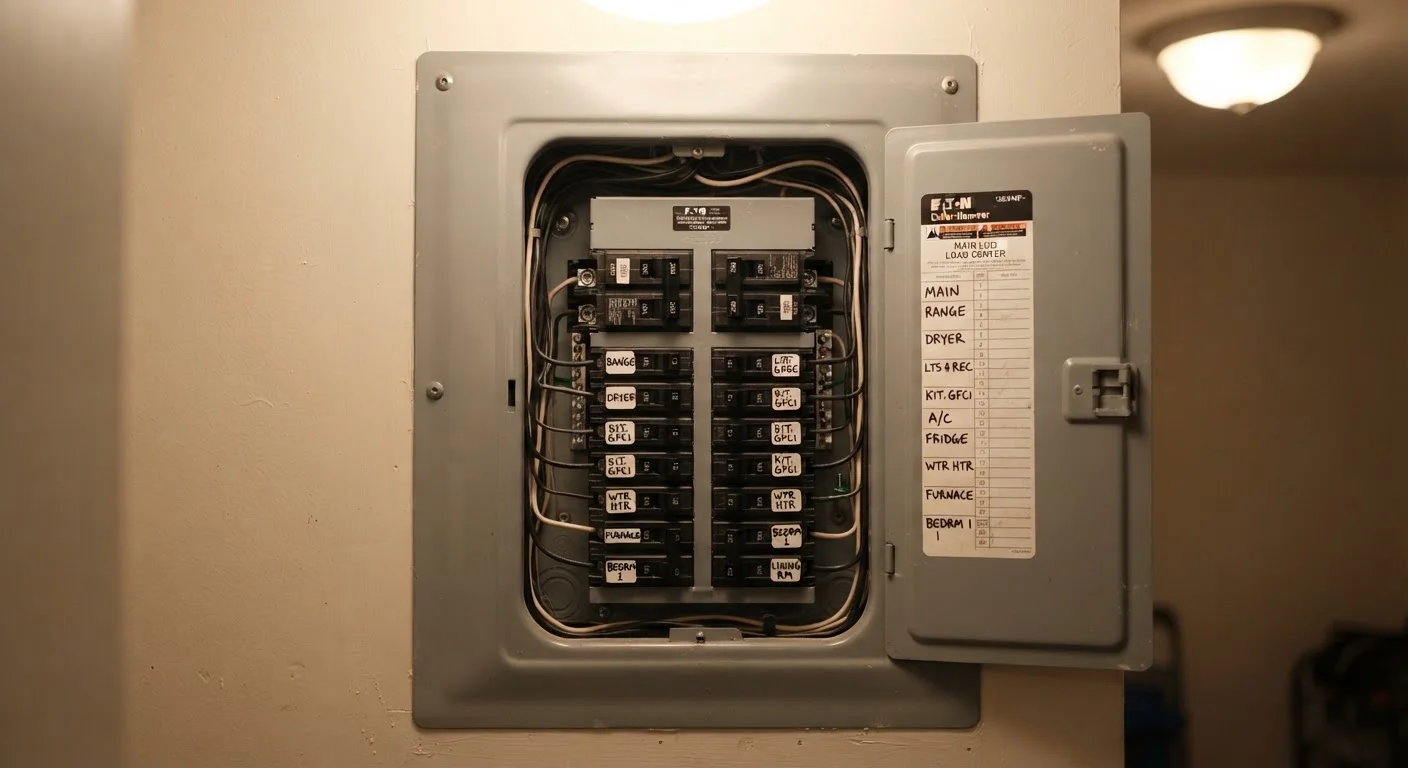
Homes built before the 1980s may still have electrical panels that were never designed for today's power demands. Fuse-based panels, Federal Pacific Stab-Lok panels (which have a documented history of reliability concerns), and panels rated at 60 or 100 amps often cannot safely support modern appliances, EV chargers, or home offices.
If your home has a fuse box instead of circuit breakers, or if you're constantly running extension cords because you've run out of outlets, an electrician should evaluate whether a panel upgrade is warranted. This is never a DIY project - panel work involves your home's main service feed and requires permits in virtually all jurisdictions.
Older panels were built for lighter loads - today's appliances and devices may demand a professional upgrade.
Shocks or tingling when touching switches
Feeling even a mild tingle or static-like shock when touching a light switch, outlet, or appliance is abnormal and should be taken seriously. It can indicate a grounding problem, a wiring fault, or a failing device - any of which can escalate to more dangerous shock levels or create a fire condition.
Don't test it repeatedly or assume it will resolve on its own. An electrician can use diagnostic tools to identify grounding deficiencies and faulty wiring that isn't visible to the naked eye.
Any shock or tingle from a switch or outlet - however mild - signals a grounding or wiring fault.
What to Do When You Spot These Signs
If you recognize more than one of these symptoms in your home, don't wait for a problem to compound. Contact a licensed, insured electrician - and before anyone begins work, verify their credentials carefully. Our guide on what to verify before hiring a contractor walks you through exactly what to check.
Document symptoms before calling
Before an electrician arrives, note when each symptom occurs, which outlets or rooms are affected, and whether it coincides with specific appliances running. This information helps the electrician diagnose the issue faster and reduces diagnostic time. Photos of discoloration or scorching are also useful to have on hand.
Electrical inspections fit naturally into a broader home maintenance routine. If you don't already have a seasonal checklist, the annual home maintenance calendar is a solid starting point for keeping your systems in check year-round.
This article is for general informational purposes only. Electrical work involves serious safety risks. Always consult a licensed electrician for diagnosis, repair, and guidance specific to your home's system and local code requirements.
The content on this site is for informational purposes only and is not a substitute for professional advice. Always consult a qualified professional for guidance specific to your situation.