

Why Understanding the Claims Process Matters Before an Accident
Most drivers have a general sense that auto insurance pays for accident-related costs - but far fewer know exactly what happens after they make that first phone call. The claims process involves multiple steps, each with its own requirements, timelines, and potential pitfalls. Readers who are new to auto insurance may find the process especially unfamiliar.
Going in unprepared can lead to delayed payouts, lower settlement offers, or even denied claims - outcomes that a little advance knowledge can help you avoid. This guide walks through every stage of a typical auto insurance claim so you know what to do, what to expect, and what to watch out for.
What you will need
Before you begin, gather the tools and materials that will make the process smoother.
Insurance Policy Documents
Confirms your coverage types, deductible amounts, and claim notification deadlines.
Smartphone with Camera
Used to photograph vehicle damage, license plates, road conditions, and the accident scene.
Police Report Copy
Provides an official third-party record of the incident, which adjusters frequently request.
Repair Estimate from a Body Shop
Gives you an independent cost baseline to compare against the insurer's adjuster assessment.
Step-by-Step: How to File Your Auto Insurance Claim
The steps below reflect how a standard claim typically unfolds in the United States. Actual timelines and procedures vary by insurer, state, and the specifics of your policy. Always refer to your actual policy documents and consult a licensed insurance agent for guidance specific to your situation.
Never Admit Fault at the Scene
Even if you believe you contributed to the accident, avoid making statements about fault to other drivers or bystanders. Fault is a legal and insurance determination made after a full investigation. Statements made at the scene can be used against you during the claims process and may affect your settlement.
Ensure Safety and Document the Scene
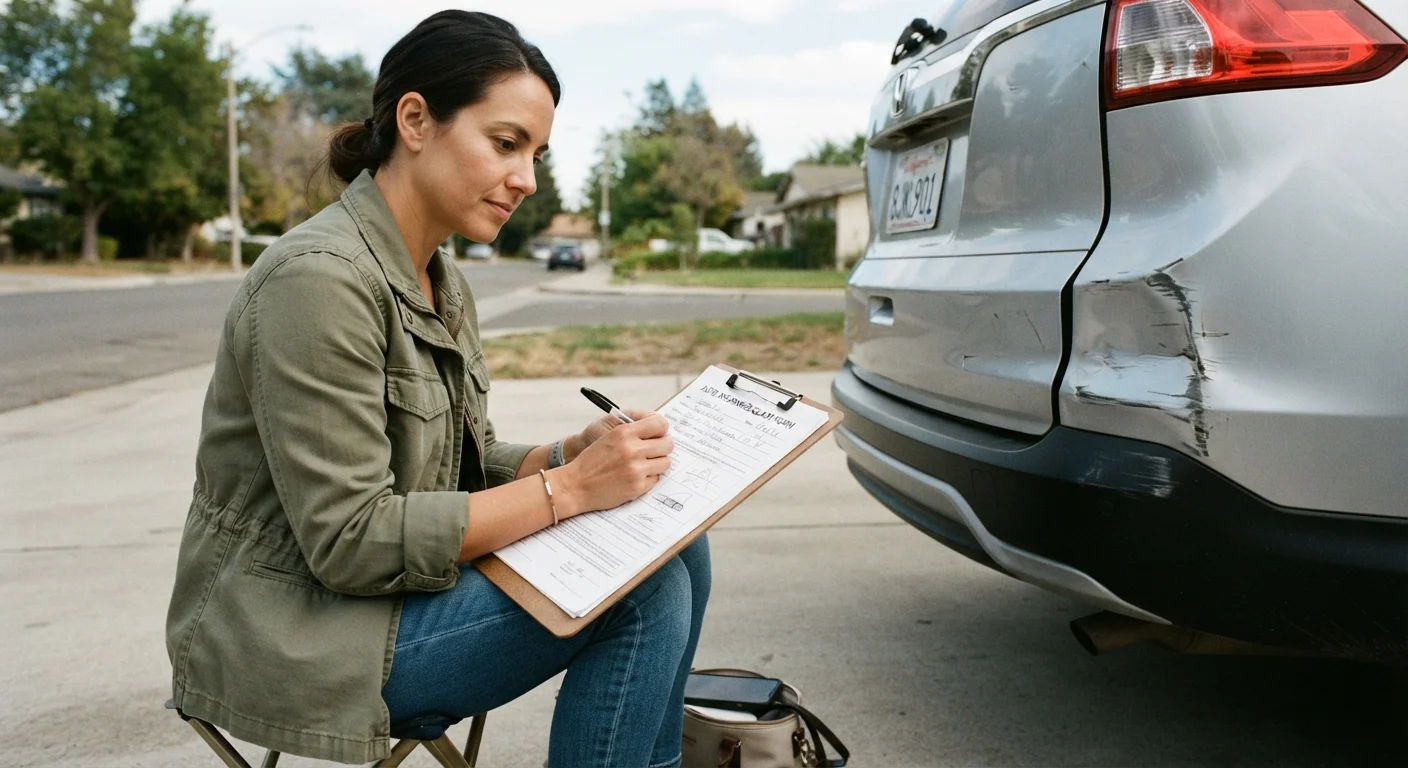
Move vehicles out of traffic if it is safe to do so, then check everyone involved for injuries. Call 911 if there are injuries or significant property damage - a police report creates an official record that insurers rely on. Once it is safe, photograph all vehicles from multiple angles, capture license plates, note road and weather conditions, and collect the names and contact details of any witnesses.
Exchange Information with Other Parties
Collect the following from every other driver involved: full name, contact number, driver's license number, vehicle make, model, and plate number, and their insurance company name and policy number. Provide your own information in return. Do not share more than required - avoid discussing fault, injuries, or policy limits at the scene.
Notify Your Insurance Company
Contact your insurer as soon as reasonably possible - most carriers offer 24/7 claims hotlines and mobile apps. Have your policy number, accident details, and the information you collected ready. Your insurer will open a claim file and assign a claim number, which you should record for every future communication. If the other driver was at fault, you may file with their insurer instead, but notifying your own insurer is still generally advisable.
Work with the Claims Adjuster
Your insurer will assign a claims adjuster whose job is to investigate the accident and estimate repair costs or vehicle value. The adjuster may inspect your vehicle in person or ask you to submit photos. They will review the police report, interview involved parties, and evaluate applicable coverage. Understanding your coverage types before this step helps you follow the adjuster's reasoning.
Review the Settlement Offer
Once the adjuster completes their assessment, you will receive a settlement offer. For repair claims, this is typically the repair cost minus your deductible. For total-loss vehicles (where repair costs exceed a threshold relative to vehicle value), you will receive an offer based on the car's actual cash value (ACV). Review the offer carefully against independent repair estimates or vehicle valuation resources. You have the right to negotiate if you believe the amount is inaccurate.
Handle Disputes or Denials
If your claim is denied or you believe the settlement is unfair, you have options. Start by requesting a written explanation of the decision and reviewing your policy's coverage and exclusions. You can formally appeal through your insurer's internal dispute process, request an independent appraisal, or contact your state's Department of Insurance to file a complaint. Understanding how claim denials work in other insurance lines can also provide useful context for navigating this process.
Complete Repairs and Close the Claim
Once you accept the settlement, coordinate vehicle repairs with your chosen shop. If rental reimbursement coverage is part of your policy, confirm the daily limit and maximum duration with your insurer before booking. Keep all receipts for repairs, rentals, or out-of-pocket costs related to the accident. After repairs are complete and all paperwork is signed, your insurer will officially close the claim file.
Keep a Dedicated Claims Document Folder
Store all claim-related documents - photos, repair estimates, adjuster correspondence, and rental receipts - in one folder, either physical or digital. A clear paper trail strengthens your position if a dispute arises and speeds up every interaction with your insurer.
For a deeper understanding of the terminology you'll encounter - from deductibles and subrogation to actual cash value - the auto insurance glossary is a useful companion resource.
This article is for general informational purposes only and does not constitute personalized insurance, legal, or financial advice. Coverage, procedures, and outcomes vary by policy and provider. Consult a licensed insurance professional and review your actual policy documents before making decisions about your coverage or a claim.
The content on this site is for informational purposes only and is not a substitute for professional advice. Always consult a qualified professional for guidance specific to your situation.