

The Real Reason Budgets Don't Survive the First Month
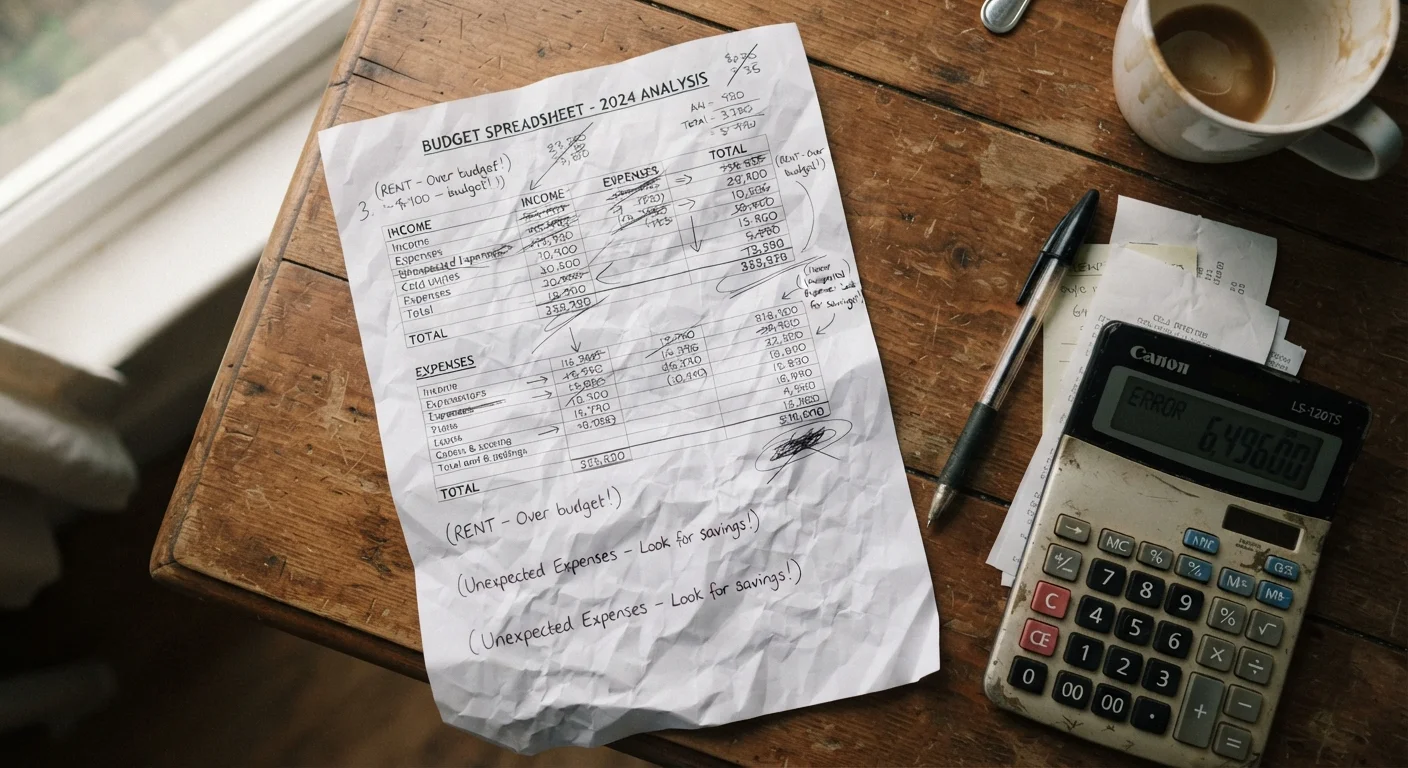
Most people who abandon a budget blame themselves. They assume they lack discipline, or that budgeting simply isn't for them. In reality, the majority of budget failures trace back to structural flaws — plans built on assumptions that don't survive contact with real life.
The good news: these are design problems, and design problems can be fixed. Understanding exactly where budgets break down is the first step toward building one that holds. If you haven't built your first budget yet, our step-by-step budgeting guide is a useful starting point before working through these pitfalls.
Using last month's spending as the budget baseline without accounting for irregular expenses.
Why it happens: People naturally recall their most recent regular bills — rent, utilities, subscriptions — and forget that car registrations, annual insurance premiums, and medical co-pays arrive unpredictably throughout the year.
Setting a budget so strict that a single small overage feels like total failure.
Why it happens: First-time budgeters often model their plan on an idealized version of their spending — cutting categories to aspirational minimums rather than realistic ones. One bad week triggers an 'I've already blown it' mindset that derails everything.
Tracking spending reactively instead of planning spending proactively.
Why it happens: Many people think of a budget as a ledger — something you record in after money has moved. Without forward-looking allocation, you discover overspending only after it has already happened.
Failing to account for income variability when income isn't a fixed paycheck.
Why it happens: Budget templates and online calculators are built around steady monthly income. Freelancers, gig workers, or anyone with variable hours often force-fit their irregular earnings into a fixed-income model that doesn't hold.
Skipping a regular budget review so small errors compound into large gaps.
Why it happens: Setting up a budget feels like the work is done. Without a scheduled check-in, spending quietly drifts from the plan for weeks before anyone notices — by which point the gap is hard to close.
How to Build a Budget That Outlasts Week One
The mistakes above share a common thread: they treat budgeting as a one-time event rather than an ongoing system. A budget that survives real life is one you revisit, adjust, and treat with some flexibility.
~33%
Americans with a written monthly budget
Surveys consistently find that fewer than one in three U.S. adults maintains a formal written budget, according to polling data from the National Foundation for Credit Counseling.
$400
Emergency expense many households can't cover
Federal Reserve research has found a significant share of U.S. adults would struggle to cover an unexpected $400 expense without borrowing — underscoring why an irregular-expense buffer is critical.
A few practical adjustments make an outsized difference. Round irregular expenses up, not down, when estimating. Build a small buffer — even $25–$50 — into your monthly plan to absorb surprises without blowing the whole framework. And schedule a brief monthly review to catch drift before it compounds. Our monthly budget checkup guide offers a structured way to do exactly that.
If your income is tight and the margin for error feels razor-thin, that doesn't mean budgeting is impossible — it means the structure needs to be even more deliberate. See budgeting strategies for tight financial situations for approaches built around limited cushion.
Don't Abandon the Budget — Adjust It
When a budget category routinely goes over, the instinct is to abandon the whole plan. Resist that. A single category that doesn't fit reality is information, not failure. Adjust the category allocation before the pattern causes you to disengage entirely from the budgeting process.
Once your budget is stable, it becomes the foundation for bigger goals — building savings and understanding your options for saving and investing, or tackling existing credit and debt with a clear plan. A working budget isn't the finish line; it's the launchpad.
This article is for general informational and educational purposes only and does not constitute personalized financial advice. For guidance specific to your financial situation, consult a qualified financial professional.
The content on this site is for informational purposes only and is not a substitute for professional advice. Always consult a qualified professional for guidance specific to your situation.