

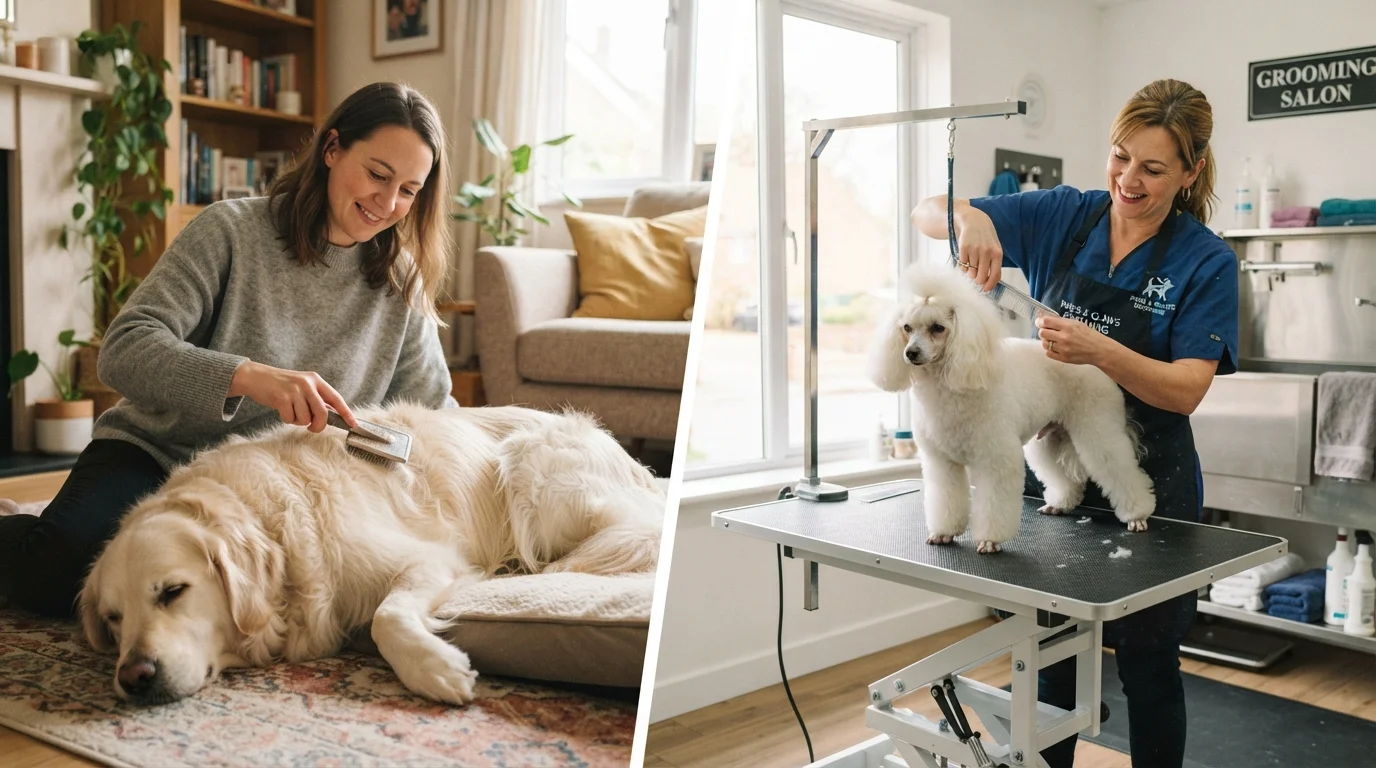
Option A
At-Home Grooming
The hands-on, flexible everyday approach.
Best for: Pet owners who want to build a regular bonding routine and manage light-to-moderate grooming needs on their own schedule.
Option B
Professional Grooming
The expert, fully equipped service option.
Best for: Pets with complex coat types, specific health or behavioral needs, or owners who lack the time or confidence for full grooming sessions.
What Each Approach Actually Covers
At-home grooming encompasses the daily and weekly maintenance most pets need: brushing, ear wiping, eye discharge removal, basic nail trimming, and the occasional bath. These tasks build familiarity and can help you spot lumps, skin irritation, or early ear infections before they become serious. For a broader look at how grooming fits into overall pet health, see our Pet Health & Wellness hub.
Professional grooming goes further. A trained groomer can safely execute breed-standard haircuts, use high-velocity dryers without causing heat injury, grind nails to a smooth finish, and express anal glands when needed — a task most owners reasonably prefer to skip. Professionals also typically spot skin conditions, ear problems, or coat abnormalities and can flag them for a vet follow-up. For pet owners managing multiple species, Pet Wellness Across Species outlines how grooming needs differ between dogs, cats, rabbits, and birds.
| Criterion | At-Home Grooming | Professional Grooming |
|---|---|---|
| Typical cost | Low ongoing cost after tool investment | Per-session fee; varies by size and coat |
| Skill required | Moderate; learned over time | High; trained and certified groomers |
| Equipment | Basic brushes, clippers, nail trimmers | Professional-grade tools and dryers |
| Complex coat handling | Limited; risk of mat damage | Experienced with all coat types |
| Bonding opportunity | High; builds trust and familiarity | Low; third-party interaction |
| Health spotting | Good for owners who know what to look for | Groomers trained to flag concerns |
| Scheduling flexibility | Any time; no appointment needed | Requires booking; may have wait times |
| Suitable for anxious pets | Often better for owner-familiar animals | Better for pets unresponsive to owner handling |
Cost, Time, and Practical Tradeoffs
At-home grooming requires an upfront investment in tools — a slicker brush, comb, nail clippers, and possibly clippers — but ongoing costs are low. The tradeoff is time and skill: learning to clip nails without hitting the quick, or to bathe a reluctant dog without drama, takes practice. Mistakes can cause minor injuries or coat damage if technique is poor.
Professional grooming costs vary widely by location, pet size, and coat complexity, but regular appointments for a medium-to-large dog can represent a meaningful recurring expense. That said, you receive skilled labor, professional equipment, and a predictable outcome. Many owners find that scheduling professional sessions every 6–10 weeks, with at-home brushing in between, balances both cost and coat health effectively.
~6–10 weeks
Recommended professional grooming interval for most coated breeds
Most professional groomers and veterinary guidelines suggest this frequency for breeds requiring haircuts, though individual needs vary by coat type.
1 in 3
Pet owners who report grooming-related stress in their animal
Survey data from veterinary behavioral studies consistently find that handling and grooming are among the most common sources of pet anxiety during routine care.
Your pet's temperament also shapes this decision. Some animals become highly stressed in salon environments with unfamiliar sounds and handling from strangers. Others, paradoxically, handle professional settings better because groomers know how to work efficiently and confidently. If behavior is a concern, our article on when to call a behaviorist vs. a dog trainer can help you decide whether a professional consultation is warranted before grooming becomes a struggle.
Making the Right Call for Your Pet
There is no universal answer. A short-coated Beagle and a Standard Poodle have fundamentally different grooming demands, and so do a nervous rescue cat and a relaxed Labrador. Start by honestly assessing your pet's coat type, your own comfort with grooming tasks, and how your pet responds to handling.
If you're just building a home grooming routine from scratch, start small — master brushing and nail checks before attempting a full clip. Consistency matters more than perfection. For owners newer to pet grooming concepts, understanding baseline care habits is a practical first step.
When to Involve Your Veterinarian
Grooming and health overlap more than many owners realize. Ear infections, skin conditions, matted fur causing sores, and overgrown nails that affect gait all warrant a vet conversation — not just a grooming session. If your pet resists grooming to the point of aggression or extreme stress, ask your veterinarian whether a behavioral or medical cause is contributing. This article is for general informational purposes and does not substitute for professional veterinary advice.
Ultimately, professional and at-home grooming are not competing options — they complement each other. Using both strategically gives most pets the best outcome: routine coat health maintained at home, with professional expertise applied where it genuinely makes a difference.
The content on this site is for informational purposes only and is not a substitute for professional advice. Always consult a qualified professional for guidance specific to your situation.