

Why Boredom Is a Bigger Behavioral Driver Than Most Owners Realize
When a dog chews through furniture or a cat knocks items off shelves repeatedly, the instinct is to call it a discipline problem. In reality, behavioral science points to a different culprit: cognitive under-stimulation. Animals evolved with brains designed to solve problems — locating food, navigating territory, reading social cues. When pets spend hours in unstimulating environments, that neural energy has nowhere productive to go.
The result is often redirected toward destructive or compulsive behaviors. Excessive barking, pacing, inappropriate elimination, and hyperactivity are all recognized signals that a pet's environment isn't meeting their mental needs. As explored in our article on animal emotional wellness, anxiety and boredom don't just affect mood — they affect physical health too.
Understanding this connection reframes the entire approach to behavior: instead of correcting unwanted actions after the fact, owners can proactively reduce the conditions that produce them.
Core Enrichment Practices That Actually Work
Effective enrichment engages your pet's senses, problem-solving instincts, and social drives. The following practices are grounded in animal behavioral science and are suitable for most household pets.
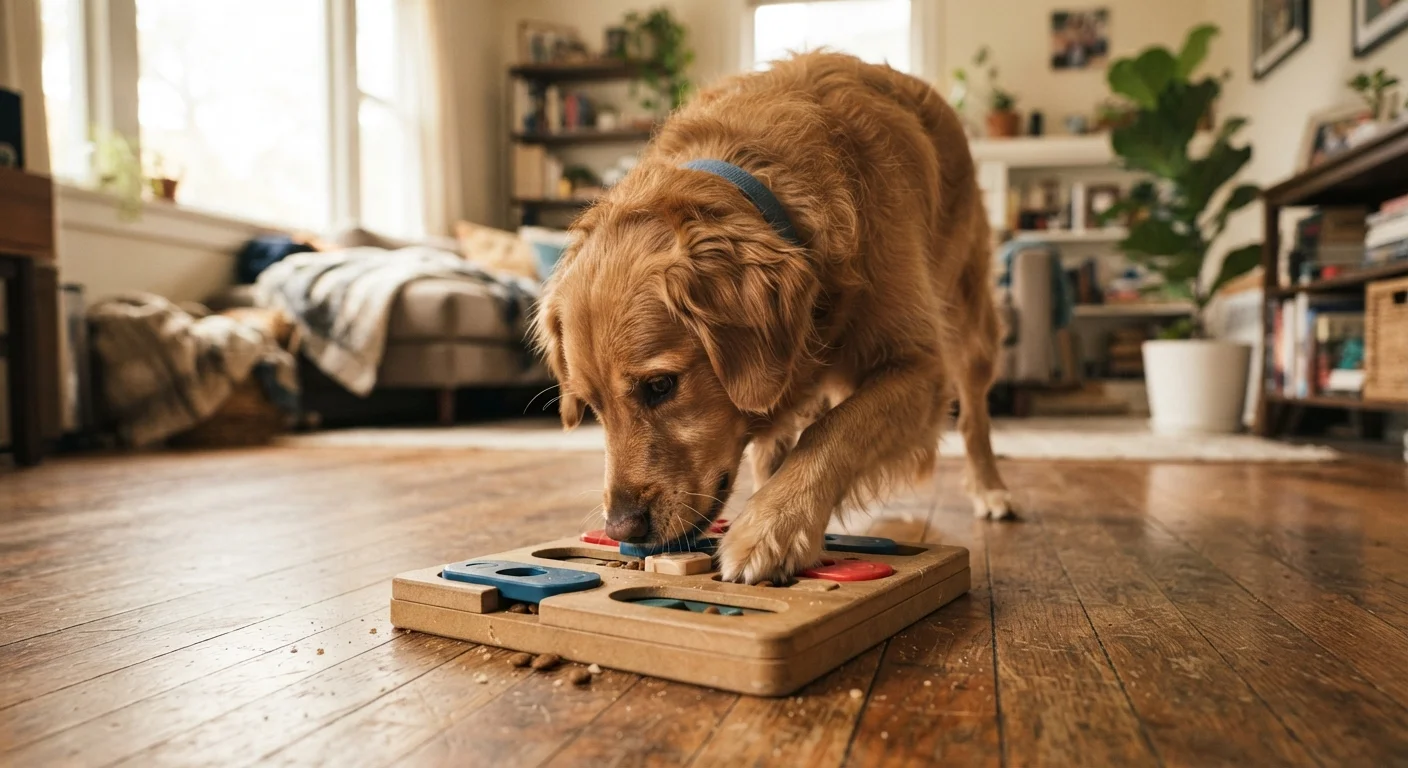
Use food puzzles and foraging activities to replace bowl feeding
Pets that hunt or forage for food in the wild spend a significant portion of their cognitive energy on food acquisition. Replacing a static bowl with puzzle feeders or scattered kibble re-engages this instinct, providing meaningful mental work. This also slows eating, which has additional digestive benefits.
Rotate novel objects and sensory experiences regularly
Habituation — the brain's tendency to stop responding to familiar stimuli — means that the same toys quickly lose their enrichment value. Rotating items preserves novelty, which is one of the most potent drivers of cognitive engagement in animals.
Incorporate training sessions as structured mental exercise
Learning new behaviors requires sustained attention, pattern recognition, and memory — all cognitively demanding processes. Short, positive-reinforcement training sessions address mental enrichment goals directly while also building communication and trust between pet and owner.
Provide species-appropriate social and environmental complexity
Animals evolved in socially and environmentally rich contexts. Pets that lack appropriate social interaction or environmental variety experience elevated baseline stress, which lowers their threshold for problem behaviors. Structured social time and environmental changes satisfy this biological need.
Use structured independence training to build frustration tolerance
Pets that have never learned to self-entertain are more vulnerable to boredom-driven behavior. Gradually teaching a pet to engage with enrichment items independently builds the cognitive flexibility needed to occupy themselves during owner absence.
Pairing these practices with consistent physical activity amplifies the results. Research on the relationship between activity and mental wellness — even in humans — confirms that a tired brain is a calmer brain. See our overview of how physical activity supports mental health for further context on this connection.
Getting Started: Quick Wins You Can Implement Today
Owners often delay enrichment programs because they assume significant time or expense is required. In practice, many high-impact strategies take fewer than ten minutes a day and cost little. The key is consistency — brief daily sessions are more effective than occasional long ones.
Small changes compound over time. Just as daily routines support pet longevity, predictable enrichment activities reduce baseline stress and create a calmer, more confident animal.
Start Small and Build Consistency
You don't need an elaborate enrichment program to see results. Even one new enrichment activity introduced consistently for two weeks will begin to shift your pet's baseline behavior. Prioritize daily repetition over variety in the early stages — predictability helps pets feel secure while they adjust to more stimulating routines.
Matching Enrichment to Your Pet's Individual Needs
Not all enrichment works equally for every animal. A high-drive herding breed needs different cognitive challenges than a brachycephalic lap dog. A senior cat with reduced mobility requires age-appropriate sensory stimulation rather than agility-based activities. The goal is to find the right level of challenge — too easy produces boredom, too difficult produces frustration.
When Enrichment Alone Isn't Enough
Some behavioral problems — including compulsive behaviors, severe separation anxiety, or sudden unexplained aggression — have underlying medical or neurological components that enrichment cannot address alone. If your pet's behavior changes suddenly or doesn't improve after consistent enrichment efforts, a veterinary evaluation should be the first step. A certified applied animal behaviorist can provide individualized assessment beyond what general enrichment strategies offer.
Observe your pet's response during and after each enrichment session. Signs of healthy engagement include focused attention, relaxed body language, and calm behavior afterward. If a pet becomes anxious or over-aroused, simplify the task or reduce session length. Adjusting the approach based on behavioral feedback is what distinguishes effective enrichment from well-intentioned guesswork.
85%
Of destructive behaviors linked to under-stimulation
Veterinary behaviorists broadly estimate that the majority of common household pet behavior complaints — including destructive chewing, excessive vocalization, and hyperactivity — are associated with insufficient mental and physical stimulation rather than willful disobedience.
5–10 min
Daily enrichment needed to show behavioral improvement
Animal behavior practitioners note that even brief, consistent daily enrichment sessions — as short as five to ten minutes — can reduce anxiety-related and boredom-driven behaviors within a few weeks when applied regularly.
This article is for general informational and educational purposes. For pets showing significant behavioral challenges or signs of anxiety, consult a licensed veterinarian or certified applied animal behaviorist for professional guidance.
The content on this site is for informational purposes only and is not a substitute for professional advice. Always consult a qualified professional for guidance specific to your situation.