

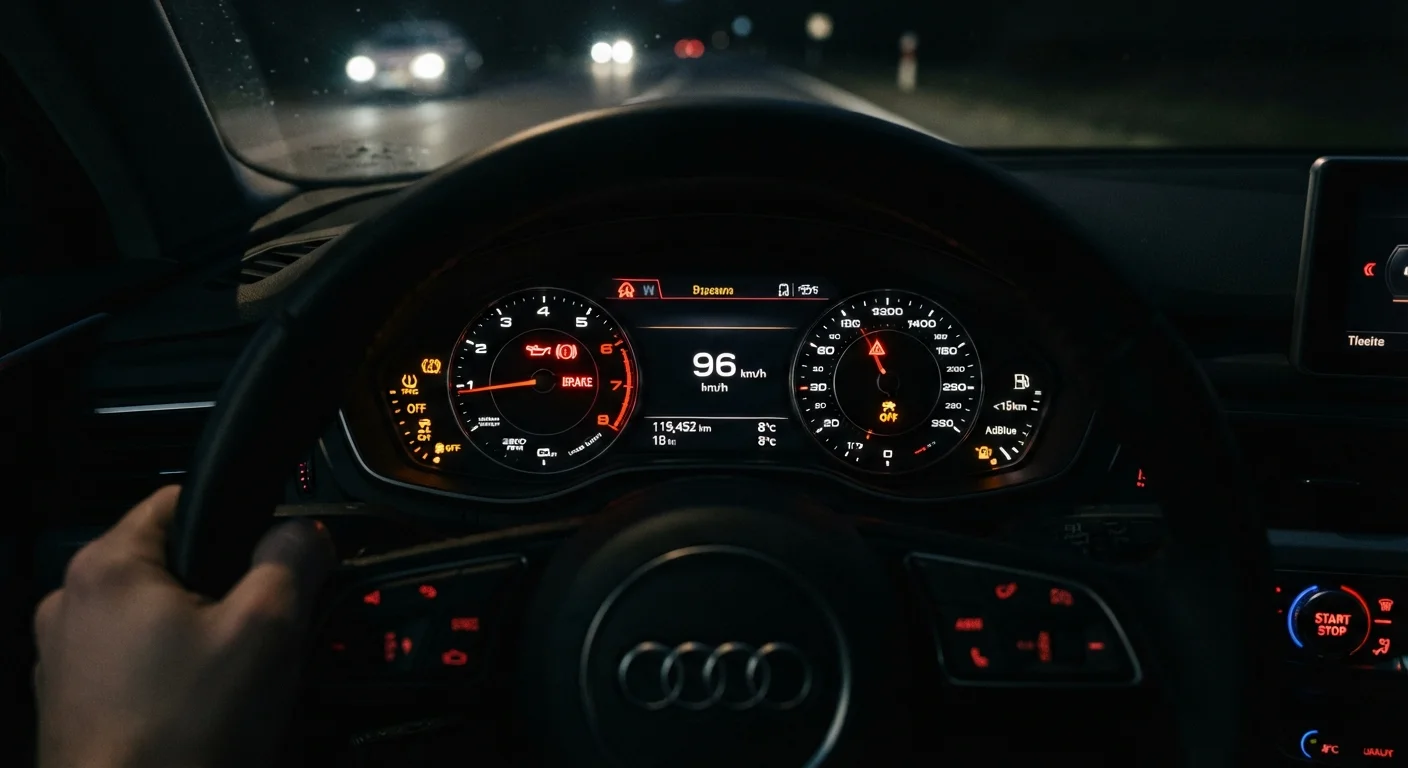
How Dashboard Warning Lights Work
Modern vehicles use an OBD system - a network of sensors that monitors everything from engine temperature to brake pressure. When a sensor detects a reading outside its normal range, it triggers a warning light on your instrument cluster. The color of the light is your first clue about urgency.
| Red warning lights | Stop or pull over - immediate action required |
| Amber/yellow warning lights | Schedule service soon - monitor closely |
| Flashing check engine light | Active engine misfire - reduce speed, same-day service |
| Oil pressure warning response | Pull over immediately and shut off engine |
| TPMS trigger threshold | Typically 25% below recommended tire pressure (U.S. National Highway Traffic Safety Administration (NHTSA)) |
| Owner's manual | Most accurate source for your specific vehicle's symbols |
Red lights signal an immediate problem that may risk your safety or cause serious engine damage if ignored. Amber or yellow lights indicate a developing issue that needs attention soon but rarely demands you pull over instantly. Green and blue lights are simply status indicators - they tell you a system is active, not that anything is wrong.
Your owner's manual remains the most accurate reference for your specific vehicle. If you no longer have it, most automakers provide digital versions on their websites.
The Warning Lights Every Driver Should Recognize
Below are the most common dashboard symbols, what triggers them, and the right response for each.
OBD (On-Board Diagnostics)
A standardized system built into vehicles that monitors sensors throughout the car and stores fault codes when readings fall outside normal parameters. Mechanics use an OBD scanner to read these codes and pinpoint problems.
Malfunction Indicator Lamp (MIL)
The technical name for the check engine light. It activates when the OBD system detects a fault in the engine, transmission, or emissions system that needs investigation.
TPMS
Tire Pressure Monitoring System. A sensor network that tracks air pressure in each tire and alerts the driver when pressure drops below a threshold - typically 25% below the recommended level.
Catalytic Converter
An emissions control device in the exhaust system that converts harmful combustion byproducts into less harmful gases. Engine misfires can cause unburned fuel to overheat and damage the converter.
Alternator
A generator driven by the engine that recharges the battery and powers the vehicle's electrical systems while the car is running. A failing alternator causes the battery warning light to illuminate.
Brake Fluid
A hydraulic fluid that transmits the force of your brake pedal to the brake calipers and wheel cylinders. Low brake fluid can indicate a leak or severely worn brake pads.
Check Engine Light (Amber Engine Icon)
One of the most misunderstood lights on any dashboard. It can indicate something as minor as a loose gas cap or as serious as a failing catalytic converter. A steady check engine light means get a diagnostic scan soon - many auto parts retailers offer this service at no charge. A flashing check engine light signals an active misfire that can damage the catalytic converter; reduce speed and have the vehicle inspected the same day.
Oil Pressure Warning (Red Oil Can Icon)
This light means oil pressure has dropped dangerously low - not simply that oil is dirty or due for a change. Pull over safely as soon as possible and turn off the engine. Driving with low oil pressure can destroy internal engine components within minutes. Check the oil level; if it's adequate, do not restart without a mechanic's assessment. For more on what happens when oil maintenance is deferred, see what skipping oil changes actually risks.
Temperature Warning (Red Thermometer Icon)
Your engine is overheating. Turn off the A/C immediately, and if the gauge doesn't drop within a minute or two, pull over safely and shut off the engine. Never open a hot radiator cap. Allow the engine to cool completely before checking coolant levels.
Battery / Charging System (Red Battery Icon)
The charging system - typically the alternator - is not keeping the battery at proper voltage. The vehicle may continue running temporarily on battery power alone. Minimize electrical load (turn off A/C, heated seats, radio) and drive directly to a shop, as the car will eventually stall.
Brake Warning (Red Exclamation in Circle)
If this appears and your parking brake is fully released, have brakes inspected immediately. It can indicate low brake fluid, a fluid leak, or a hydraulic failure. Do not assume it's a sensor error. This light appearing alongside the ABS light may point to a broader brake system issue.
TPMS Light (Amber Tire Cross-Section Icon)
The TPMS light means one or more tires are significantly under- or over-inflated. Check all four tires with a gauge and inflate to the pressures listed on the sticker inside your driver's door jamb - not the maximum pressure printed on the tire sidewall. Before any long trip, a quick tire check is worthwhile; our pre-trip vehicle checklist covers this and more.
When to Pull Over Immediately vs. When to Schedule Service
~1 in 4
Vehicles on U.S. roads with an active check engine light
Estimates from vehicle data aggregators suggest a substantial share of registered vehicles carry unresolved OBD fault codes at any given time.
25%
Pressure drop that triggers a federally mandated TPMS alert
The U.S. NHTSA requires TPMS systems to warn drivers when any tire falls 25% or more below the vehicle manufacturer's recommended inflation pressure.
Pull over immediately if you see: the oil pressure warning, the engine temperature warning, a flashing check engine light, or the brake warning light (with parking brake released). These indicate conditions that can cause immediate safety risk or catastrophic mechanical failure.
Schedule service within a few days for: a steady check engine light, the TPMS light, the battery warning, or the service required light. These issues are real but typically give you a short window to respond without stranding yourself.
A good habit: whenever a new light appears, cross-reference it in your owner's manual before deciding your next move. If multiple warning lights illuminate at once, treat the situation as serious until a technician diagnoses the cause. Regular attention to your vehicle - including commonly deferred maintenance items - reduces the likelihood that warning lights catch you off guard.
This article is for general informational purposes only. Warning light behavior varies by vehicle make, model, and year. Always consult your owner's manual and a qualified mechanic for diagnosis and repair decisions specific to your vehicle.
The content on this site is for informational purposes only and is not a substitute for professional advice. Always consult a qualified professional for guidance specific to your situation.