

What Engine Oil Actually Does
Motor oil isn't just a lubricant - it performs several critical jobs simultaneously. As you drive, it forms a thin film between metal surfaces that would otherwise grind against each other, reducing friction and heat. It also carries microscopic debris away from sensitive components, delivers it to the oil filter, and helps regulate engine temperature alongside the cooling system.
Fresh oil contains chemical additives that neutralize acids produced during combustion, prevent corrosion, and keep contaminants suspended so they can be filtered out. The problem is that these additives deplete over time and under heat. As oil ages, it thickens, becomes acidic, and can no longer do its job effectively - even if the level on the dipstick looks fine.
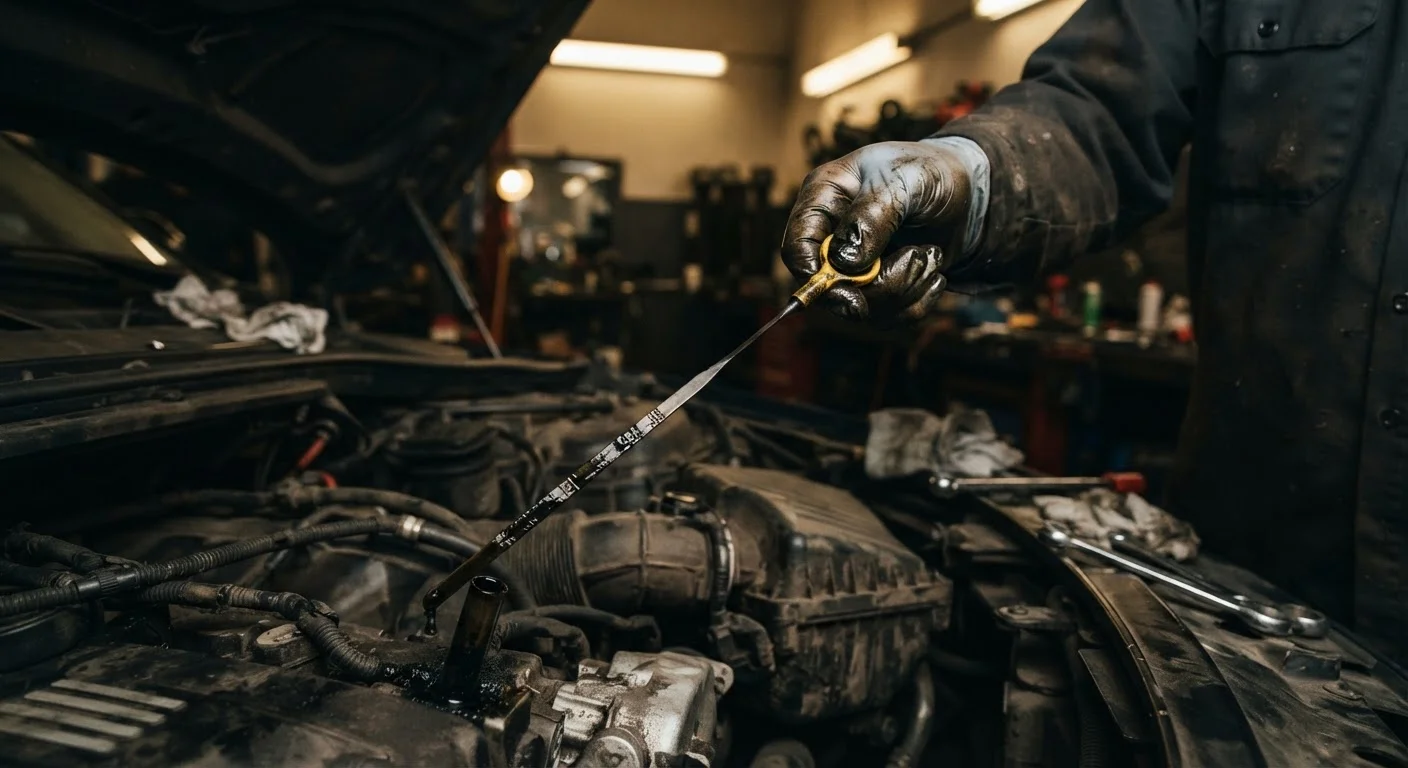
Oil Level vs. Oil Condition Are Different Things
A dipstick can show you that you have enough oil, but it can't tell you whether that oil is still doing its job. Oil can look clean and sit at the correct level while being chemically depleted. Checking level monthly is good practice, but it doesn't replace following your change interval.
What Actually Happens When You Skip a Change
A single missed or slightly delayed oil change is unlikely to cause dramatic damage in a well-maintained vehicle. The real danger is cumulative. Here's how neglect progresses:
- Increased friction and heat: Degraded oil loses viscosity and film strength. Metal-on-metal contact rises, generating excess heat and wearing down components like camshaft lobes and rod bearings.
- Sludge formation: Old oil breaks down into a thick, tar-like residue that can clog oil passages and starve parts of lubrication. Once sludge builds up, cleaning it out can be expensive and may not fully restore engine health.
- Accelerated wear: The engine's internal tolerances are tight. Ongoing friction from degraded oil shortens the working life of rings, seals, and valve train components - repairs that can cost thousands of dollars.
- Oil pressure problems: Sludge and thick oil make it harder for the oil pump to circulate fluid, which can trigger low oil pressure warnings. If you see that oil pressure warning light, don't ignore it.
~44%
Drivers who still follow the 3,000-mile rule
Surveys by the Car Care Council have found a significant share of drivers still change oil more frequently than most modern vehicles require, often based on outdated guidance.
7,500-10,000 mi
Typical synthetic oil change interval
Most major automakers specify this range for vehicles running full synthetic oil under normal driving conditions, per published owner's manual guidance.
$4,000+
Potential cost of engine sludge damage
Engine sludge resulting from chronic oil neglect can require extensive internal cleaning or component replacement, with repair costs varying widely by vehicle and severity.
How Long Can You Actually Wait?
The answer depends on three things: your vehicle, your oil type, and how you drive.
Conventional oil generally holds up for roughly 5,000 to 7,500 miles under normal driving conditions, though some older vehicles or those with high-output engines may require shorter intervals. Full synthetic oil is engineered to last longer - many manufacturers specify 7,500 to 10,000 miles, and some vehicles can safely extend to 15,000 miles under ideal conditions.
Rather than relying on a fixed mileage number, the most accurate guide is your vehicle's oil life monitoring system - a feature on most vehicles made in the last decade or so. These systems use algorithms factoring in driving patterns, engine temperature cycles, and load to estimate when oil actually needs changing, not just when a calendar says it should.
If your vehicle lacks this feature, your owner's manual is the authoritative source. Avoid generic rules-of-thumb that don't account for your specific engine design or oil specification.
Set a Reminder Based on Your Monitor, Not the Sticker
Many quick-lube shops place a sticker on your windshield recommending your next change at 3,000 miles - regardless of your vehicle's actual specifications. Use your onboard oil life monitor or owner's manual interval as your primary guide. If your car has neither, a mechanic familiar with your make and model can recommend an appropriate schedule.
Driving Conditions That Shorten the Interval
Manufacturers typically define two maintenance schedules: normal and severe. Severe conditions aren't rare - they include:
- Frequent short trips under five miles, especially in cold weather
- Extended idling (common in stop-and-go commutes or drive-throughs)
- Towing, hauling, or driving in mountainous terrain
- Extreme heat or dusty environments
- High-performance or turbocharged engines that run hotter
If your driving regularly falls into these categories, you may need to change oil closer to the lower end of the recommended range - even if you're using synthetic. This is worth factoring in before heading out on a long drive, when your engine will be working hard for sustained periods.
Staying on top of oil changes is also one of the most straightforward habits that extend a vehicle's long-term reliability. For a broader look at what else tends to slip through the cracks, see our coverage of maintenance items drivers routinely delay.
Frequently Asked Questions
Old oil thickens, loses its lubricating ability, and can form sludge that clogs engine passages. Over time this causes increased friction, overheating, and accelerated wear on components like the camshaft and bearings. In severe cases, prolonged neglect can result in engine failure.
For most modern vehicles, no. Many cars today - especially those using full synthetic oil - can safely go 5,000 to 10,000 miles or more between changes. Check your owner's manual or onboard oil life monitor for your specific vehicle's recommendation.
The most reliable method is your vehicle's oil life monitoring system, which calculates change intervals based on driving conditions rather than mileage alone. If your car doesn't have one, follow the interval in your owner's manual and check oil level and color periodically on the dipstick.
Missing one scheduled change by a modest margin is unlikely to cause immediate, irreversible harm in most vehicles. The risk comes from making it a habit. Consistently delaying changes accelerates engine wear and can void powertrain warranty coverage.
Yes. Full synthetic oil is engineered to maintain its protective properties longer than conventional oil, which is why it supports extended intervals. Synthetic blend oils fall in between. Always use the oil type and viscosity grade specified in your owner's manual.
Yes, and often in a counterintuitive way. Frequent short trips - under five miles - prevent the engine from fully warming up, which allows moisture and fuel to contaminate the oil faster. Drivers who mostly make short trips may need more frequent changes despite low mileage.
The content on this site is for informational purposes only and is not a substitute for professional advice. Always consult a qualified professional for guidance specific to your situation.