

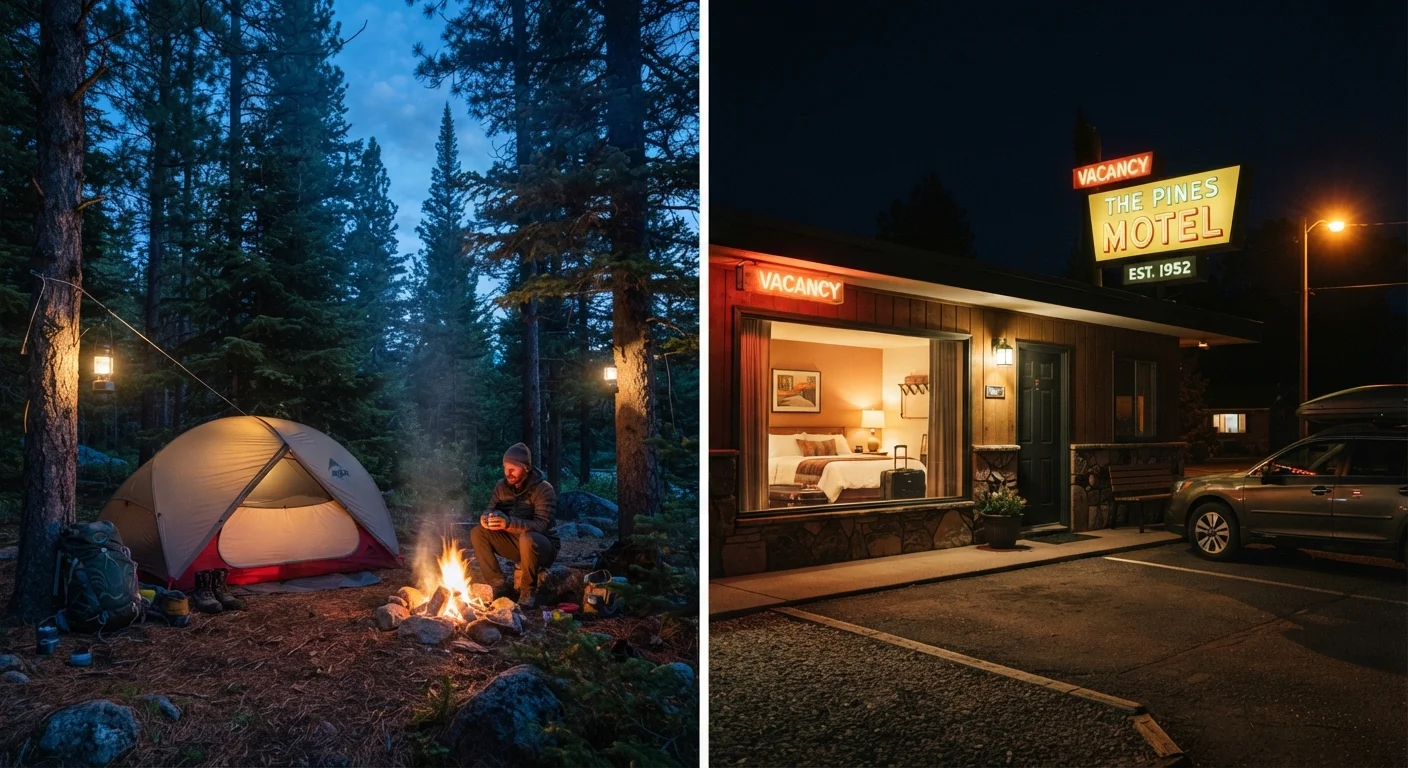
Our Verdict
Camping suits travelers who want to keep costs down, spend time outdoors, and don't mind trading comfort for experience. Motels make more sense for those prioritizing rest, simplicity, and predictable conditions - especially on longer or time-sensitive drives. Many road trippers find a mix of both works well, camping where sites are spectacular and booking a motel when fatigue or weather demands it.
Camping is ideal for outdoor-oriented travelers with flexible schedules; motels are better suited to those who prioritize comfort, consistent sleep quality, or are traveling with young children or elderly companions.
What Each Option Actually Involves
Choosing between camping and motels on a road trip isn't purely a budget decision - it's a choice about how you want to spend your non-driving hours. Understanding what each option genuinely requires helps set realistic expectations before you leave home.
Camping means arriving at a designated campground or dispersed site, setting up shelter (tent, hammock, or rooftop setup), cooking your own meals, and managing your comfort with gear you've brought. Some campgrounds offer hookups, flush toilets, and showers; primitive sites may offer nothing but a flat patch of ground. Sites typically require advance reservations, especially in national and state parks during peak season.
Motels mean pulling into a parking lot, checking in, and walking into a climate-controlled room with a bed, bathroom, and often Wi-Fi. You're trading independence for infrastructure. Costs vary widely by region, season, and proximity to attractions - highway motels in rural areas typically run lower than those near popular destinations. See our Road Trip Planning for First-Timers guide for general advice on budgeting overnight stops into your overall plan.
The Real Costs: Beyond the Nightly Rate
At face value, camping appears cheaper - a campsite often runs $15-$40 per night versus $70-$150 or more for a basic motel. But the full cost picture is more nuanced.
$15-$40
Typical campsite fee per night
Fees vary widely based on amenities and location; developed sites with hookups or showers typically run higher than primitive sites on public lands.
$70-$150+
Average motel nightly rate on popular routes
Rates near national parks, coastal areas, and major attractions routinely exceed national averages, particularly during summer and holiday weekends.
Camping requires upfront investment in gear: a quality tent, sleeping bags rated for expected temperatures, a sleeping pad, a cooking stove, and food storage. If you don't already own this equipment, first-trip costs can be substantial. Gear amortizes over many trips, but it represents real money out of pocket before you hit the road.
Motels, by contrast, have no gear overhead. You pay per night and get everything included. But nightly costs accumulate fast on a two-week trip, and popular corridors - particularly near national parks or coastal routes - can push rates significantly higher in summer months.
Food costs also differ. Cooking at a campsite is typically cheaper than restaurant meals, but motel stays don't preclude grocery shopping or bringing a cooler. The gap narrows when you factor in realistic eating habits.
Comfort, Sleep Quality, and Recovery
Road trips are physically tiring. Long hours behind the wheel, unfamiliar roads, and navigating new places all drain energy. How well you sleep matters more than many travelers anticipate when planning their first multi-day drive.
Lower nightly cost once gear is owned
After the initial gear investment, campsite fees are typically a fraction of motel rates, offering meaningful savings on longer trips.
Direct access to natural settings
Camping places you inside the landscapes you're traveling through - waking up in a forest or near a canyon rim is an experience motels cannot replicate.
Motels provide reliable, consistent rest
A real bed, climate control, and a private bathroom deliver predictable sleep quality that doesn't depend on weather or gear performance.
Motels require no gear hauling or setup
There's no packing and unpacking equipment each day - you arrive, check in, and your environment is ready, which reduces physical and logistical fatigue.
Camping encourages slower, more immersive travel
Spending an evening at a campsite - cooking a meal, sitting by a fire - slows the pace of a trip in a way that often becomes a highlight in itself.
Motels consistently deliver a bed, climate control, and a private bathroom - conditions that support genuine rest. For travelers covering significant daily mileage, this predictability has real value. Camping sleep quality depends heavily on weather, ground conditions, campsite noise, and the quality of your gear. A cold night in an undersized sleeping bag or a rainstorm drumming on a thin tent will affect the next day's drive.
Camping is highly weather-dependent
Rain, heat, cold snaps, or high winds can make a camping experience genuinely uncomfortable, and there's no fallback once you've committed to a site.
Campsite availability requires advance planning
Popular parks and campgrounds fill up weeks or months ahead in peak season, making last-minute camping decisions difficult or impossible in desirable locations.
Camping demands physical effort each day
Setting up and breaking down camp, cooking meals, and carrying water adds time and energy expenditure beyond the driving itself - which compounds fatigue on long trips.
Motels add up quickly over multi-week trips
Even mid-range motel stays at $90-$120 per night can represent the single largest expense on a two-week road trip, often exceeding fuel costs.
Motel quality is inconsistent despite similar pricing
A budget motel near a tourist corridor may be poorly maintained, noisy, or in an unsafe area - price alone doesn't reliably predict the experience.
That said, many experienced campers report sleeping deeply outdoors in the right conditions. Fresh air, physical activity, and quiet natural settings can make for excellent rest. It's less about camping being worse and more about variability - motel stays are more consistent, camping is more condition-dependent.
Flexibility, Spontaneity, and Planning Load
How you prefer to plan - or not plan - plays a major role in which option suits you. This is especially relevant if your route involves mixing interstate and scenic roads, where overnight options can be sparse or concentrated unpredictably.
Motel stays allow for a degree of spontaneity that camping rarely does. Many roadside motels accept walk-ins, and booking apps make same-day reservations easy in lower-demand areas. You can decide late in the day how far you want to drive and find something nearby.
Campgrounds - particularly in national forests or state parks - often require reservations made weeks or months in advance during peak season. Showing up without a reservation at a popular campground in July is a gamble. Dispersed camping on public lands offers more flexibility but requires familiarity with land management rules, fire restrictions, and Leave No Trace practices.
Dispersed Camping: Know the Rules First
Camping outside designated campgrounds on Bureau of Land Management (BLM) or National Forest land - known as dispersed camping - is permitted in many areas but comes with specific rules around fire restrictions, stay limits, and minimum distances from water sources. Regulations vary by region and can change seasonally. Always verify current rules with the relevant land management agency before heading out.
For travelers planning longer journeys across multiple states, overnight logistics are a central planning variable. Our guide on planning a multi-state road trip covers how to align your overnight stops with daily driving distances and route logic.
The content on this site is for informational purposes only and is not a substitute for professional advice. Always consult a qualified professional for guidance specific to your situation.