

Why Terrain Matters More Than Most Drivers Expect
Most everyday driving happens on flat, well-marked suburban roads or predictable interstate stretches. That familiarity breeds habits - following distances, speeds, braking patterns - that work fine until the landscape changes dramatically. Mountain passes, desert highways, and coastal cliff routes each introduce challenges that catch underprepared drivers off guard.
This isn't about advanced motorsport technique. It's about understanding how different environments place different demands on your vehicle, your attention, and your decision-making. If you're planning a road trip through varied geography, the vehicle prep checklist should be your first stop - terrain-specific driving starts well before you leave the driveway.
Use engine braking on long mountain descents instead of riding your friction brakes.
Continuously pressing the brake pedal on a sustained downgrade overheats pads and rotors, causing brake fade - a dangerous reduction in stopping power. Engine braking keeps speed in check without thermal buildup. Automatic transmission drivers can use L, 2, or a dedicated engine brake mode.
Fill your fuel tank whenever you drop below half in remote desert or mountain corridors.
Gas stations in remote terrain are sparse, and unexpected detours, road closures, or mechanical slowdowns can add significant miles. Waiting for the low-fuel warning in isolation can strand you in conditions where help is hours away.
Check pass and highway conditions before departure, not while driving.
Mountain passes can close or become chain-required with little notice due to weather. Desert roads flood unexpectedly during monsoon season. Planning ahead allows for route adjustments before you're committed to a section.
Slow down well before coastal or mountain curves, not as you enter them.
Late braking while turning reduces traction because your tires are already managing lateral forces. Braking before the curve - when the vehicle is still tracking straight - leaves maximum grip available for cornering. This is a fundamental of safe curve driving on any road.
Carry more water than expected for desert travel and store it accessibly.
Breakdowns in extreme heat require occupants to stay hydrated while waiting for help, which can take hours in remote areas. Dehydration also impairs judgment and driving ability before obvious symptoms appear.
Use available pullouts proactively rather than blocking traffic or stopping on shoulders.
On narrow mountain and coastal roads, slow-moving vehicles create dangerous pressure for following drivers who may attempt unsafe passes. Pullouts are placed specifically to allow traffic to flow safely; using them is considerate and legally required in several states.
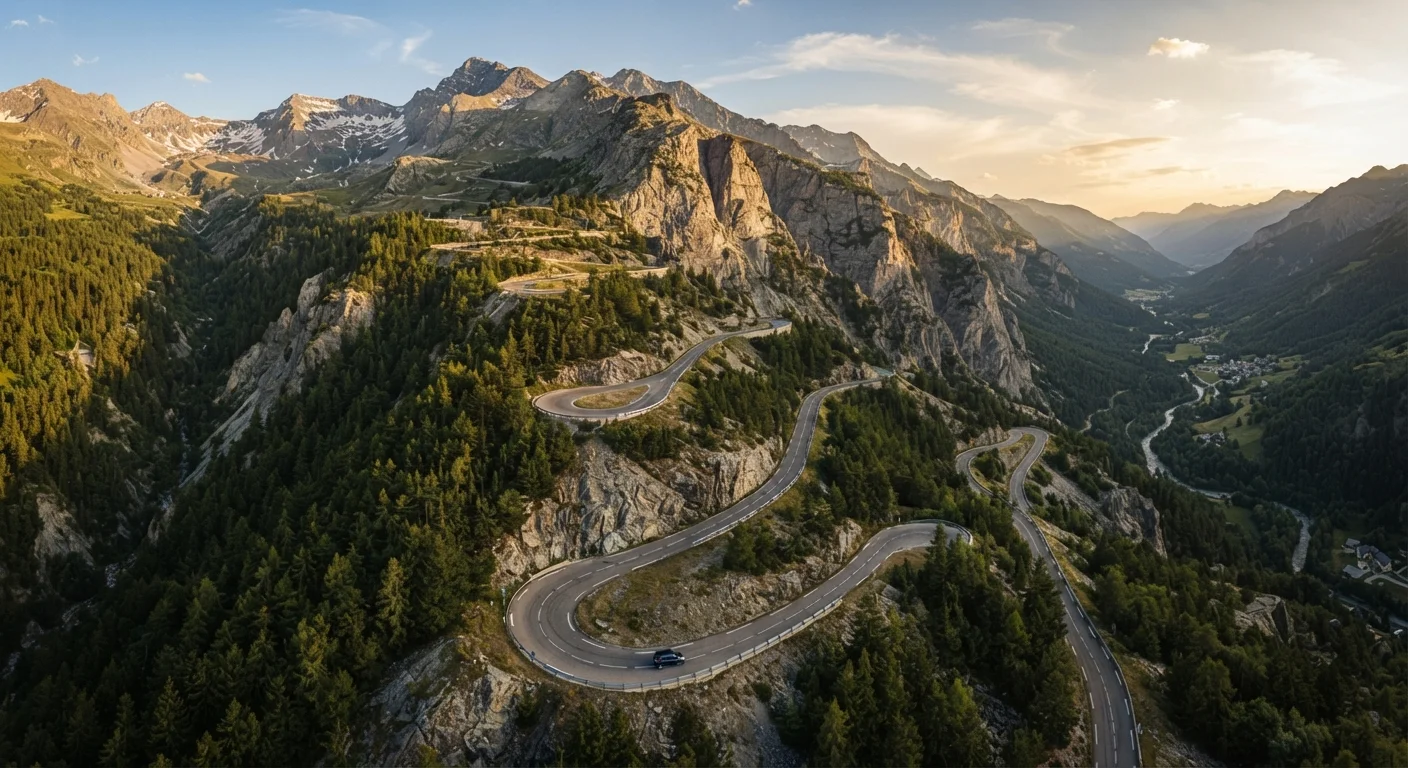
Mountain Roads: Altitude, Grades, and Brake Management
High-elevation mountain driving introduces three compounding factors: steep grades, sharp curves, and thinner air. Each one affects your vehicle differently than flat-road driving does.
On long descents, the biggest risk isn't speed itself - it's brake fade, which occurs when repeated braking overheats your brake pads and rotors, reducing their effectiveness. The standard technique is engine braking: downshift to a lower gear (or use the L or engine brake mode on automatic transmissions) so the drivetrain helps slow the vehicle, reducing how much you rely on friction brakes. This is especially important on grades that descend for several miles continuously.
At altitude, naturally aspirated engines produce less power due to lower oxygen density. Turbocharged vehicles compensate better, but all vehicles will feel different above 8,000 feet. Coolant systems also work harder in thin air; monitor your temperature gauge on long climbs and pull over if it approaches the red zone. Weather can shift rapidly in mountain environments - always check conditions before entering a pass, and carry tire chains if there's any snow risk.
Test Your Brakes Before a Long Descent
If you're unfamiliar with a mountain pass, apply moderate braking briefly before committing to a long downgrade to check feel and responsiveness. If brakes feel soft, spongy, or uneven, pull over safely before the descent and allow them to cool before proceeding. Never ride the brakes continuously for more than a minute on a steep grade.
Desert Highways: Heat, Distance, and Isolation
Desert driving looks deceptively simple - long, straight roads, minimal traffic, clear visibility. The hazards are quieter but serious: extreme heat, vast distances between services, and limited cell coverage.
Heat affects both vehicle and driver. Coolant systems, transmission fluid, and tires are all stressed by sustained high temperatures. Check tire pressure before departing, since heat causes pressure to build - and an underinflated tire entering a hot desert stretch is a recipe for a blowout. Keep an eye on your engine temperature gauge, especially if you're running air conditioning at full blast on a climb.
For the driver, heat accelerates fatigue and dehydration. Carry more water than you think you'll need - a general guideline is at least one gallon per person for emergencies, separate from your drinking supply. Fuel is the other critical resource: in remote desert corridors, gas stations can be 80 or more miles apart. Fill up whenever you're below half a tank, not when the warning light appears. If you're driving solo through remote desert areas, review the solo road trip safety guide for communication and emergency planning strategies.
80+ miles
Typical gap between gas stations in remote desert corridors
Stretches of desert highway in the American Southwest - including parts of Nevada, Arizona, and New Mexico - regularly exceed 80 miles between fuel stops.
~20%
Engine power loss at 8,000 feet altitude vs. sea level
Naturally aspirated gasoline engines typically lose roughly 3-4% of power per 1,000 feet of elevation gain, meaning meaningful performance reduction at high mountain passes.
Coastal Routes: Wind, Narrow Lanes, and Visual Distraction
Coastal cliff roads - the Pacific Coast Highway, sections of Route 1, Maine's coastline - are among the most scenic drives in the country. They're also among the most dangerous for inattentive drivers.
Wind gusts off the ocean can push a vehicle sideways, particularly high-profile vehicles like SUVs and trucks. Grip your wheel firmly and be prepared to correct, not overcorrect. Watch for sudden gusts at exposed headlands after stretches of protected road - transitions are where vehicles get caught off-guard.
Lane widths on coastal routes are often narrower than drivers accustomed to wide interstates expect. Oncoming RVs or delivery trucks can feel uncomfortably close. Reduce your speed, keep to the right of your lane, and use available pullouts to let faster traffic pass rather than rushing. Use pullouts also for sightseeing - stopping on a coastal road shoulder is dangerous and often illegal.
Visual distraction is real. Ocean views are beautiful and attention-pulling. If you're driving with passengers, ask them to handle navigation duties so you can keep your eyes where they belong. For a broader look at route decision-making, weighing scenic vs. interstate routes offers useful framing before you commit to a coastal corridor.
Universal Rules Across All Terrain Types
Regardless of which landscape you're crossing, a few practices apply everywhere. Fatigue is amplified by unfamiliar terrain - the mental load of navigating mountain curves or scanning for desert obstacles burns through your reserves faster than routine highway driving. Know your warning signs and don't push past them. Driving fatigue is a leading contributor to serious accidents, and unfamiliar terrain removes the muscle-memory safety net drivers rely on.
Download offline maps before entering areas with spotty coverage. Share your route and expected arrival time with someone not in the vehicle. Keep an emergency kit in the trunk - jumper cables, a first aid kit, reflective triangles, a flashlight, and a basic tool kit. If you're new to long-distance trip planning overall, the road trip planning guide for first-timers covers the broader preparation framework that supports terrain-specific driving.
Chain Requirements and Road Closures Vary by State
Several western states - including California, Colorado, and Washington - require tire chains or approved traction devices on mountain roads during winter conditions. Requirements vary by road class, vehicle type, and current conditions. Check the relevant state DOT website before traveling through mountain passes in cold-weather months, and carry chains even if conditions look clear at the trailhead.
The content on this site is for informational purposes only and is not a substitute for professional advice. Always consult a qualified professional for guidance specific to your situation.