

Why Packing Strategy Matters Beyond Just Fitting Everything In
Most drivers think about car packing purely as a space puzzle. But how you load a vehicle affects three things that go well beyond storage efficiency: safety, fuel economy, and access during the trip. Get these wrong and you're not just cramped - you may be driving a vehicle that's harder to control in an emergency.
Improperly loaded cargo shifts weight distribution, can restrict rearward visibility, and creates hazards inside the cabin if items break loose. A 2019 AAA Foundation for Traffic Safety report noted that road debris - including cargo that falls from or within vehicles - contributes to thousands of crashes annually. Smart loading is, in part, a safety practice.
Before you start loading, it pays to make sure the vehicle itself is road-ready. See our pre-trip vehicle checklist to cover tires, fluids, and other essentials before you add cargo weight.
What you will need
Step-by-Step: Loading the Car the Right Way
The following steps work for most passenger vehicles - sedans, SUVs, minivans, and wagons. Adjust for your specific vehicle's layout and cargo space.
Cargo net or trunk organizer
Keeps loose items grouped and prevents shifting during transit.
Soft duffel bags
Compress to fill irregular spaces more efficiently than rigid suitcases.
Roof cargo carrier or rack
Extends cargo capacity for bulky, lightweight items like camping gear or bedding.
Seatback organizer
Provides in-cabin storage for passengers needing easy access to snacks, tablets, or small items.
Bungee cords or ratchet straps
Secures larger or oddly shaped items from shifting in the cargo area.
Finalize Your List Before You Touch a Bag
Packing efficiently starts before a single item goes in the car. Write out everything you plan to bring, then cross off anything you're packing "just in case" that doesn't serve a clear purpose. This up-front discipline prevents the most common packing problem: too much stuff.
Sort your items into categories: daily-use items, clothing, emergency/safety gear, food and drinks, and entertainment. This grouping will guide how and where everything loads.
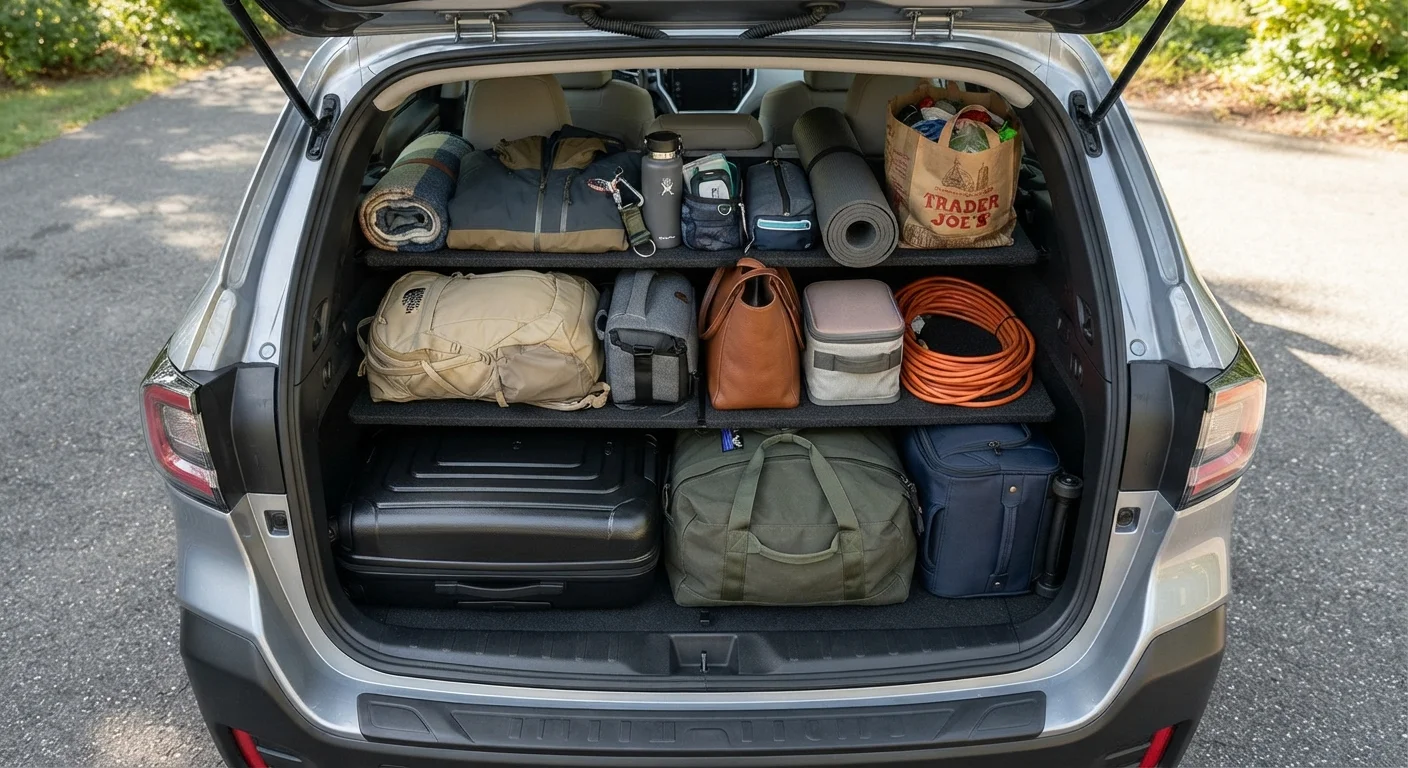
Load Heavy Items First, Low and Centered
Place your heaviest bags and gear directly on the cargo floor, as low and as close to the center of the vehicle as possible. This keeps the vehicle's center of gravity stable, which matters for handling - especially during evasive maneuvers or on winding roads.
Think: suitcases and hard-sided bags go in first, flat on the floor. Never stack heavy items high or position them only on one side of the trunk.
Fill Gaps with Soft, Compressible Items
Once the heavy base layer is in place, use soft bags, rolled clothing, blankets, and pillows to fill gaps around and on top. These items compress and conform, making use of irregular space that rigid luggage wastes.
Keep cargo height below the rear window line when possible - this preserves rearward visibility and keeps the load from shifting into the cabin on sudden stops.
Designate an Easy-Access Zone
Identify items you'll need during the drive - road snacks, a phone charger, sunglasses, the vehicle registration, a first-aid kit - and place them in a dedicated, reachable spot. This might be a seatback organizer, a small bag on the rear floor, or a center console caddy.
Digging through packed luggage while driving or at a gas station is both frustrating and time-consuming. A planned access zone eliminates that. See our guide to what experienced long-distance drivers keep stocked for a useful checklist of drive-day items worth keeping within reach.
Secure Everything Before Closing Up
Use a cargo net, bungee cords, or ratchet straps to prevent items from shifting during transit. Pay particular attention to anything that could roll, slide, or topple - bottled beverages, coolers, and irregularly shaped items are the usual culprits.
Give the load a firm push from different angles before closing the trunk. If anything shifts significantly, rearrange or add a securing layer. A cargo barrier between the trunk and rear seats adds another layer of protection in SUVs and wagons.
Reassess Roof Cargo Carefully
If you're using a roof rack or cargo carrier, load lighter, bulky items there - sleeping bags, folded tents, or extra coats. Heavy items on the roof raise the center of gravity and increase rollover risk, so keep roof loads light.
Roof cargo also creates meaningful wind resistance, which can reduce fuel efficiency noticeably on highway driving. Factor this into your fuel planning, particularly on longer stretches.
Unsecured Cargo Is a Road Hazard
Loose items in the cabin or cargo area can become dangerous projectiles during sudden braking or a collision. Always secure heavy items and never stack cargo above seat-back height in open cargo areas. A bungee net or cargo barrier is a worthwhile investment before any long trip.
Pack a 'First Night' Bag Separately
Designate one small bag with everything you'll need on arrival - toiletries, a change of clothes, chargers, medications - and keep it accessible without unpacking everything else. This is especially helpful when arriving after dark or checking in somewhere new.
Don't Exceed Your Vehicle's Load Limit
Every vehicle has a Gross Vehicle Weight Rating (GVWR) - the maximum safe loaded weight including passengers and cargo. Overloading affects braking distance, handling, and tire integrity. Check your owner's manual or the placard inside the driver's door jamb for your specific vehicle's limits.
If you're traveling with children, their car seat placement and in-cabin needs add another layer of planning. Our guide to road trips with kids covers how to balance safety, comfort, and realistic daily driving with younger passengers on board.
For a broader look at the planning decisions that most often derail road trips - including packing and vehicle prep - see why road trips go wrong.
The content on this site is for informational purposes only and is not a substitute for professional advice. Always consult a qualified professional for guidance specific to your situation.