

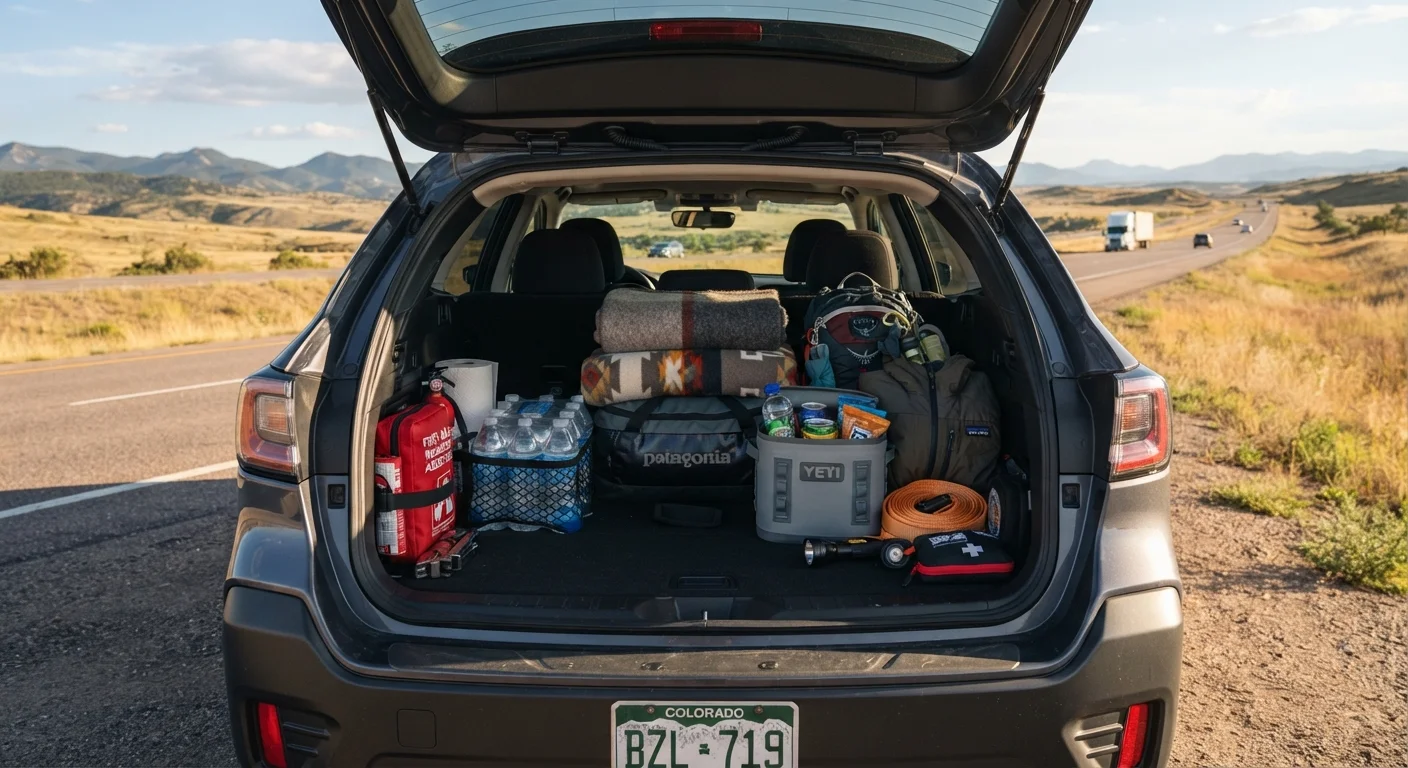
What's actually in a prepared driver's car
There's a meaningful difference between a car that's loaded for a road trip and a car that's prepared for one. Most drivers think about luggage and snacks - fewer think systematically about what happens when something goes wrong 200 miles from the nearest city. The items below reflect what experienced long-distance drivers actually carry, organized around safety, health, comfort, and logistics.
Before reviewing this list, it's worth doing a broader vehicle check. Our pre-trip vehicle checklist covers tires, fluids, and mechanical basics that should be confirmed before any long haul. The gear below assumes your car is mechanically ready to go.
Tailor your kit to your route and season
A summer desert drive through Nevada demands more water and sun protection than a fall trip through New England. Winter travel in mountain states warrants adding an ice scraper, sand or kitty litter for traction, and an extra layer of warm clothing. Think about the specific terrain and climate of your route rather than relying on a generic one-size-fits-all list.
Emergency roadside kit
An emergency roadside kit is the non-negotiable foundation of any long-distance setup. At minimum, pack jumper cables (or a portable jump starter), a reflective triangle or road flares, a tire pressure gauge, and a basic lug wrench. If your vehicle has a spare tire - and not all modern cars do - confirm it's properly inflated before departure. A small folding shovel is worth adding if you're traveling in winter or through rural terrain.
Experienced long-haulers also include a roll of duct tape, zip ties, and a short length of tow rope. These low-cost items take up minimal space and have saved many a driver from a prolonged wait on the shoulder.
A portable jump starter costs little but can get you back on the road without flagging down a stranger.
First-aid kit
A compact first-aid kit handles the unexpected bumps and scrapes that come with travel - blisters from rest-stop walking, minor cuts, sunburn, or headaches. A well-stocked kit should include adhesive bandages in multiple sizes, antiseptic wipes, gauze pads, medical tape, pain relievers, antihistamines, and any prescription medications your household requires.
Check expiration dates before every long trip. Many people carry a kit for years without refreshing it, only to discover empty blister packs or expired medications when they actually need them.
Check expiration dates on your first-aid kit before every major trip - expired supplies offer false confidence.
Water and non-perishable snacks
Dehydration worsens driver fatigue faster than most people realize. Pack more water than you think you'll need - a general guideline is at least one liter per person for each leg of the journey, plus reserves in case of an unexpected delay or breakdown in a remote area. Insulated bottles keep water cool through hot summer driving.
For snacks, prioritize items that won't melt, spoil, or create crumbs that distract from driving: nuts, dried fruit, protein bars, and individual crackers are reliable options. Avoid heavily salted snacks that accelerate thirst on a long stretch.
Pack more water than you think you need - a breakdown in a remote area can quickly become a dehydration risk.
Navigation backup
GPS apps fail when cell coverage disappears, which happens with surprising frequency across stretches of the American West, rural South, and mountain corridors. Download offline maps for your route before you leave home using your preferred navigation app. A physical road atlas or state map is a genuine backup that requires no battery or signal.
Many seasoned road-trippers also write down or print key route segments, including major highways, exit numbers, and overnight stop addresses. Relying entirely on a single device with no contingency is a risk not worth taking on a multi-day drive.
Download offline maps before departure - cell coverage drops without warning in rural and mountain regions.
Comfort and fatigue-management gear
Driver fatigue is a serious safety concern on long trips. A lumbar support cushion, sun shade for windshield parking stops, and a neck pillow for passengers make hours in the car significantly more manageable. Sunglasses with UV protection reduce eye strain during daytime driving, particularly on east-west routes where you're frequently driving into the sun.
For overnight stops or unexpected delays, a lightweight blanket and a change of clothes stored in an accessible bag - not buried in the trunk - can make a disrupted itinerary far less stressful. See our guide to traveling with kids for additional comfort planning when children are along for the ride.
A lumbar cushion and quality sunglasses are small investments that meaningfully reduce physical fatigue on long drives.
Power and device management
A multi-port USB car charger keeps phones, GPS units, and other devices topped up while driving. For longer stretches without outlet access at rest stops, a portable power bank provides a meaningful safety buffer - a dead phone during a nighttime breakdown is an avoidable problem. Keep charging cables for every device your group relies on, including backups for the most critical ones.
If you're traveling with a dash cam - useful for documentation in case of an accident - confirm it's mounted securely and functioning before departure. Review our full vehicle prep checklist to make sure your car's electrical system is ready to support these accessories throughout the drive.
A portable power bank ensures your phone stays charged even if you can't find a working outlet at a rest stop.
Vehicle documents and emergency contacts
Keep your vehicle registration, proof of insurance, and a roadside assistance card (if you have a membership) in an easily accessible location - not buried in the glove box under six months of receipts. If you're crossing state lines or traveling internationally into Canada or Mexico, be aware of any documentation requirements specific to those crossings and verify them with official government sources before departure.
Write down or print a short contact list: your insurance company's claims line, roadside assistance number, and a trusted personal contact who knows your itinerary. When stress runs high after an accident or breakdown, having this information on paper - rather than relying on a potentially dead phone - is a practical safeguard.
Print your roadside assistance number and insurance claims line - a dead phone at the wrong moment is a real risk.
Pack smart, drive confident
The goal of stocking your car well isn't to prepare for every disaster - it's to handle the realistic inconveniences that show up on long drives: a drained battery, a missed exit, a hungry backseat, a sunburned arm from an afternoon of driving west. Most of these items are inexpensive and take up little space when organized thoughtfully.
If you're working through how to load everything efficiently, smart car packing strategies can help you organize for both access and safety. And if this is your first time planning a longer trip from scratch, Road Trip Planning for First-Timers walks through the full picture - routes, budgeting, overnight stops, and vehicle prep in one place.
Do a dry-run inventory before each major trip
Before you load luggage, spend ten minutes going through your vehicle's emergency and comfort supplies. Replenish water, check first-aid expiration dates, confirm the spare tire is inflated, and verify that all charging cables are present. This short habit catches the gaps that accumulate between trips and prevents the frustration of discovering missing items mid-journey.
This article provides general travel preparation guidance for informational purposes. Always verify safety requirements, road conditions, and border documentation with official sources before departure. Consult a qualified mechanic for any vehicle maintenance concerns before a long drive.
The content on this site is for informational purposes only and is not a substitute for professional advice. Always consult a qualified professional for guidance specific to your situation.