

The Spectrum: From Flexitarian to Fully Vegan
Plant-based eating is best understood as a continuum rather than a fixed category. At one end sits the flexitarian - someone who eats predominantly plants but includes meat or fish occasionally, often a few times per week. Moving along the spectrum, a pescatarian avoids land-animal meat but includes fish and seafood. Lacto-ovo vegetarians exclude all meat and fish but consume dairy and eggs. At the far end, a whole-food plant-based (WFPB) pattern or vegan diet eliminates all animal-derived foods entirely.
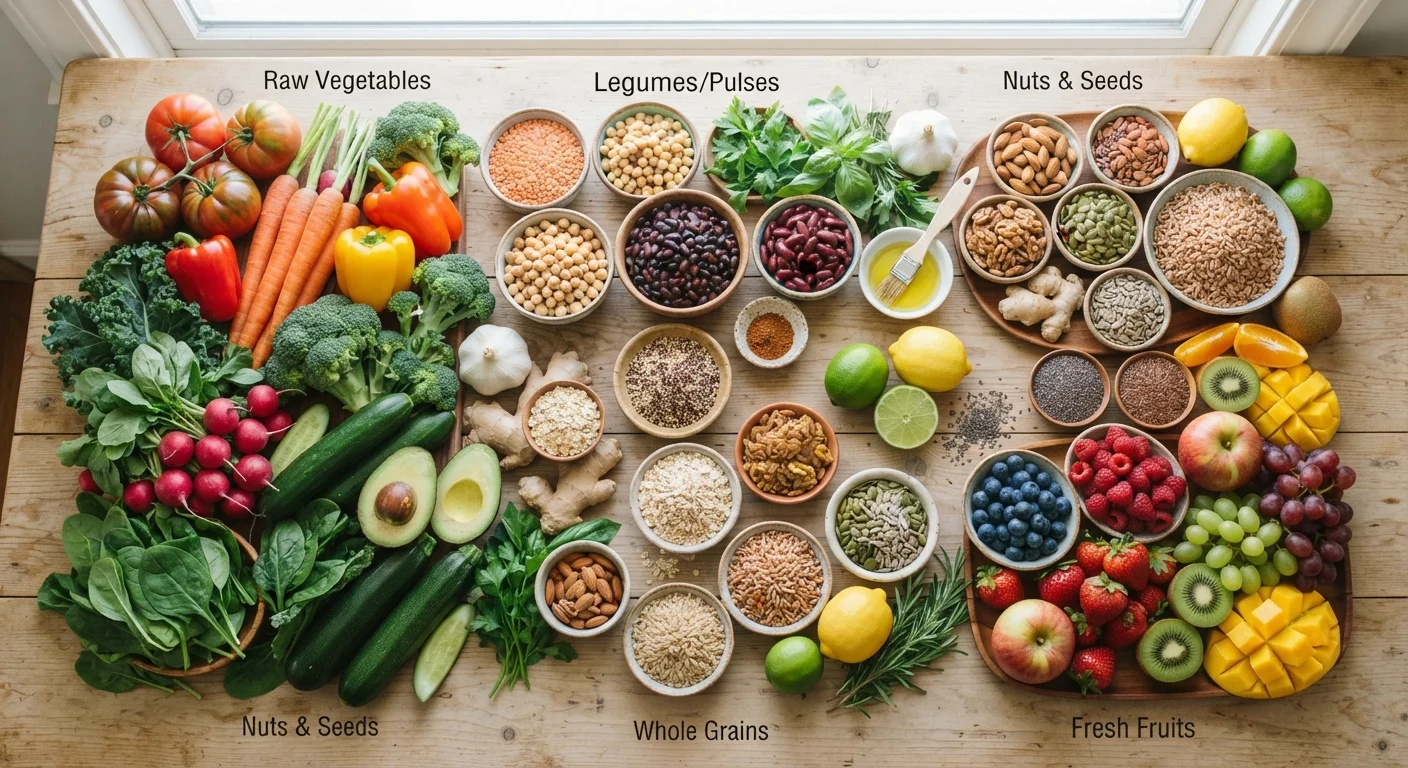
What unites these patterns is emphasis: plant foods - vegetables, fruits, legumes, whole grains, nuts, and seeds - supply the bulk of calories, fiber, and micronutrients. The proportion shifts; the principle does not.
Clarify the term before comparing diets
When reading about plant-based diet research, check how the study defines the term. Some studies use it to mean fully vegan; others apply it to any diet scoring high on plant-food indexes while still including animal products. The definition shapes what the findings actually tell you.
Understanding where a given eating pattern falls on this spectrum matters for nutrition planning. A pescatarian who eats salmon twice a week has a very different micronutrient profile than someone who is fully vegan, even though both might use the term "plant-based."
What Plant-Based Does Not Mean
One persistent misconception is that any food labeled "vegan" or "plant-based" is automatically nutritious. Heavily processed meat analogues, packaged chips, sugar-sweetened beverages, and refined grain products can all be animal-free - yet they share little with the vegetable-forward whole foods that health research consistently links to favorable outcomes.
Nutrition researchers make an important distinction here: a whole-food plant-based diet emphasizes foods close to their natural state. Processed plant-derived products occupy a different nutritional category. The label on a package matters far less than what the food actually contains.
It is also worth noting that plant-based eating is not inherently low-calorie, low-fat, or low-carbohydrate. Nuts, seeds, avocado, and legumes are calorie-dense whole foods - which is not a drawback, but it does mean portion context still applies. As our explainer on how nutrition research works notes, sweeping dietary claims deserve scrutiny regardless of which pattern is being promoted.
~5%
U.S. adults identifying as vegetarian
Gallup polling has consistently found roughly 5% of American adults identify as vegetarian, while a larger share describe themselves as eating less meat than they used to.
28g+
Daily fiber recommended for adults
The Dietary Guidelines for Americans identify dietary fiber as a nutrient of public health concern, noting most Americans consume well below recommended amounts - a gap plant-forward diets are well positioned to address.
3x
More fiber in whole plant foods vs. processed alternatives
Whole legumes, grains, and vegetables typically contain substantially more fiber per serving than their refined or processed counterparts, underscoring why food quality within a plant-based pattern matters.
Key Nutritional Considerations
Moving toward a plant-centered diet offers potential advantages - higher fiber intake, greater micronutrient diversity, and a broader range of phytonutrients (naturally occurring plant compounds). But more restrictive patterns introduce genuine nutritional gaps that require deliberate management.
Nutrients to Monitor
- Vitamin B12: Found reliably only in animal products. Fully plant-based eaters should discuss supplementation with a healthcare provider.
- Iron: Plant-based (non-heme) iron is less readily absorbed than heme iron from meat. Pairing iron-rich foods like lentils with vitamin C sources improves uptake.
- Calcium and Vitamin D: Dairy-free eaters need to source these from fortified foods, leafy greens, or tofu made with calcium sulfate, alongside adequate sun exposure or supplementation.
- Omega-3 Fatty Acids: ALA from flaxseed and walnuts is present in many plant diets, but conversion to the active EPA and DHA forms is limited. Algae-based supplements provide a direct plant-derived source of these longer-chain fatty acids.
- Zinc and Iodine: Both are less concentrated in plant diets; iodized salt and varied legume intake can help, but awareness is important.
For a detailed look at how protein sources compare and how to meet amino acid needs from plants, see our companion piece on protein quality and amino acid profiles.
Special populations need individual guidance
Pregnant and breastfeeding individuals, infants, young children, older adults, and people managing chronic conditions have nutritional requirements that may not be fully met by a generalized plant-based eating plan. If you or a family member falls into one of these groups, consult a registered dietitian or physician before making significant dietary changes.
Making It Work in Practice
The transition to more plant-centered eating does not require an all-or-nothing overhaul. Research on dietary change consistently suggests that gradual, sustainable shifts outperform sudden, rigid eliminations in the long run. Starting with a few plant-forward meals per week - rather than eliminating entire food groups overnight - reduces the likelihood of nutritional gaps and allows taste preferences to adjust.
Common pitfalls include under-eating overall, relying on a narrow range of foods, and replacing animal proteins with low-protein plant foods without compensating elsewhere. Our article on common mistakes when increasing vegetable intake covers the patterns most likely to derail good intentions.
Working with a registered dietitian - particularly during an initial transition or if you have underlying health conditions - is the most reliable way to tailor a plant-based approach to your individual needs. The goal is a dietary pattern that is both nutritionally adequate and sustainable over time.
This article is for general informational and educational purposes only and does not constitute medical or dietary advice. Consult a qualified healthcare professional or registered dietitian before making significant changes to your diet, especially if you have an existing health condition or specific nutritional needs.
Frequently Asked Questions
No. Vegan diets exclude all animal products entirely, while plant-based is a broader term describing eating patterns where plant foods predominate. Someone can eat small amounts of fish, eggs, or dairy and still follow a plant-based approach, depending on how they define it.
Yes, with planning. Legumes, tofu, tempeh, edamame, seitan, and whole grains all contribute protein. Eating a variety of these sources across the day helps ensure a complete amino acid profile. For a deeper look, see our related article on protein quality and amino acid profiles.
Vitamin B12, iron, calcium, zinc, iodine, and long-chain omega-3 fatty acids (EPA and DHA) are the nutrients most commonly identified as requiring careful attention. B12 in particular is not reliably available from plant foods and typically requires supplementation for fully vegan eaters.
Technically they are plant-derived, but heavily processed vegan products - like certain meat substitutes, packaged snacks, or sweetened beverages - are not what nutrition researchers mean by a whole-food plant-based diet. The quality and processing level of foods matters, not just their origin.
Many people can thrive on plant-forward eating, but individual needs vary. Pregnant individuals, young children, older adults, and people managing chronic conditions have specific nutritional considerations. Always consult a registered dietitian or healthcare provider before making major dietary changes.
The content on this site is for informational purposes only and is not a substitute for professional advice. Always consult a qualified professional for guidance specific to your situation.