

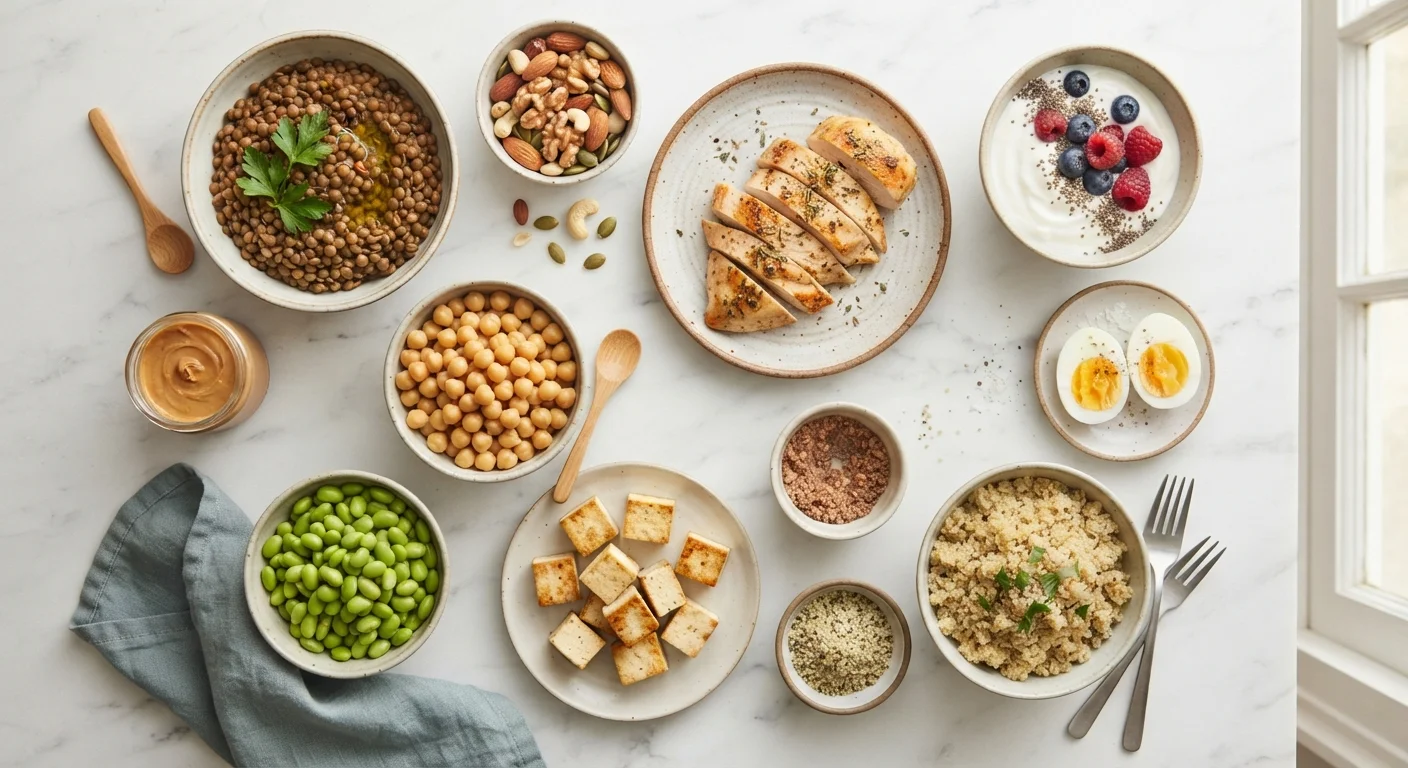
The Building Blocks: Essential vs. Non-Essential Amino Acids
Proteins are long chains of molecules called amino acids. The human body uses approximately 20 amino acids to build and repair tissues, produce enzymes and hormones, and support immune function. Of these, nine are classified as essential amino acids - histidine, isoleucine, leucine, lysine, methionine, phenylalanine, threonine, tryptophan, and valine - because the body cannot synthesize them in sufficient amounts on its own. They must come from food.
The remaining amino acids are either non-essential (the body makes them from other molecules) or conditionally essential (required from food only under certain circumstances, such as illness or intense physiological stress). Protein quality, at its core, is largely a question of how reliably a food delivers all nine essential amino acids in proportions that match what human cells actually need.
Amino Acid Needs Shift With Life Stage
Infants, children, pregnant individuals, older adults, and people recovering from illness or surgery may have different essential amino acid requirements than healthy, sedentary adults. General population guidelines do not automatically apply to these groups. If you fall into one of these categories, working with a registered dietitian or your healthcare provider is especially important for determining appropriate protein intake.
Complete vs. Incomplete Proteins
A protein source is described as complete when it supplies all nine essential amino acids in adequate quantities. Animal-derived foods - including eggs, dairy, poultry, fish, beef, and pork - are generally complete proteins. Among plant foods, soybeans (and products like tofu, tempeh, and edamame) and quinoa are well-established complete protein sources.
Most other plant proteins are considered incomplete because they are notably low in at least one essential amino acid - called a limiting amino acid. Grains tend to be low in lysine; legumes tend to be low in methionine. This is not a flaw that makes plant proteins inadequate - it simply means that variety and strategic pairing across the day fills the gaps. The classic nutritional example is rice and beans, a combination that provides a complementary amino acid profile. Research indicates that as long as varied protein sources are eaten over the course of a day, complementary combining at every individual meal is not strictly necessary for healthy adults.
For a broader look at how plant-centered eating patterns approach nutritional completeness, see our guide to plant-based eating.
Strategic Pairing Makes Plant Proteins Work
You don't need to calculate complementary amino acids at every meal. Eating a wide variety of legumes, whole grains, nuts, and seeds across the day naturally covers your essential amino acid needs. Focus on variety over the course of a day rather than engineering perfect protein combinations at every sitting.
Digestibility: The Often-Overlooked Factor
Even a protein with an excellent amino acid profile can only benefit you to the degree your digestive system can break it down and absorb it. Digestibility - the proportion of ingested protein that is actually absorbed and utilized - varies meaningfully across food sources.
Animal proteins are generally highly digestible, with values often exceeding 90%. Many plant proteins have lower digestibility, partly because plant cell walls, dietary fiber, and naturally occurring compounds called antinutrients (such as phytates and tannins) can interfere with protein-digesting enzymes. Cooking, soaking, fermenting, and sprouting plant foods can reduce antinutrient content and improve digestibility substantially.
Two scientific scoring systems - PDCAAS (Protein Digestibility-Corrected Amino Acid Score) and the more recent DIAAS (Digestible Indispensable Amino Acid Score) - attempt to capture both amino acid composition and digestibility in a single measure. DIAAS is considered the more precise tool because it accounts for digestion at the small intestinal level rather than estimating whole-body digestibility.
~90%+
Digestibility of most animal-based proteins
Research published in nutrition science literature consistently finds animal proteins such as eggs, meat, and dairy are digested and absorbed at rates above 90%, reflecting their high bioavailability.
9
Essential amino acids humans must obtain from food
According to established nutritional biochemistry, the human body cannot synthesize nine amino acids in sufficient quantities, making adequate dietary intake necessary for normal physiological function.
~70-80%
Typical digestibility of many legume proteins
Nutrition research suggests raw or minimally processed legumes have lower digestibility than animal proteins, though cooking and processing can bring values closer to those of animal-based sources.
Practical Guidance for Meeting Protein Needs
Understanding protein quality translates into a few practical dietary habits regardless of whether you follow an omnivorous, vegetarian, or vegan pattern:
- Prioritize variety. No single food needs to be your only protein source. Rotating among legumes, whole grains, nuts, seeds, eggs, dairy, or lean meats ensures a broader amino acid and nutrient profile.
- Include a soy food if plant-based. Edamame, tofu, tempeh, and unsweetened soy milk offer complete, high-digestibility plant protein. They are among the most well-studied plant protein sources in the scientific literature.
- Consider cooking method. Boiling, pressure-cooking, and fermenting legumes improve protein digestibility compared to eating them raw or undercooked.
- Don't fixate on a single metric. High DIAAS scores don't tell the whole story. Whole foods come with fiber, vitamins, minerals, and phytonutrients that a protein supplement or isolate may lack.
Because nutrition research evolves and individual recommendations depend on age, activity, and health history, it helps to understand how to interpret nutrition science critically - see why dietary advice seems to keep changing for context on reading nutrition findings with appropriate skepticism.
This article is for general informational and educational purposes only and is not a substitute for personalized advice from a registered dietitian or qualified healthcare professional. Individual protein needs vary; consult a professional for guidance specific to your health circumstances.
Frequently Asked Questions
A complete protein contains all nine essential amino acids in adequate amounts. Animal foods like eggs, meat, fish, and dairy are classic examples, but plant sources like soy and quinoa also qualify. Most other plant proteins are considered incomplete because they are low in at least one essential amino acid.
Yes. By eating a variety of plant proteins throughout the day - such as legumes, grains, nuts, and seeds - you can cover all essential amino acids even without combining them at every single meal. Soy foods like edamame, tofu, and tempeh are complete plant proteins on their own.
Digestibility describes what fraction of the protein you eat is actually broken down and absorbed by your body. Animal proteins tend to have higher digestibility (often above 90%) than many plant proteins, where fiber and antinutrients can limit absorption. Cooking and processing can improve the digestibility of plant proteins.
The general Recommended Dietary Allowance (RDA) for protein is 0.8 grams per kilogram of body weight per day for healthy adults, though individual needs vary with age, activity level, and health status. A registered dietitian can help determine what's appropriate for your specific situation.
Not necessarily. While animal proteins often score higher on digestibility and completeness metrics, plant proteins come packaged with fiber, phytonutrients, and other compounds associated with good health outcomes. The overall dietary pattern matters more than any single food's protein score.
A limiting amino acid is the essential amino acid present in the lowest quantity in a given food relative to human needs. For example, lysine is a common limiting amino acid in grains, while methionine is often limited in legumes. Pairing grains and legumes together compensates for each source's deficit.
The content on this site is for informational purposes only and is not a substitute for professional advice. Always consult a qualified professional for guidance specific to your situation.