

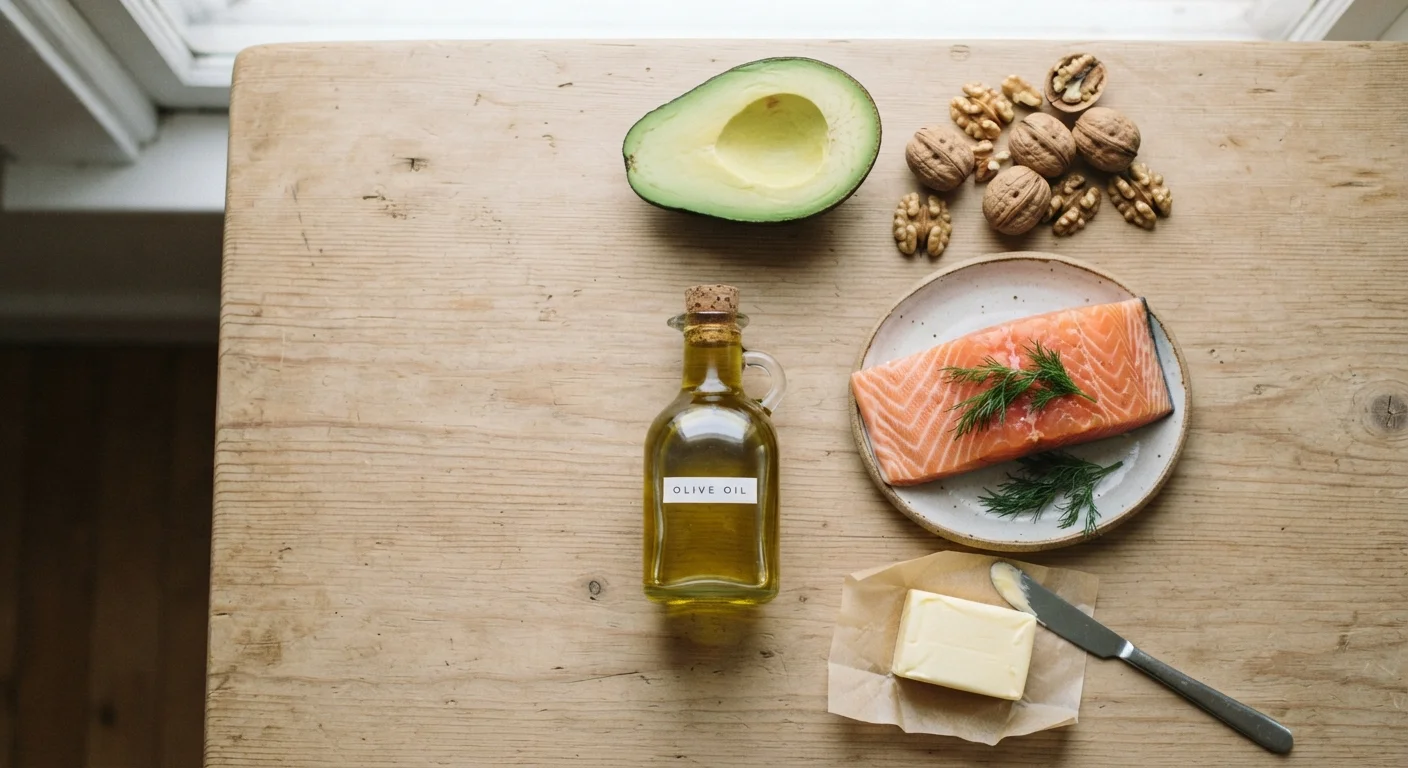
Why Fat Type Matters More Than Fat Amount
For decades, dietary fat was treated as a single villain. Public health messaging urged Americans to eat less fat overall, which led to a flood of low-fat products that often replaced fat with added sugar. The science has since moved on. What the research now consistently shows is that the type of fat you consume carries more significance for cardiovascular and metabolic health than the total quantity alone.
Fat belongs to the macronutrient family alongside carbohydrates and protein. It plays essential roles in absorbing fat-soluble vitamins (A, D, E, and K), supporting cell membrane integrity, regulating hormones, and providing sustained energy. To understand how to make smarter choices, it helps to know what distinguishes each fat category at a basic level. For a broader look at how fat fits alongside other macronutrients, see Macronutrients 101.
| Saturated fat state at room temp | Solid |
| Unsaturated fat state at room temp | Liquid |
| Artificial trans fats in U.S. food supply | Largely banned since 2020 (U.S. Food and Drug Administration) |
| Fat-soluble vitamins requiring dietary fat | A, D, E, and K |
| Primary omega-3 food sources | Fatty fish, flaxseed, walnuts |
| Fat's calorie density | 9 calories per gram (Standard nutrition reference) |
The Three Main Fat Categories Explained
Saturated Fat
Saturated fats have carbon chains fully "saturated" with hydrogen atoms, which makes them solid at room temperature. Common sources include butter, full-fat dairy, red meat, coconut oil, and palm oil. Long-standing dietary guidelines have recommended limiting saturated fat intake based on its association with raised LDL cholesterol - often called "bad" cholesterol - and cardiovascular disease risk. However, nutrition researchers note that the picture is more nuanced: different saturated fatty acids appear to affect LDL differently, and the food matrix they arrive in also matters. Replacing saturated fat with refined carbohydrates, for example, has not shown clear cardiovascular benefit in research.
Unsaturated Fat
Unsaturated fats contain one or more double bonds in their carbon chains, keeping them liquid at room temperature. They split into two subtypes:
- Monounsaturated fats (MUFAs): Found in olive oil, avocados, and many nuts. Research, including evidence from Mediterranean diet studies, associates regular MUFA consumption with favorable cholesterol profiles and reduced cardiovascular risk.
- Polyunsaturated fats (PUFAs): Include omega-3 and omega-6 fatty acids. Omega-3s - found in fatty fish, flaxseed, and walnuts - are associated with anti-inflammatory effects and heart health. Omega-6s, found in many vegetable oils, are also essential but are already abundant in the typical American diet.
Trans Fat
Trans fats come in two forms. Artificial trans fats, created through partial hydrogenation of vegetable oils, were widely used in processed foods for decades. The FDA determined they were no longer GRAS and required their removal from the U.S. food supply, a process largely completed by 2020. Research consistently linked artificial trans fats to raised LDL cholesterol, lowered HDL cholesterol, and increased cardiovascular disease risk - a uniquely harmful profile. Naturally occurring trans fats exist in small amounts in dairy and meat products; their health effects are studied differently and are not considered equivalent to artificial trans fats.
Saturated fat
A type of dietary fat whose carbon chains are fully bonded with hydrogen atoms. It is solid at room temperature and found mainly in animal products and some tropical oils.
Unsaturated fat
A fat containing one or more carbon-carbon double bonds, making it liquid at room temperature. Includes both monounsaturated and polyunsaturated varieties, generally associated with favorable health outcomes.
Trans fat
A fat formed when liquid oils are partially hydrogenated into solid form. Artificial trans fats were associated with serious cardiovascular harm and have been largely removed from the U.S. food supply.
LDL cholesterol
Low-density lipoprotein cholesterol, often called "bad" cholesterol. Elevated LDL is associated with increased risk of plaque buildup in arteries and cardiovascular disease.
HDL cholesterol
High-density lipoprotein cholesterol, often called "good" cholesterol. Higher HDL levels are generally associated with a lower risk of cardiovascular disease.
Omega-3 fatty acids
A class of polyunsaturated fats essential to human health. Found in fatty fish, flaxseed, and walnuts, they are associated with anti-inflammatory effects and heart health support.
How to Apply This at the Grocery Store
Understanding fat categories is only useful if it translates into practical habits. Here are evidence-informed principles most nutrition researchers and dietitians broadly agree on:
- Look for "partially hydrogenated oils" on ingredient lists. This phrase signals artificial trans fats may still appear in trace amounts in some imported or older packaged products. Learn how ingredient lists work with our guide to reading an ingredient list.
- Favor whole-food fat sources. Nuts, seeds, fatty fish, avocados, and olive oil deliver unsaturated fats alongside fiber, vitamins, and other compounds that work together.
- Treat saturated fat with moderation rather than elimination. Major health organizations generally recommend keeping saturated fat to a modest proportion of total calories, but the emphasis should be on what replaces it - unsaturated fats are a better swap than refined starches.
- Be skeptical of sweeping headlines. Nutrition science evolves, and individual studies rarely overturn established consensus on their own. For context on why dietary advice can seem to shift, see why nutrition advice seems to keep changing.
The 'Low-Fat' Label Doesn't Mean Healthier
When fat is removed from processed foods, manufacturers often add sugar, refined starch, or sodium to restore palatability. A low-fat label tells you only about fat content - not overall nutritional quality. Checking the full ingredient list and nutrition panel gives a more complete picture. For common misunderstandings like this one, see nutrition myths the evidence has debunked.
This article is for general informational and educational purposes only and does not constitute medical or dietary advice. Individual nutritional needs vary. Consult a registered dietitian or qualified healthcare professional before making significant changes to your diet, especially if you have a health condition.
The content on this site is for informational purposes only and is not a substitute for professional advice. Always consult a qualified professional for guidance specific to your situation.