

Start here
What Are Macronutrients?
Next
Carbohydrates: Your Body's Preferred Fuel
Then
Protein: Building, Repairing, and Regulating
Continue
Fat: Essential, Not the Enemy
Bring it together
Why Balance Matters More Than Elimination
What Are Macronutrients?
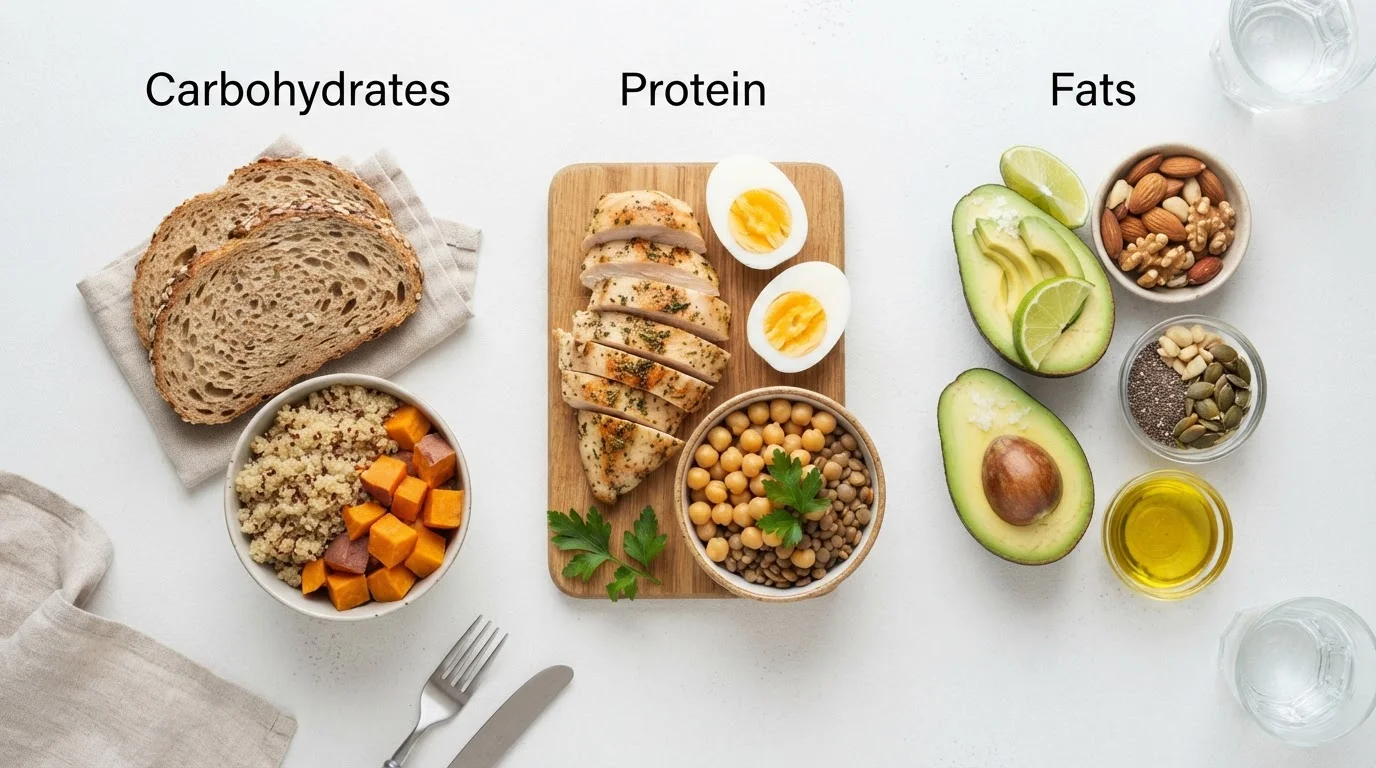
Every food you eat is built from three foundational nutrients: carbohydrates, proteins, and fats. These are called macronutrients - "macro" meaning large - because your body needs them in relatively substantial amounts compared to vitamins and minerals (the micronutrients). Each macronutrient provides calories, which the body uses as energy, but calories are really just the beginning of what each one does.
Understanding macronutrients gives you a practical lens for reading food, evaluating dietary advice, and making everyday choices that align with your health goals. For context on the nutrients your body needs in smaller quantities, see our reference guide to vitamins and minerals.
Macronutrient
A nutrient your body needs in large amounts - carbohydrates, protein, and fat - each providing energy and performing distinct biological functions.
Glucose
The simple sugar that carbohydrates break down into; it is the body's primary fuel source for most cells, especially the brain.
Amino acids
The building blocks of protein. Nine are 'essential,' meaning the body can't make them and must get them from food.
Dietary fiber
A type of carbohydrate that the body cannot fully digest; it supports gut health, blood sugar regulation, and feelings of fullness.
Unsaturated fat
A type of dietary fat found in plants and fish that is generally associated with heart-health benefits when consumed as part of a balanced diet.
This article provides general nutrition information and education. It is not a substitute for personalized advice from a registered dietitian or qualified healthcare professional.
Carbohydrates: Your Body's Preferred Fuel
Carbohydrates are the body's primary and most readily used energy source. When you eat carbs - whether from bread, fruit, beans, or milk - they're broken down into glucose, which circulates in the bloodstream and fuels your brain, muscles, and organs. The brain alone relies almost exclusively on glucose for its daily energy needs.
Not all carbohydrates behave identically. Simple carbohydrates (sugars) digest quickly, while complex carbohydrates (starches and fiber) digest more slowly, largely because fiber resists breakdown. Fiber plays an outsized role in gut health, cholesterol regulation, and sustained satiety - making whole grains, vegetables, legumes, and fruit nutritionally richer choices than refined grain products or sugary foods.
The persistent idea that "carbs make you fat" doesn't hold up under scrutiny. Weight change depends on overall energy balance and diet quality, not any single nutrient. Our companion piece on nutrition myths the evidence has debunked examines this claim and others in detail.
Protein: Building, Repairing, and Regulating
Protein is the structural backbone of nearly every tissue in your body. Muscles, skin, hair, enzymes, and many hormones are all made from proteins - long chains of smaller units called amino acids. Of the 20 amino acids the body uses, nine are classified as essential, meaning your body cannot make them and must obtain them through food.
Beyond structure, protein plays critical roles in immune function, oxygen transport (hemoglobin is a protein), and cellular signaling. It is also notably filling - protein tends to promote satiety more effectively than equal calories from carbs or fat, which may be relevant for appetite management.
Mix Your Protein Sources for Best Coverage
If you primarily eat plant-based proteins, combining different sources - such as rice and beans, or hummus and whole-grain pita - throughout the day helps ensure you're covering all nine essential amino acids. You don't need to combine them in a single meal; meeting your needs over the course of the day is what counts.
Animal-based foods - meat, poultry, fish, eggs, and dairy - typically supply all nine essential amino acids in one package. Plant sources vary in their amino acid profiles, so variety is key for those following plant-based diets. For a deeper look, explore our article on protein quality and amino acid profiles.
Fat: Essential, Not the Enemy
Dietary fat has spent decades unfairly cast as the villain of nutrition. In reality, fat is essential for absorbing fat-soluble vitamins (A, D, E, and K), building cell membranes, producing certain hormones, protecting organs, and supporting brain health - the brain is roughly 60% fat by dry weight.
Fat also provides more than twice the calories per gram of carbohydrates or protein (9 calories per gram versus 4), which makes it a concentrated energy source - useful, but worth being mindful of in terms of portion size.
The type of fat matters considerably. Unsaturated fats, found in foods like avocados, nuts, seeds, and oily fish, are broadly associated with cardiovascular benefits in research. Artificially produced trans fats, meanwhile, are widely regarded by health authorities as harmful. For a thorough explanation of fat types and the evidence behind them, see our plain-language guide to saturated, unsaturated, and trans fats.
Dietary Guidelines for Americans
The federal government's evidence-based nutritional guidance, updated periodically, covering recommended intakes for all macronutrients across different life stages.
MyPlate (USDA)
An interactive government tool that helps you visualize balanced meal proportions across food groups, making macronutrient balance more concrete and practical.
Academy of Nutrition and Dietetics - Find a Dietitian
A professional directory to locate a registered dietitian who can provide personalized, evidence-based guidance tailored to your individual health needs and goals.
Why Balance Matters More Than Elimination
Popular diets frequently advocate cutting one macronutrient entirely - zero-fat, zero-carb, or ultra-low-protein approaches. The appeal is understandable: simple rules feel manageable. But nutrition science consistently shows that each macronutrient fills roles the others cannot fully replace.
Eliminating carbohydrates, for instance, removes a key source of dietary fiber and the main fuel for high-intensity exercise. Cutting fat too aggressively impairs vitamin absorption and hormonal balance. Inadequate protein leads to muscle loss over time, particularly relevant as people age.
Drastic Macronutrient Cuts Can Backfire
Severely restricting any macronutrient without professional guidance can lead to nutrient deficiencies, fatigue, muscle loss, and difficulty sustaining the diet long-term. Before making major changes to your eating pattern - especially if you have a chronic health condition - consult a registered dietitian or your primary care provider.
A more durable approach focuses on the quality within each macronutrient group - choosing whole grains over refined ones, lean or plant-based proteins, and unsaturated fats - rather than wholesale elimination. Because dietary needs vary by age, activity level, health status, and personal goals, working with a registered dietitian offers the clearest path to an eating pattern that fits your life. If you're curious about why nutrition recommendations seem to shift so often, our article on how nutrition science works and why advice changes is a helpful next read.
Frequently Asked Questions
Not necessarily. Many people eat a well-balanced diet without tracking exact gram amounts. Focusing on whole, minimally processed foods across all three macronutrient groups is a practical starting point. Tracking may be useful for specific athletic or medical goals, but it isn't required for general wellness.
Low-carbohydrate diets can produce weight loss for some people, but they're not inherently superior to other balanced approaches for long-term results. Research generally shows that adherence - sticking with an eating pattern - matters more than the specific macronutrient ratio. Consult a healthcare professional before making major dietary changes.
General dietary guidance suggests roughly 0.8 grams of protein per kilogram of body weight per day for sedentary adults, though needs rise with physical activity, age, and health status. These are population-level estimates, not personal prescriptions - a registered dietitian can offer individualized guidance.
No. Dietary fats vary significantly in their effects on cardiovascular health. Unsaturated fats found in foods like olive oil, nuts, and fish are generally associated with heart-health benefits in research, while artificially produced trans fats are widely considered harmful. See our <a href="/health-wellness/nutrition-diet/saturated-fat-unsaturated-fat-and-trans-fat-a-plain-language-guide">plain-language guide to fat types</a> for a full breakdown.
Yes, though it takes some planning. Plant proteins are often lower in one or more essential amino acids, so eating a variety of sources - beans, lentils, tofu, whole grains, nuts - throughout the day helps cover your needs. Our related article on <a href="/health-wellness/nutrition-diet/protein-quality-why-source-and-amino-acid-profile-both-matter">protein quality and amino acid profiles</a> explores this in depth.
Simple carbohydrates - like those in table sugar or white bread - are digested quickly, causing faster rises in blood glucose. Complex carbohydrates - found in whole grains, legumes, and vegetables - digest more slowly due to their fiber content, supporting steadier energy levels. Prioritizing complex carbs is generally recommended by nutrition experts.
The content on this site is for informational purposes only and is not a substitute for professional advice. Always consult a qualified professional for guidance specific to your situation.