

Start here
How Your Home's Air System Works
Next
HVAC Filters: What They Do and When to Change Them
Then
Furnace Basics and Seasonal Readiness
Deeper dive
Ducts: The Hidden Backbone of Your System
When you're ready
When to Call a Professional
How Your Home's Air System Works
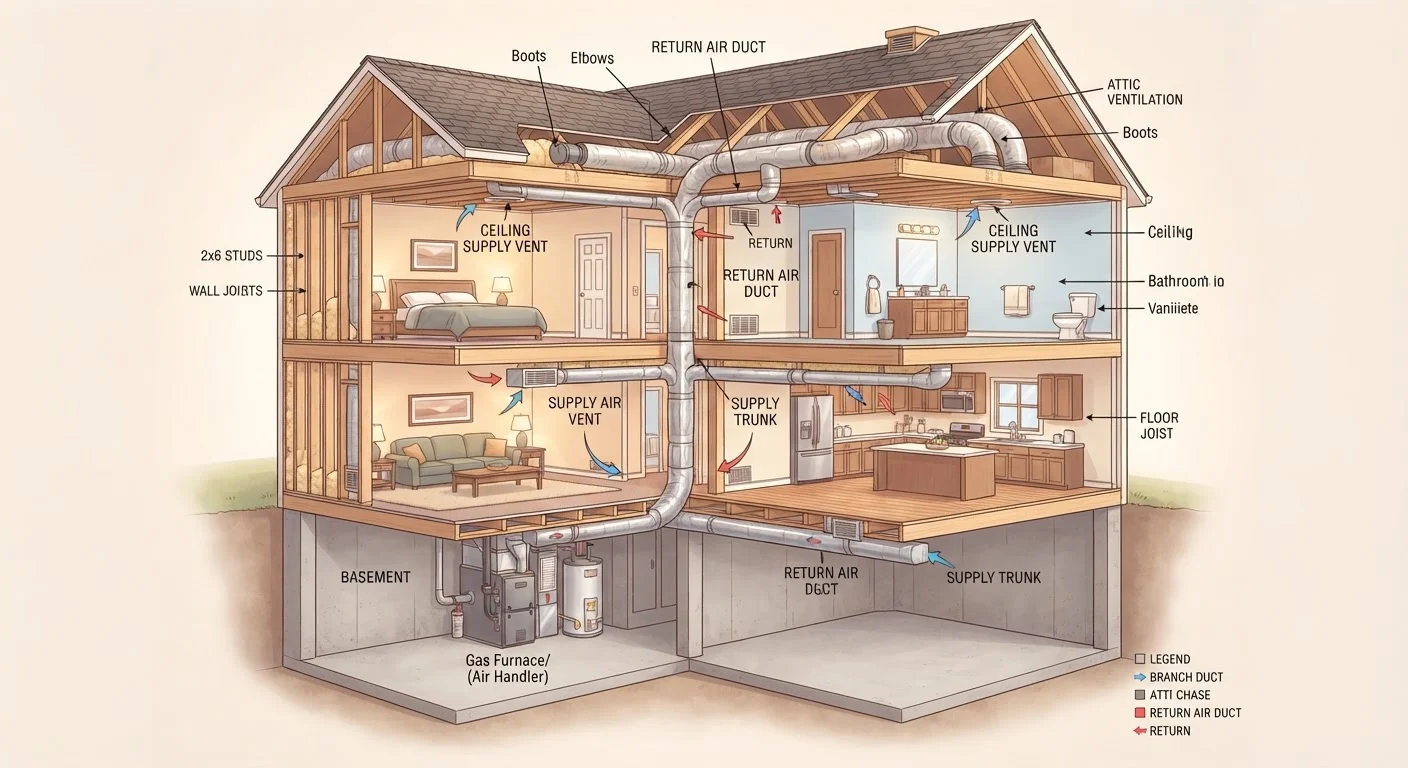
Most homes use a forced-air HVAC system - a single network that handles both heating and cooling. Understanding its three main parts helps you maintain it effectively.
- The air handler or furnace conditions the air - heating it in winter, or working alongside an air conditioner to cool it in summer.
- The ductwork distributes conditioned air through the house via supply vents and returns it through return-air grilles.
- The filter sits at the return-air intake, trapping dust and particles before air re-enters the system.
Air constantly cycles through this loop: it's drawn in, filtered, conditioned, and pushed back out through supply registers. When any part of this loop is compromised - a clogged filter, a leaky duct, an aging furnace - the whole system works harder and less efficiently.
This guide is part of a broader look at home upkeep. See the first-time homeowner's guide for a wider introduction to your home's systems.
HVAC
Stands for Heating, Ventilation, and Air Conditioning - the combined system that controls your home's temperature, humidity, and air circulation.
MERV rating
A number (1-16 for residential use) that indicates how effectively an air filter captures airborne particles. Higher numbers mean finer filtration.
Heat exchanger
A metal component inside a gas furnace that transfers heat to the air without mixing combustion gases into your living space. Cracks are a serious safety hazard.
Return-air grille
The large vent (usually on a wall or ceiling) that draws room air back into the HVAC system to be filtered and reconditioned.
Mastic sealant
A paste-like compound used to permanently seal joints and gaps in ductwork. More durable than standard adhesive duct tape for long-term air sealing.
Short-cycling
When a furnace or air conditioner turns on and off more rapidly than normal, often signaling a mechanical issue, improper sizing, or airflow restriction.
HVAC Filters: What They Do and When to Change Them
The air filter is your system's first line of defense against dust, pet dander, pollen, and other airborne particles. A clean filter keeps your equipment running efficiently and protects indoor air quality. A clogged filter does the opposite - it forces the blower motor to work harder, increasing wear and energy use.
Choosing the Right Filter
Filters are rated by MERV (Minimum Efficiency Reporting Value). For most households, a MERV 8-11 filter strikes the right balance between filtration effectiveness and adequate airflow. Avoid going above MERV 13 unless your system is specifically designed for it - overly dense filters can restrict airflow and damage equipment.
Filter Change Schedule
- 1-inch filters: every 30-90 days
- 4-5-inch media filters: every 6-12 months
- Homes with pets or allergy sufferers: lean toward the shorter end of those ranges
Easy Reminder: Label Your Filter
Write the installation date directly on the filter's cardboard frame with a marker when you install it. At a glance, you'll always know how old it is. Buying a multi-pack at once makes it easy to keep a spare on hand so a replacement is never an errand away.
Mark your filter change date on a piece of tape stuck to the furnace door - it takes seconds and removes all guesswork. Filter changes are also a natural checkpoint for other seasonal tasks covered in the Annual Maintenance Calendar.
Furnace Basics and Seasonal Readiness
Your furnace is the heart of your heating system. Whether it burns natural gas, propane, or uses electric resistance, it needs annual attention to run safely and efficiently.
What a Professional Tune-Up Covers
A licensed HVAC technician performing a pre-season inspection will typically clean the burners, check the heat exchanger for cracks (a critical safety step - a cracked heat exchanger can allow combustion gases into living spaces), test safety controls, verify gas pressure, and lubricate moving parts. This is not a DIY task - always hire a licensed professional for furnace servicing.
Gas Furnaces Require Professional Servicing
Never attempt to inspect or clean a gas furnace's burners, heat exchanger, or gas connections yourself. A cracked heat exchanger can allow carbon monoxide - a colorless, odorless gas - to enter your living space undetected. Only a licensed HVAC technician has the tools and training to safely evaluate these components.
What You Can Do Between Service Visits
- Keep the area around the furnace clear of stored items or flammable materials.
- Listen for unusual sounds: banging, squealing, or rapid on-off cycling warrant a service call.
- Check that your carbon monoxide alarm is functioning. For placement and testing guidance, see our article on smoke detectors and CO alarms.
Schedule your furnace tune-up in late summer or early fall - before heating demand peaks and HVAC technicians' calendars fill up.
Ducts: The Hidden Backbone of Your System
Ductwork is the network of metal, fiberglass, or flexible conduit that carries conditioned air through your home. Because most of it is hidden behind drywall or in unconditioned spaces like attics and crawlspaces, it's easy to overlook - but duct condition directly affects both comfort and energy efficiency.
Common Duct Problems
- Air leaks
- Gaps at joints or connections allow conditioned air to escape into unconditioned spaces before it reaches living areas, wasting energy and reducing comfort.
- Poor insulation
- Ducts running through hot attics or cold crawlspaces lose energy rapidly if not properly insulated.
- Debris buildup
- Dust and debris accumulate over years. The EPA advises professional cleaning only when mold, vermin, or significant blockages are confirmed.
Signs of Duct Issues
- Some rooms are consistently harder to heat or cool than others
- Energy bills rising without a clear cause
- Excessive dust settling on surfaces near vents
Accessible duct sections - often visible in basements and utility rooms - can be inspected visually. Look for disconnected sections, visible gaps, or damaged insulation. Sealing accessible joints with mastic sealant (not standard duct tape, which degrades quickly) is a manageable DIY fix; anything in enclosed spaces should be handled by a professional.
When to Call a Professional
Many HVAC maintenance tasks - filter changes, visual inspections, keeping vents clear of furniture and rugs - are well within homeowner ability. Others require licensed expertise, specialized tools, or carry safety risks that make professional help essential.
Always Hire a Licensed HVAC Technician For:
- Annual furnace or boiler inspections and tune-ups
- Any work involving gas lines, heat exchangers, or electrical components
- Refrigerant handling (legally required to be performed by certified technicians)
- Duct pressure testing and professional sealing in enclosed spaces
- Installing or replacing equipment
When hiring, look for technicians with NATE certification (North American Technician Excellence) or equivalent credentials in your state, and verify licensing as required by local regulations. Permits may be required for equipment replacement - verify with your local building department before any major work begins.
Building HVAC servicing into a regular home maintenance rhythm is the most effective way to catch problems early. The seasonal maintenance calendar can help you plan these tasks alongside other annual upkeep. Staying proactive about your air system is one of the most cost-effective habits a homeowner can develop.
Frequently Asked Questions
Most manufacturers and HVAC professionals recommend changing standard 1-inch filters every 30-90 days. Homes with pets, allergies, or heavy dust may need more frequent changes. Thicker filters (4-5 inches) can last up to 6-12 months. Always check the manufacturer's guidance for your specific filter.
MERV stands for Minimum Efficiency Reporting Value - it measures how effectively a filter captures airborne particles. Higher numbers trap smaller particles, but very high ratings (above 13) can restrict airflow in systems not designed for them. A MERV 8-11 filter suits most residential systems well.
Common signs include rooms that are noticeably harder to heat or cool than others, higher-than-expected energy bills, and visible gaps or disconnected sections in accessible ductwork. A licensed HVAC technician can perform a duct pressure test for a definitive assessment.
Yes - annual professional inspection is strongly recommended. Technicians check heat exchangers, gas connections, burners, and safety controls that require licensed expertise. This is also important for maintaining manufacturer warranties and home insurance requirements in many cases.
Homeowners can vacuum accessible registers and wipe down grilles, but thorough duct cleaning requires specialized equipment and a trained contractor. The EPA recommends professional duct cleaning only when there is confirmed mold growth, vermin infestation, or substantial debris buildup.
Watch for short-cycling (turning on and off rapidly), unusual banging or rattling noises, a yellow or flickering pilot flame instead of blue, or heating that is uneven across the home. Any of these warrants a call to a licensed HVAC technician.
The content on this site is for informational purposes only and is not a substitute for professional advice. Always consult a qualified professional for guidance specific to your situation.