

The Core Idea: Owning a Slice of the Market
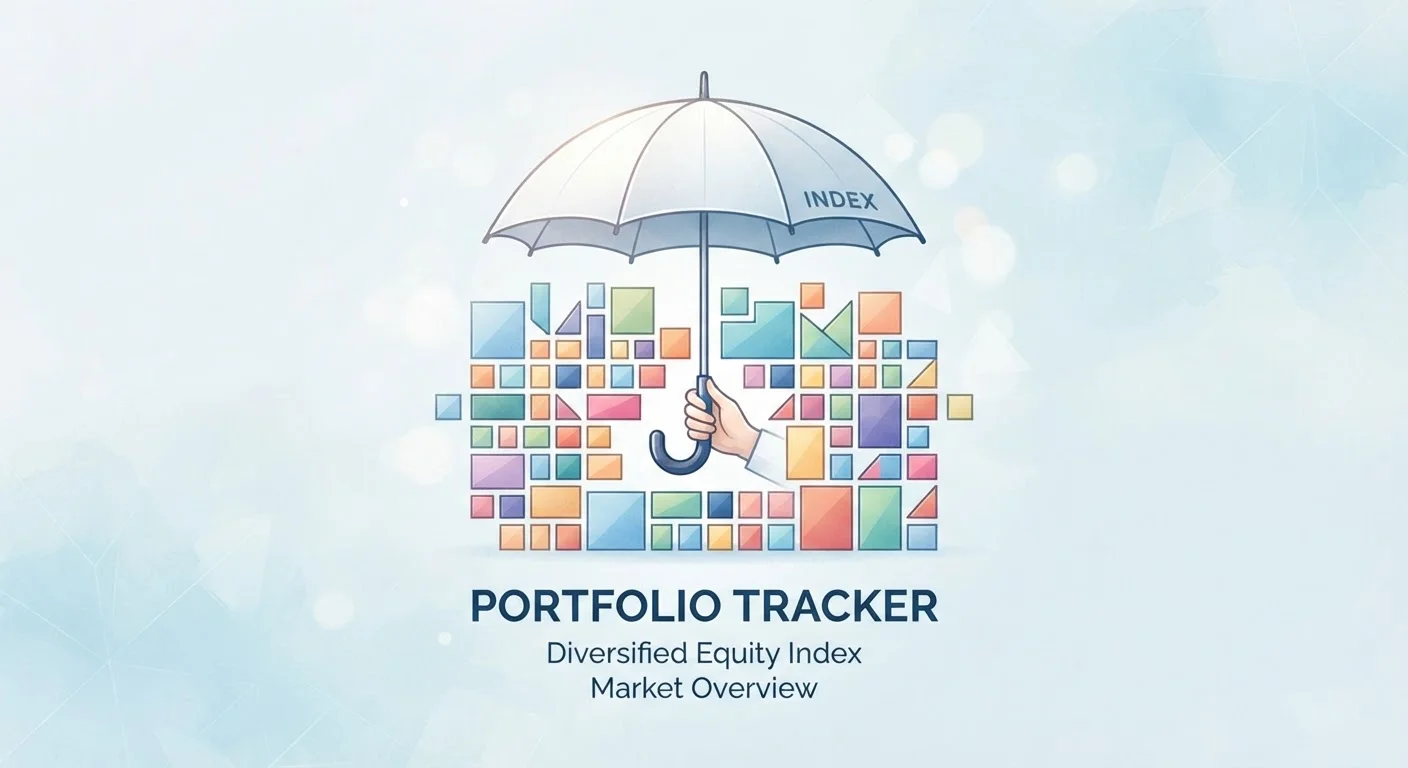
When most people think of investing in stocks, they imagine someone carefully researching and selecting individual companies. An index fund works differently. Rather than trying to identify which stocks will outperform, an index fund simply owns all — or a representative sample — of the stocks that make up a specific market index.
The S&P 500 is the most frequently cited example: it represents 500 of the largest publicly traded U.S. companies across a wide range of industries. An S&P 500 index fund holds those same companies in roughly the same proportions. When the overall index rises, the fund rises with it. When the index falls, the fund falls too.
This approach is called passive investing, because the fund isn't making judgment calls about individual stocks — it's following a predetermined list. To understand why this matters in the broader context of building wealth, it helps to first distinguish between saving and investing. See the difference between saving and investing for a clear breakdown of how each fits into your financial picture.
Why the Fee Structure Changes Everything
One of the most significant advantages of index funds is cost. Because no team of analysts is actively researching and trading securities, the administrative costs are much lower. That savings is passed to investors in the form of a lower expense ratio — the annual fee charged as a percentage of your investment.
~0.05%
Typical index fund expense ratio
Many broad market index funds charge well under 0.10% annually, compared to actively managed funds that often charge 0.50%–1.0% or more.
$7+ trillion
Assets in U.S. index funds
According to the Investment Company Institute, U.S. index funds held trillions in assets as passive investing has grown substantially over the past two decades.
500+
Companies in an S&P 500 index fund
A single S&P 500 index fund provides ownership exposure to approximately 500 of the largest publicly traded U.S. companies across many industries.
Consider what that difference means over time. On a $50,000 investment held for 30 years, the gap between a 0.05% and a 1.0% expense ratio can translate into tens of thousands of dollars in foregone returns — money that would otherwise have compounded in your account instead of going to the fund company.
Lower fees are not a minor detail. They are one of the primary reasons financial educators, researchers, and consumer advocates consistently highlight index funds in discussions about long-term wealth-building.
Built-In Diversification
Owning a single company's stock means your investment rises or falls entirely with that company's fortunes. An index fund, by contrast, spreads your money across dozens, hundreds, or even thousands of companies at once. This built-in breadth is a form of diversification — a foundational risk-management principle in investing.
If one company in an index stumbles, the impact on the overall fund is limited because it represents only a small fraction of the total holdings. This doesn't eliminate risk — broad markets can and do decline — but it reduces the danger of a single bad outcome derailing your portfolio. For a deeper look at how this principle works, see our explainer on diversification as an investing principle.
It's worth noting that diversification within one country's market is not the same as global diversification. Some investors use a combination of domestic and international index funds to broaden exposure further — though any investment decision should reflect individual circumstances and, ideally, guidance from a qualified financial adviser.
What Index Funds Don't Do
Index funds are widely discussed, but they are not a guaranteed path to profit and they are not appropriate for every situation. A few important limitations to understand:
- They track the market, not beat it. By design, an index fund will never outperform its benchmark — it aims to match it, minus fees.
- They decline in bear markets. When markets fall broadly, index funds fall with them. Investors who need their money in the short term may face losses if they must sell during a downturn.
- They are not substitutes for an emergency fund. Money you might need within the next few years generally shouldn't be in market-linked investments. See emergency fund basics for guidance on that separate financial layer.
Check the Expense Ratio Before You Invest
When evaluating any fund, look up its expense ratio in the fund's prospectus or on the fund company's website. Even a difference of half a percentage point can significantly reduce your long-term returns due to compounding. Lower is generally better, all else being equal — but fees are just one factor to consider alongside your goals and time horizon.
Many people also hold misconceptions about who index funds are for or how complicated they are to access. Our article on common myths about investing addresses several of these directly.
This article is for general informational and educational purposes only. It does not constitute personalized financial, investment, tax, or legal advice. Please consult a qualified, licensed financial professional before making any investment decisions.
Frequently Asked Questions
An index fund grows in value when the securities it tracks rise in price. Many index funds also pass along dividend payments made by the companies they hold. Returns are not guaranteed and depend entirely on how the underlying index performs over time.
No investment is completely safe. Index funds can and do lose value during market downturns. However, because they are broadly diversified across many securities, they tend to carry less risk than owning a small number of individual stocks. Past market performance does not guarantee future results.
An expense ratio is the annual fee a fund charges, expressed as a percentage of your invested assets. Index funds typically have very low expense ratios — often below 0.10% — because they are passively managed. Even small fee differences compound significantly over decades of investing.
Many employer-sponsored 401(k) plans include index fund options, often among the lowest-cost choices available. Check your plan's fund menu and look for funds with names referencing a market index alongside their expense ratios.
An ETF (exchange-traded fund) is a structure, not a strategy. Many ETFs track indexes, making them functionally similar to index mutual funds. The main practical difference is that ETFs trade on stock exchanges throughout the day, while index mutual funds are bought and sold at a price set once per trading day.
The content on this site is for informational purposes only and is not a substitute for professional advice. Always consult a qualified professional for guidance specific to your situation.