

What Is Body Condition Scoring and Why Does It Matter?
Body weight alone tells only part of the story. A 12-pound cat may be perfectly healthy or significantly overweight depending on their frame size and muscle mass. That's why veterinarians use a standardized tool called the Body Condition Score (BCS) — a 1–9 scale (or sometimes 1–5) that combines visual observation with hands-on feel to give a fuller picture of a pet's fat and muscle distribution.
A score of 4–5 out of 9 is considered ideal for most dogs and cats. Scores below 3 suggest the animal is underweight; scores of 7 or above indicate excess body fat. The system was developed and is widely used in veterinary practice because it accounts for the natural variation between breeds and body types.
Learning the basics of BCS empowers you to monitor your pet between annual wellness exams. Weight can shift gradually — a few ounces per month — making it easy to miss until it becomes a real health concern. For a broader look at how weight affects your pet's long-term health, see what the research says about pet obesity.
What you will need
How to Assess Your Pet's Body Condition at Home
The following steps apply primarily to dogs and cats. For rabbits, birds, or other small animals, body condition assessment works on similar principles but has species-specific details — consult your vet or refer to our species-by-species wellness overview for guidance.
Run your hands along the ribcage
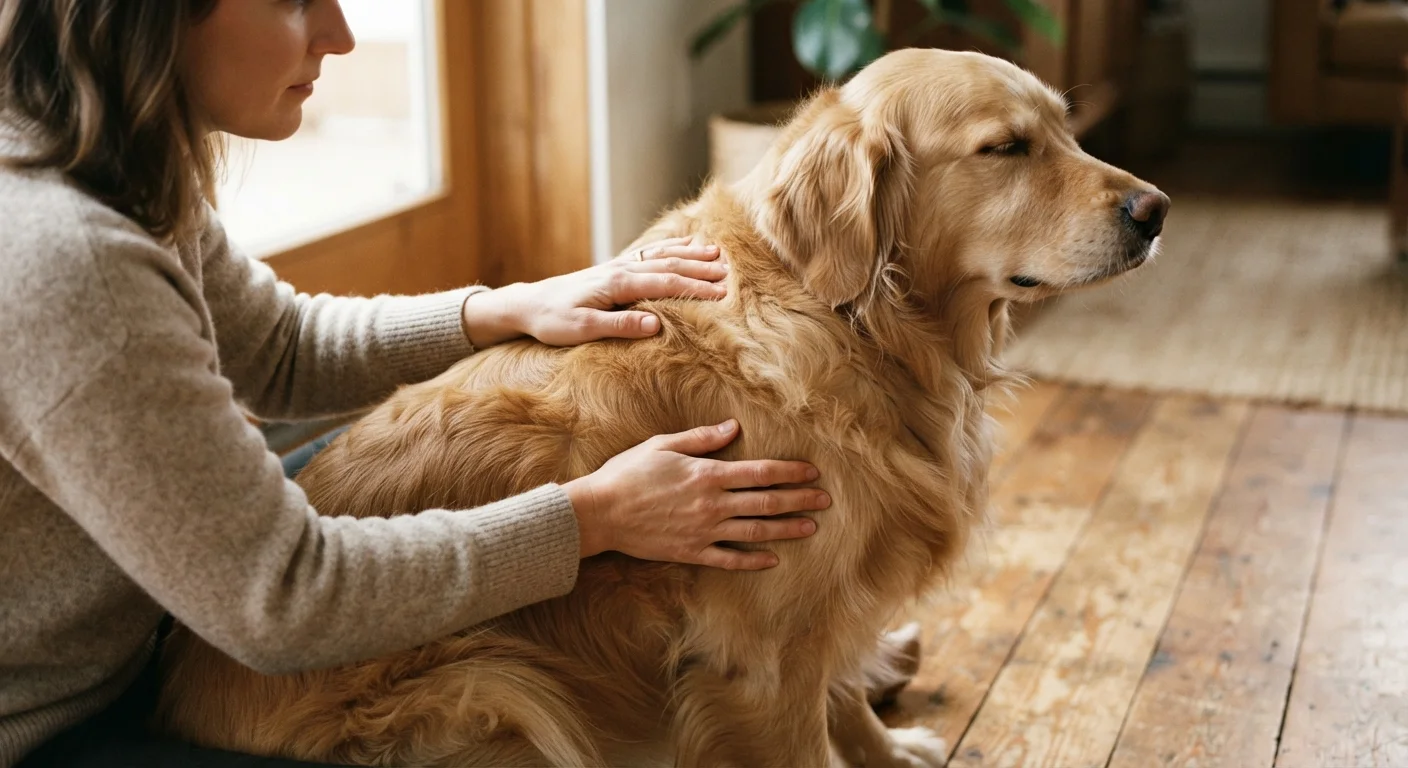
Place both hands flat on your pet's sides, thumbs along the spine, fingers spread across the rib cage. Apply light pressure and slide your hands forward and back. You should be able to feel individual ribs with minimal pressure — like running your fingers over the back of your hand. If you have to press firmly to find ribs, excess fat is present. If ribs jut out visibly or feel sharp with no padding, the animal may be underweight.
Check for a visible waist when viewed from above
Stand directly above your pet while they are standing on all fours. Look down at their back. A healthy dog or cat will show a gentle inward curve — a defined waist — between the ribs and hips. A pet with excess weight will appear uniformly wide or barrel-shaped with no waist definition. A very underweight pet may show sharp hip bones and an extremely exaggerated tuck.
Look for an abdominal tuck from the side
Crouch down to your pet's eye level and view them from the side. The abdomen (belly) should tuck upward slightly behind the rib cage rather than hanging level with or below it. This upward tuck indicates a healthy muscle-to-fat ratio. A pendulous or rounded belly that drops below the rib line is a common sign of excess weight, particularly in cats.
Assess the base of the tail and hip bones
Gently run your hand down your pet's spine toward the base of the tail and over the hip area. In a well-conditioned animal, the spine and hips should be smooth and felt with light pressure but not prominently visible. Protruding, angular hip bones or a visible spine with no fat coverage suggest the animal is underweight. A thick, firm fat deposit over the hips and tail base may indicate overweight status.
Record your findings and track over time
Note what you observed: rib feel (hard to find / easy to feel / visible), waist definition (present / absent), abdominal tuck (present / absent), and any bony prominence. Use this as a simple baseline and repeat the check monthly. Gradual changes — even small ones — are easier to catch when you have a written record to compare against.
Make the Check Part of a Regular Routine
Pairing your body condition check with another regular activity — like a weekly brushing session — helps it become a habit rather than a chore. Pets who are used to being handled are also easier to examine, and gentle, consistent touch strengthens your bond with them.
This article is for general informational purposes only and is not a substitute for veterinary advice. Always consult your veterinarian about your individual pet's weight and nutrition needs.
When to Act on What You Find
If your at-home assessment suggests your pet may be underweight or overweight, schedule a veterinary appointment rather than making major changes to their diet on your own. Your vet can confirm the BCS, rule out underlying medical causes (such as thyroid issues or fluid retention), and recommend a tailored feeding plan.
In the meantime, look at what's in your pet's bowl. Understanding portion guidance, calorie density, and ingredient quality can help you make more informed choices — our guide on reading pet food labels breaks this down clearly. Also note that a pet's coat condition often changes alongside weight shifts; your pet's coat can signal health changes worth paying attention to.
For ongoing wellness information across all life stages, the Pet Health & Wellness hub is a helpful starting point.
Don't Restrict Food Without Veterinary Guidance
Sudden calorie restriction — especially in cats — can cause serious health complications including hepatic lipidosis (fatty liver disease). If you believe your pet needs to lose weight, work with your veterinarian to create a gradual, supervised plan rather than reducing portions on your own.
The content on this site is for informational purposes only and is not a substitute for professional advice. Always consult a qualified professional for guidance specific to your situation.