

Why Sequence Is Everything in Skincare
Most people focus on what they put on their skin — but the order those products go on matters just as much. Skincare layering follows a simple principle: products should move from thinnest to thickest consistency, allowing lighter, water-based formulas to penetrate before heavier ones seal them in. When that logic gets flipped, products can't absorb properly, actives get diluted, and irritation becomes far more likely.
If you've ever wondered why your expensive serum doesn't seem to do anything, or why your skin feels oddly congested despite a seemingly solid routine, sequencing is often the first place to look. The good news? It's one of the easiest things to fix. Whether you're just getting started or refining an existing routine, understanding these common missteps can make a real difference. For anyone building from the ground up, Building a Skincare Routine From Scratch is a great foundation before diving into layering specifics.
Applying moisturizer before a serum.
Why it happens: Moisturizers feel like the logical 'base layer,' especially when skin is dry. Many people reach for them first instinctively.
Putting SPF on before moisturizer in the morning.
Why it happens: People often think of sunscreen as just another moisturizing step, so they slot it in wherever feels natural rather than treating it as the final layer.
Applying oil-based products before water-based serums.
Why it happens: Face oils feel luxurious and lightweight, so it's easy to assume they go on early. In reality, oils form an occlusive seal over whatever is beneath them.
Layering multiple actives on top of each other without considering pH.
Why it happens: When you find ingredients you love — vitamin C, retinol, AHAs — it's tempting to stack them all in one go for maximum results.
Skipping wait time and layering products immediately one after another.
Why it happens: Morning routines are rushed, and pausing between steps feels unnecessary when products seem to absorb instantly.
How to Build a Sequence That Actually Works
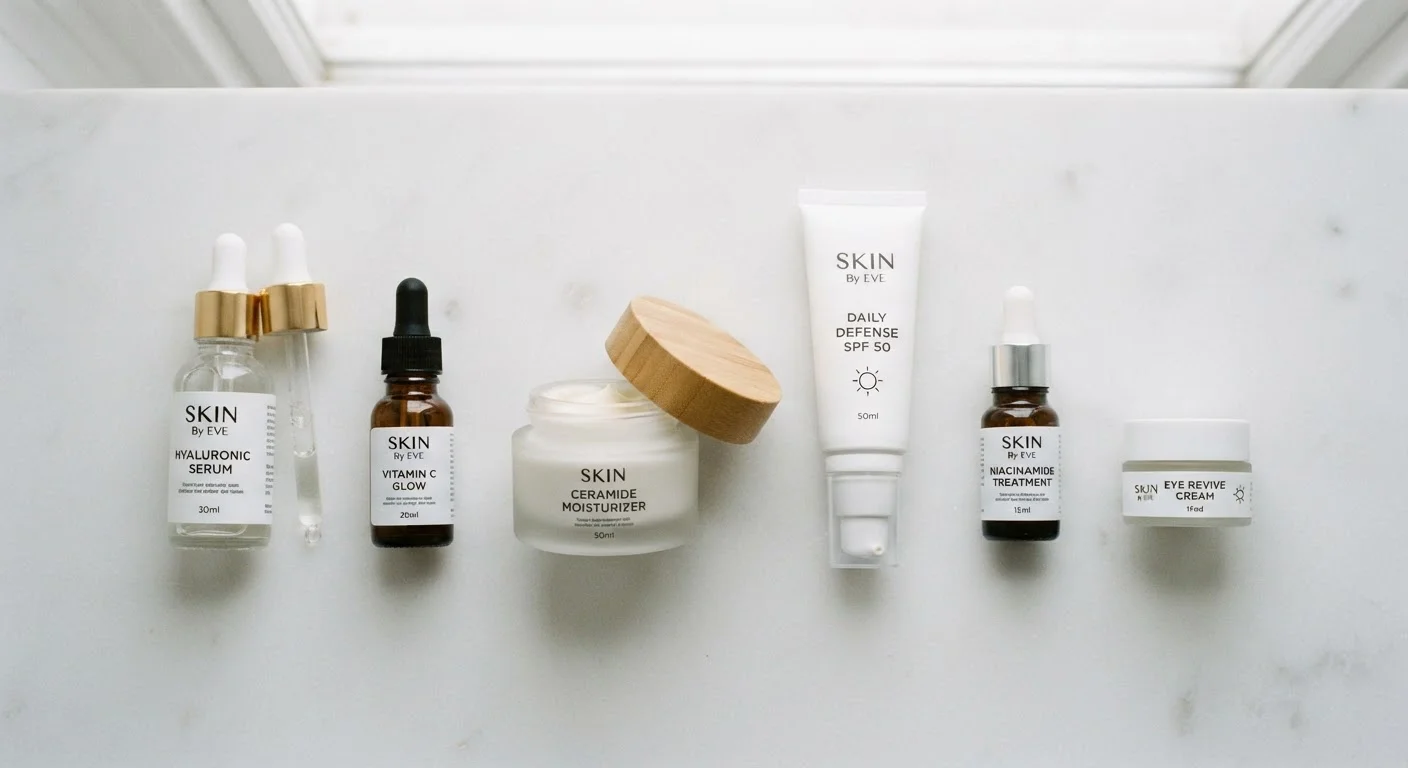
Once you understand what goes wrong, a reliable layering framework clicks into place pretty naturally. Cleanser always comes first to remove debris and prep skin to absorb what follows. Toners and essences (thin, watery) come next. Then serums — which carry your highest-concentration actives — followed by eye cream if you use one, then moisturizer, and finally, in the morning, SPF on top of everything.
60 sec
Recommended wait time between active layers
Dermatologists commonly recommend at least 30–60 seconds between steps to allow product absorption and reduce pilling or irritation.
55%+
SPF efficacy lost when products applied on top
Research published in dermatology literature has shown that applying products over sunscreen can significantly reduce its measured UV protection factor.
Timing matters too. Waiting 30–60 seconds between layers — especially after actives like vitamin C or exfoliating acids — gives each product a moment to settle before the next one is applied. It's a small habit that noticeably reduces pilling and irritation. And if you're combining multiple actives, it's worth checking which ingredients work best together versus which need to be separated into morning and evening routines. Our guide on ingredients that don't play well together explains why certain pairings can cancel each other out or cause sensitivity.
Streamlining your layering also benefits your overall morning rhythm. If a multi-step routine feels like too much before 8 a.m., this practical grooming sequence can help you cut time without cutting corners.
This article is for general informational and educational purposes only. If you experience persistent skin irritation, breakouts, or reactions, consult a qualified dermatologist or skincare professional for personalized guidance.
The content on this site is for informational purposes only and is not a substitute for professional advice. Always consult a qualified professional for guidance specific to your situation.