

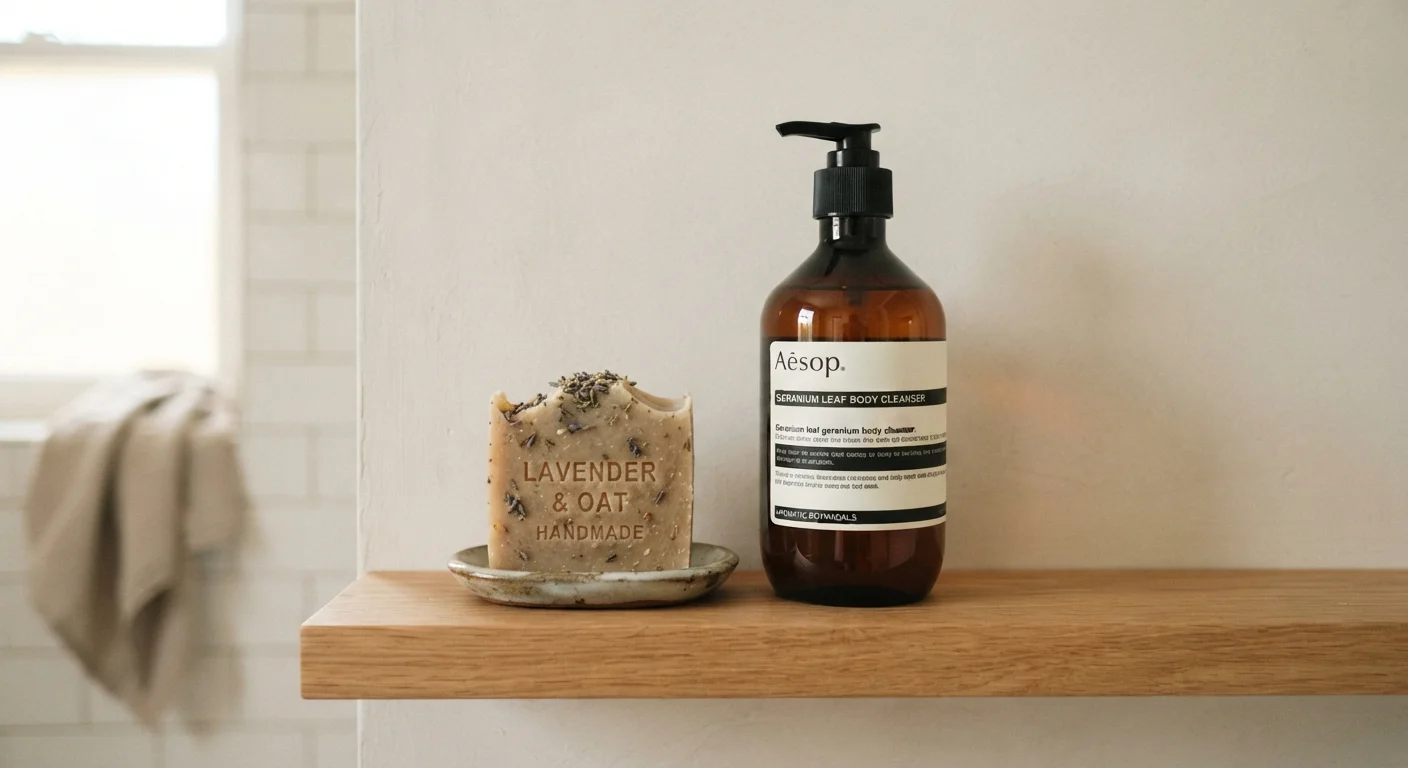
Option A
Bar Soap
The classic, no-fuss cleanser with a long track record.
Best for: Those who prefer minimal packaging, a firm lather, and a straightforward cleansing routine.
Option B
Body Wash
The modern, customizable liquid option with added skin benefits.
Best for: People who want a moisturizing, fragrance-rich experience or have dry and sensitive skin.
How Each Cleanser Actually Works
At their core, both bar soap and body wash are surfactant-based cleansers — meaning they use compounds that attract both oil and water to lift dirt, sweat, and bacteria from the skin's surface. But the similarity mostly ends there.
Traditional bar soap is made through a process called saponification, where oils or fats are combined with an alkali (like lye). The result is a soap with a pH typically ranging from 9 to 10. The skin's natural surface, by contrast, sits at a mildly acidic pH of around 4.5 to 5.5. Repeated disruption of this acid mantle can weaken the skin barrier over time, particularly for people who already deal with dryness or sensitivity.
Body wash is formulated differently — usually as a synthetic detergent (or "syndet") product that can be pH-adjusted to sit much closer to the skin's natural range. Most body washes land between pH 5.5 and 7, which is gentler on the barrier. Many also include humectants like glycerin or aloe, and emollients like plant oils or shea butter, to support moisture retention during and after rinsing.
Understanding what's actually in your cleanser helps you make a smarter match for your skin — and if you're curious about how different cleanser formats work on the face, our guide to gels, oils, balms, and milks breaks down the full spectrum.
| Criterion | Bar Soap | Body Wash |
|---|---|---|
| Typical pH | 9–10 (alkaline) | 5.5–7 (closer to skin's natural pH) |
| Moisture support | Minimal; can strip oils | Often includes humectants and emollients |
| Best skin type fit | Oily, normal | Dry, sensitive, combination |
| Packaging waste | Low (minimal or paper wrap) | Higher (plastic bottles) |
| Cost per use | Generally lower | Generally higher |
| Travel convenience | Easy — no liquid restrictions | Subject to liquid carry-on rules |
| Formulation customization | Limited | Wide range of targeted ingredients |
Skin Type Fit: Who Benefits From Which
Matching your cleanser to your skin type is more important than sticking with whichever format you grew up using. If you're not sure what your skin type actually is, understanding what skin type really means is worth reading before making a switch.
Dry skin: Body wash is generally a better fit. The added humectants and emollients help offset the moisture loss that naturally occurs when washing with water. Look for formulas free of heavy fragrance, which can be an irritant.
Oily or acne-prone skin: A simple, unfragranced bar soap — or a syndet bar — can work very effectively. It cuts through sebum without leaving a residue, and bar formats tend to have fewer additives that can clog pores.
Sensitive skin: Proceed with intention. Bar soaps' higher pH can aggravate reactive skin, but a well-made syndet bar or a fragrance-free, hypoallergenic body wash can both work well. Patch testing a new formula on your inner arm before full use is always a smart move.
Normal or combination skin: You have flexibility. Either format can work — it often comes down to personal preference, texture, and the other ingredients in the formula.
4.5–5.5
Healthy skin surface pH range
Dermatology research consistently identifies this mildly acidic range as optimal for maintaining the skin's protective barrier function.
9–10
Typical bar soap pH
This alkaline range can temporarily disrupt the skin's acid mantle, which may be noticeable for those with dry or sensitive skin types.
~30%
Average water content in bar soap
Bar soap's lower water content relative to body wash contributes to its longer shelf life and reduced packaging needs per use.
Practicality, Sustainability, and Cost
Beyond skin compatibility, there are real-world factors worth considering. Bar soap tends to be less expensive per use — a bar typically outlasts a comparable bottle of body wash. It also requires little to no plastic packaging, making it a meaningful choice for those reducing household plastic waste.
Body wash, on the other hand, offers precise dosing (you control how much you use per shower), and the pump or squeeze format avoids the shared-bar hygiene concern some people have in shared bathrooms. However, its water content means it takes more formula per wash, and the bottles contribute to plastic waste unless you opt for refillable or concentrated formats.
For travelers, bar soap is unambiguously more convenient — no liquid limits, no leak risk, no extra zip-lock bag needed. The same principle applies if you're packing a gym bag daily.
Neither format is universally superior. The best choice is the one that fits your skin, your values, and the rhythm of your daily routine — not the most expensive or most heavily marketed option on the shelf.
This article is for general informational purposes only and is not a substitute for advice from a licensed dermatologist or skincare professional. Individual skin responses vary; consult a qualified professional if you have persistent skin concerns.
The content on this site is for informational purposes only and is not a substitute for professional advice. Always consult a qualified professional for guidance specific to your situation.