

Why Cleanser Formula Actually Matters
Not all cleansers are created equal. The format of a cleanser — its texture, ingredients, and the way it interacts with skin and water — determines how effectively it removes different types of impurities and how gently it treats your skin barrier in the process. Choosing by scent or packaging alone often leads to dryness, breakouts, or that tight, uncomfortable feeling after washing.
If you're building a skincare routine from scratch, cleanser selection is genuinely foundational — it sets up everything that follows. Understanding what each formula does makes that choice a lot less guesswork.
| Cleanser types covered | Gel, oil, balm, milk, foam |
| Best for oily skin | Gel or foam (used gently) |
| Best for dry or sensitive skin | Milk or balm |
| Best for makeup and SPF removal | Oil or balm (first cleanse) |
| Double cleanse first step | Oil-based formula (oil or balm) |
| Cleanser placement in routine | First step, before toners and moisturizers |
The Five Main Cleanser Types
Gel Cleansers
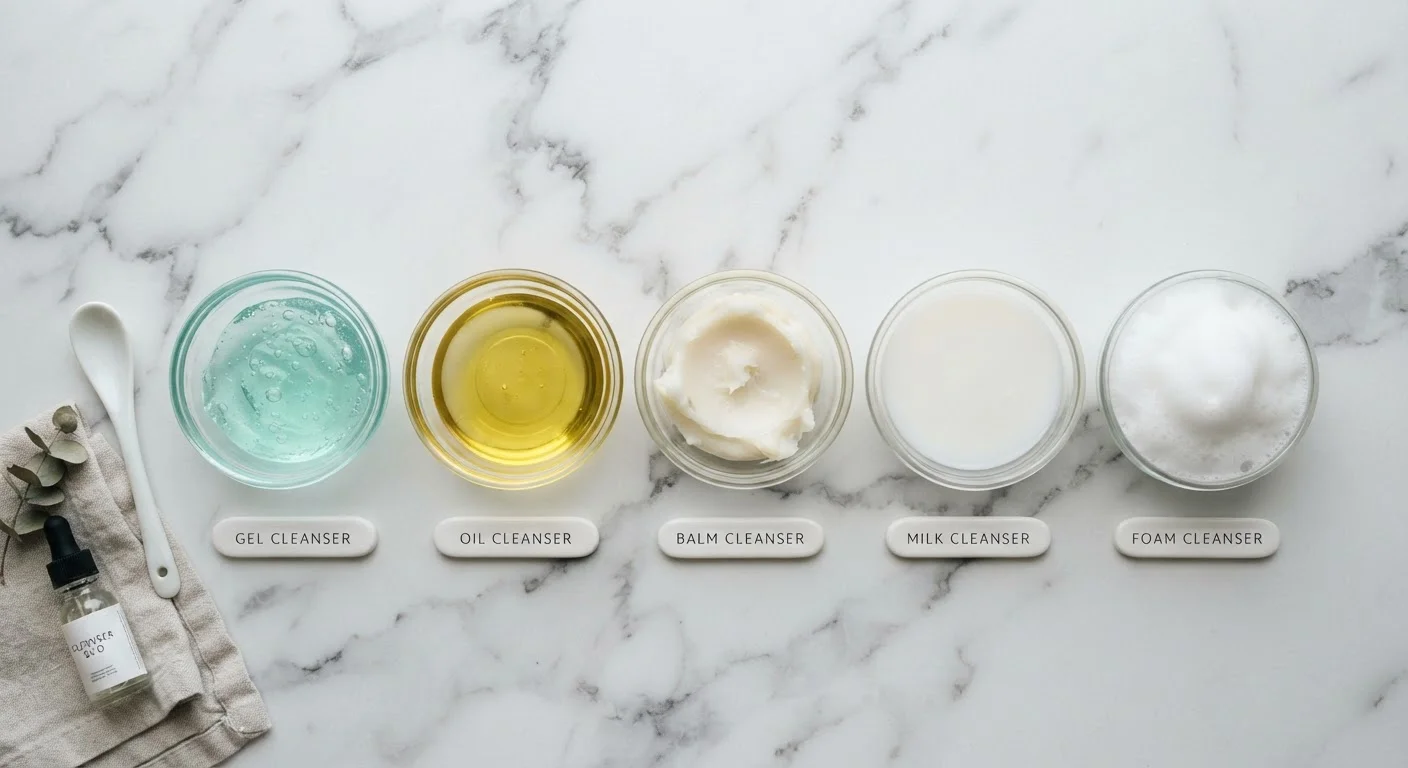
Gel cleansers are water-based, rinse completely clean, and tend to produce moderate lather. They're generally effective at cutting through surface oil and are often formulated for oily or combination skin. Gel formulas can range from very mild to quite stripping depending on their surfactant profile, so ingredient awareness matters here.
Oil Cleansers
Oil cleansers use the principle that like dissolves like — an oil-based formula emulsifies sebum, sunscreen, and oil-based makeup without disrupting the skin's moisture balance. They rinse away with water and are typically suitable for all skin types, including oily skin. They're commonly used as a first step in a double-cleanse routine. For a deeper look at gentle makeup removal techniques, see makeup removal done right.
Cleansing Balms
Balms start as a solid or semi-solid texture that melts on contact with skin. Like oils, they excel at dissolving heavy makeup and SPF. They're typically rich, soothing formulas well-suited to dry or sensitive skin types. The main difference from oils: balms often feel more cushioning during application and may leave a slightly more emollient finish before rinsing.
Milk Cleansers
Milk cleansers are lightweight, low-lather formulas with a creamy, fluid texture. They cleanse gently without thoroughly stripping natural oils, making them a strong match for dry, sensitive, or mature skin. They may not fully remove heavy makeup in one step but are excellent for everyday use or as a second-cleanse step.
Foam Cleansers
Foam cleansers — whether pre-foamed in a pump or lathering gels that foam with water — offer a satisfying deep-clean feel. They're effective at removing excess oil and are popular for acne-prone or oily skin. The trade-off: foamy formulas tend to contain stronger surfactants and can over-cleanse if used too frequently or on dry skin types.
Surfactant
Short for surface-active agent, surfactants are cleansing molecules that attract both water and oil, allowing them to lift dirt and sebum from skin so they can be rinsed away. The type and concentration of surfactants in a formula largely determines how gentle or stripping it feels.
Double cleansing
A two-step cleansing method where an oil-based cleanser (oil or balm) is used first to dissolve makeup and sunscreen, followed by a water-based cleanser to remove remaining residue and cleanse the skin itself. Originating in Korean skincare practice, it's now widely used.
Skin barrier
The outermost layer of skin that acts as a protective shield against environmental stressors and retains moisture. Harsh cleansers can disrupt this barrier, leading to dryness, sensitivity, or increased breakouts.
Emulsify
The process by which an oil-based cleanser blends with water to form a milky rinse-off consistency. Emulsification is what allows oil cleansers to be washed away cleanly without leaving a greasy film.
Emollient
An ingredient or formula property that softens and smooths skin by filling in gaps in the skin barrier. Balm and milk cleansers tend to have emollient qualities, leaving skin feeling softer rather than stripped after rinsing.
Matching Formula to Skin Type and Situation
There's no single universally correct formula. The right cleanser depends on your skin type and what you're washing off.
2-step
Double cleanse approach for makeup wearers
Dermatologists commonly suggest a two-step cleanse — oil-based first, then water-based — when wearing SPF or full-coverage makeup to avoid residue buildup.
~60 sec
Recommended cleansing time
Skincare professionals generally suggest massaging cleanser on skin for around 60 seconds before rinsing to allow effective emulsification of oils and debris.
- Oily or acne-prone skin: Gel or foam formulas are often well-tolerated, but watch for signs of over-stripping — tightness, rebound oiliness, or sensitivity.
- Dry or sensitive skin: Milk or balm cleansers tend to cleanse without compromising moisture retention. Avoid high-surfactant foams.
- Combination skin: A gentle gel or a mild milk works for most people; some prefer an oil cleanse followed by a lighter second cleanse.
- Wearing heavy makeup or SPF: An oil or balm as a first cleanse is highly effective. Double cleansing — oil or balm followed by a lighter formula — is a common and practical approach.
- Minimal product days: A milk or gentle gel is typically sufficient without the need for a double cleanse.
The cleanser you use at night may reasonably differ from your morning formula. Many people opt for a lighter rinse or milk in the morning since skin hasn't encountered much environmental grime overnight.
After cleansing, what you apply next matters just as much. Explore common moisturizer myths to make sure that next step is working for you, not against you. And if you're curious how facial cleansing compares to body cleansing approaches, bar soap vs. body wash breaks down the key differences for skin below the neck.
A Note on "Sensitive Skin" Labels
A cleanser marketed as "sensitive skin" or "gentle" isn't automatically the right choice for every person. Fragrance, essential oils, and certain preservatives can still irritate reactive skin even in mild-seeming formulas. If your skin reacts frequently, scanning ingredient lists for known irritants is worth the extra step. When in doubt, a dermatologist can help you identify specific triggers.
The content on this site is for informational purposes only and is not a substitute for professional advice. Always consult a qualified professional for guidance specific to your situation.