

Why Most Grooming Routines Don't Survive Real Life
Most grooming routines fail for the same reason: they were designed for an ideal day, not a real one. When the alarm goes off late, work runs long, or you're just plain exhausted, a ten-step regimen quickly becomes no steps at all.
The fix isn't motivation — it's architecture. A routine that holds up under pressure is built around simplicity, not aspiration. Whether you're starting from scratch or trying to stay consistent, the goal is a system that works on your worst days, not just your best ones. Check out our beginner's grooming introduction if you're building from zero.
66 days
Average time to form a new habit automatically
Research published in the European Journal of Social Psychology found that habit formation takes an average of 66 days, significantly longer than the commonly cited 21-day figure.
40%
Of daily actions driven by habit, not decisions
A study from Duke University estimated that roughly 40% of our daily behaviors are habits rather than conscious choices, underscoring why routine design matters.
The Core Practices That Make Routines Stick
Sustainable grooming isn't about doing more — it's about doing the right things reliably. These practices apply across genders, budgets, and lifestyles.
Tie grooming steps to habits you already do automatically
Habit stacking — attaching a new behavior to an existing one — dramatically increases follow-through. You're not creating a new routine from nothing; you're expanding what you already do. This removes the friction of remembering and deciding.
Keep your tools visible and within arm's reach
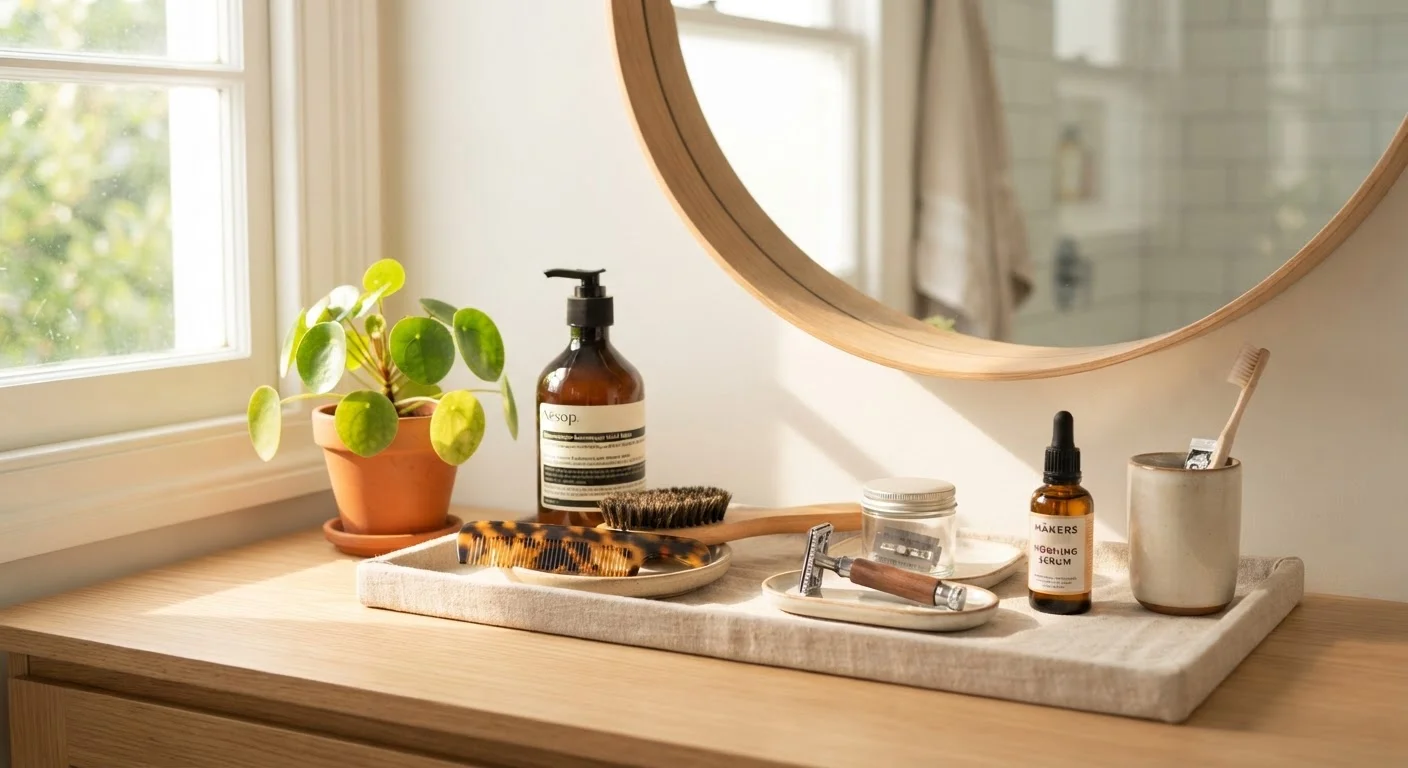
Out of sight often means out of mind. If a product is buried in a cabinet or stored in a bag under the sink, you'll skip it on rushed mornings. Visibility creates a gentle, low-effort prompt.
Set a hard cap on how many steps your daily routine requires
A five-minute core routine done seven days a week produces far better results than a 30-minute elaborate one done twice. Complexity is the enemy of consistency, especially when schedules are unpredictable.
Build a fallback 'two-minute version' of your routine
Life doesn't always give you full mornings. Having a stripped-down version of your routine prevents the all-or-nothing mindset that leads people to skip entirely when time is short.
Review and simplify your routine every season
Skin, hair, and lifestyle needs change with the weather, your age, and your schedule. A quarterly check-in prevents routine bloat and keeps your steps relevant. It also gives you a chance to cut anything that isn't working.
Quick Wins to Build Momentum Right Now
You don't need a complete overhaul to feel the difference. Small, consistent actions compound over time. Here are a few you can implement today.
For a deeper look at sequencing your morning steps efficiently, our practical grooming order guide walks through exactly how to structure your time.
Scaling Your Routine Across Daily, Weekly, and Monthly Tasks
One of the most underrated tricks in building a lasting routine is understanding that not everything needs to happen every day. Grouping tasks by frequency reduces daily decision fatigue and keeps you from feeling behind.
Use Sunday to Prep, Not Catch Up
A short Sunday reset — restocking products, cleaning tools, and mentally confirming the week's schedule — takes under ten minutes and prevents mid-week scrambles. Think of it as maintenance for your routine, not an extra chore. Pairing this with a weekly skincare checklist makes the reset even faster.
Daily: Cleansing, moisturizing, deodorant, oral hygiene, and any targeted treatments you've been advised to use consistently.
Weekly: Hair washing (based on your hair type), exfoliation, nail upkeep, and any hair removal or trimming that works on a weekly cycle.
Monthly: Haircut or trim, deeper scalp or skin treatments, and a quick product audit to check what's running low or not working.
Our head-to-toe grooming reference lays this out in a practical, scannable format.
Your Routine Will Evolve — That's Normal
Grooming needs shift with seasons, age, stress levels, and lifestyle changes. What works in your 20s may need adjustment later on. Rather than treating a routine change as a failure, think of it as a recalibration. Our age-based grooming guide explores how needs shift over time.
This article is for general informational purposes only. Consult a qualified dermatologist or healthcare professional for personalized skin or scalp concerns.
The content on this site is for informational purposes only and is not a substitute for professional advice. Always consult a qualified professional for guidance specific to your situation.