

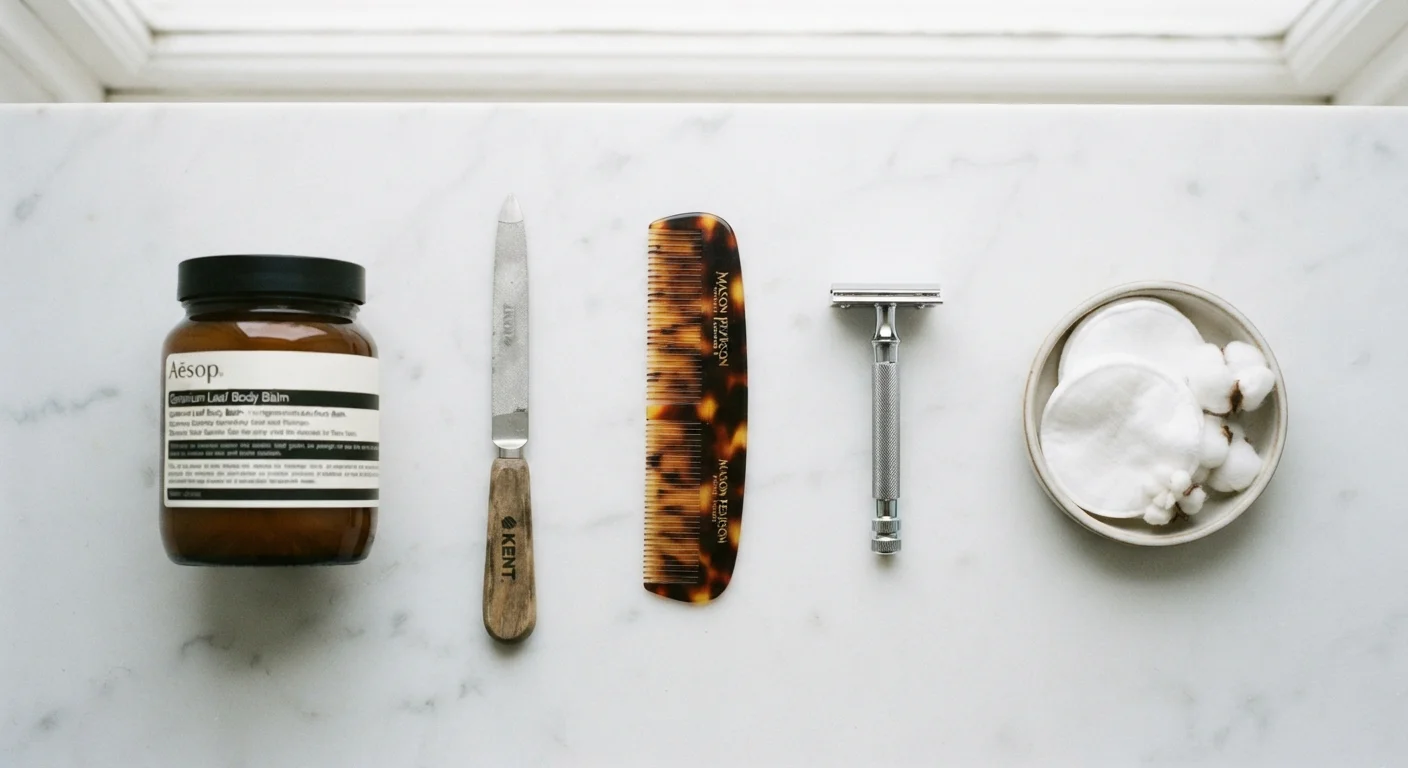
Why a Grooming Schedule Actually Matters
Grooming isn't about vanity — it's maintenance. Like changing the oil in a car or rotating your tires, regular attention to your skin, hair, nails, and hygiene keeps small issues from becoming bigger ones. And the good news? You don't need a spa budget or a shelf full of products to stay on top of it.
This reference is organized by frequency — daily, weekly, and monthly — so you can quickly find what needs attention and when. It's designed for everyone: any gender, any lifestyle, any budget. Think of it as a practical calendar for your body, not a beauty prescription.
For a deeper look at keeping a skincare routine consistent week to week, the weekly skincare checklist is a great companion resource. And if you want broader guidance on building habits that stick, check out building a grooming routine that holds up when life gets busy.
| Recommended face washes per day | 2 (morning and evening) (American Academy of Dermatology general guidance) |
| Average fingernail growth rate | ~3.5 mm per month (American Academy of Dermatology) |
| SPF recommended for daily use | Broad-spectrum SPF 30 or higher (American Academy of Dermatology) |
| Toothbrushing recommendation | Twice daily, 2 minutes each (American Dental Association) |
| Typical haircut interval | Every 4–8 weeks depending on style and length |
| Safe exfoliation frequency (face) | 1–2 times per week (General dermatologist consensus) |
Daily, Weekly, and Monthly: The Full Reference
Daily Tasks
- Face cleansing: Wash your face morning and evening with a gentle cleanser suited to your skin type. This removes sweat, oil, and environmental debris that accumulate throughout the day.
- Moisturizer + SPF: Apply a moisturizer with broad-spectrum SPF 30 or higher in the morning. Dermatologists widely recommend daily sun protection as one of the most impactful skin-care habits.
- Oral hygiene: Brush twice daily and floss once. The American Dental Association recommends two minutes per brushing session.
- Deodorant or antiperspirant: Apply daily, or as needed based on activity level.
- Hand and body lotion: Particularly important after showering or frequent handwashing to maintain skin barrier function.
Weekly Tasks
- Exfoliation: Use a gentle physical or chemical exfoliant on your face 1–2 times per week to remove dead skin cells. Over-exfoliating can irritate the skin barrier, so less is often more.
- Scalp and hair care: Wash hair based on your hair type — oily hair may need it every other day, while coarser or drier textures may do well with once-a-week washing. Use a conditioner or deep-conditioning treatment as needed.
- Nail maintenance: Trim or file nails as needed, typically every 5–7 days for fingernails and every 10–14 days for toenails. Clean under the nails gently with a nail brush.
- Body hair management: Shaving, trimming, or waxing frequency is entirely personal. Schedule based on your own comfort and preference.
- Ear cleaning: Gently clean the outer ear with a damp cloth. Avoid inserting anything into the ear canal — the ear is largely self-cleaning internally.
Monthly Tasks
- Haircut or trim: Most people find a trim every 4–6 weeks helps manage split ends and keep a style looking intentional. Longer styles can stretch to 8 weeks or more.
- Deep conditioning treatment: A monthly hair mask or intensive conditioner can help restore moisture, especially for color-treated or heat-styled hair.
- Skin product audit: Check product expiration dates and assess what's actually working. Skin changes with seasons and age, so your routine may need periodic adjustment.
- Foot care: Give feet a soak, use a pumice stone or foot file on rough patches, and apply a thick moisturizer. Toenail trimming also fits well into this monthly check-in.
- Brow shaping: Whether you thread, wax, or tweeze, most people find a touch-up every 3–5 weeks keeps brows looking defined.
Skin barrier
The outermost layer of skin that protects against moisture loss, irritants, and pathogens. Maintaining it through gentle cleansing and regular moisturizing is a core goal of any skincare routine.
Exfoliation
The process of removing dead skin cells from the surface of the skin. It can be done physically (scrubs, brushes) or chemically (acids like AHA or BHA). Over-exfoliating can compromise the skin barrier.
Broad-spectrum SPF
A sunscreen that protects against both UVA (aging) and UVB (burning) rays. SPF 30 blocks roughly 97% of UVB rays and is the minimum daily recommendation from most dermatological organizations.
Deep conditioning treatment
A more intensive hair conditioning product — often a mask or treatment — applied periodically to restore moisture and strength, particularly useful for chemically treated or heat-styled hair.
Antiperspirant vs. deodorant
Deodorants mask or neutralize odor; antiperspirants additionally reduce sweat by temporarily blocking sweat ducts. Both are considered safe for routine use by major health organizations.
For men looking for a comprehensive breakdown across face, body, and fragrance, the complete picture on men's grooming covers it all in one place. And if you're looking for more general guidance on beauty essentials, the Beauty Basics hub is a solid starting point.
Making the Schedule Work for You
No grooming schedule works if it doesn't fit your real life. The goal isn't perfection — it's consistency. If a weekly exfoliation falls off the calendar, just pick it back up the next week. If a monthly deep condition gets skipped, do it when you remember. These habits compound over time, and any effort counts.
A few principles that make maintenance easier:
- Stack habits: Attach grooming tasks to things you already do — brush your teeth, then exfoliate. Shower, then moisturize immediately while skin is still slightly damp to lock in hydration.
- Keep supplies accessible: If a product is buried in a cabinet, you're less likely to use it. Keep your daily essentials visible and within reach.
- Adjust seasonally: Skin often gets drier in winter and oilier in summer. Your routine should flex with those shifts rather than staying rigidly fixed year-round.
When to Loop In a Professional
Routine grooming is something most people can manage at home, but certain concerns — persistent acne, scalp conditions, nail changes, or unusual skin growths — deserve a professional's eye. A dermatologist can assess what's actually happening rather than what a product label promises. Don't hesitate to make an appointment if something doesn't resolve with standard care over a few weeks.
If you're ever unsure whether a skin or scalp concern is a routine maintenance issue or something worth discussing with a dermatologist, err on the side of asking. This article is for general informational purposes only and is not a substitute for professional medical or dermatological advice.
The content on this site is for informational purposes only and is not a substitute for professional advice. Always consult a qualified professional for guidance specific to your situation.