

Your Scalp Is Skin — and It's Been Neglected Long Enough
Most of us spend real time and energy on our facial skincare routines, but the scalp? It often gets a quick shampoo and nothing else. That's a gap worth closing. The scalp is a continuation of your facial skin — it has pores, oil glands, hair follicles, and a microbiome — and it responds to many of the same stressors: pollution, hard water, product residue, stress, and hormonal fluctuations.
What makes the scalp unique is its follicle density and sebum output. Those oil glands work hard, which is why scalp issues tend to show up as either excess grease or persistent dryness. When the scalp is in balance, hair tends to be more resilient, shinier, and easier to manage. When it's out of balance, you may notice flaking, itchiness, buildup, or accelerated shedding.
Understanding your scalp — the way you might understand your skin type — is the first step toward actually addressing it.
~50%
Adults who experience dandruff at some point
Dandruff (seborrheic dermatitis of the scalp) is estimated to affect up to half of the adult population globally, according to dermatology literature.
3–5×
Higher sebaceous gland density vs. facial skin
The scalp contains a significantly higher concentration of oil glands per square centimeter compared to most areas of the face, contributing to its unique care needs.
Common Scalp Conditions and What Drives Them
Scalp concerns are incredibly common and span a wide range of severity. Here's a breakdown of what's most frequently experienced:
- Excess oiliness: Overactive sebaceous glands produce too much oil, often leading to limpness, buildup, and a greasy appearance shortly after washing. This can be driven by genetics, hormones, or even over-stripping the scalp with harsh products — which triggers compensatory oil production.
- Dryness and flaking: A scalp lacking sufficient moisture may feel tight, itchy, or produce small white flakes. This is distinct from dandruff, which tends to be linked to a yeast called Malassezia and often produces larger, oilier flakes.
- Scalp psoriasis or seborrheic dermatitis: These are inflammatory skin conditions that can affect the scalp and require professional diagnosis and management. Don't assume persistent, severe irritation is just dandruff — a dermatologist can help differentiate and recommend appropriate care.
- Product buildup: Residue from styling products, dry shampoos, and even conditioners can accumulate on the scalp over time, clogging follicles and contributing to dullness or irritation.
Many of these issues overlap and influence each other — which is why a consistent, attentive approach (rather than reactive spot-treatment) tends to serve people best. For a broader look at how grooming habits can be approached systematically, see this everyday self-care checklist.
Fingertips, Not Fingernails
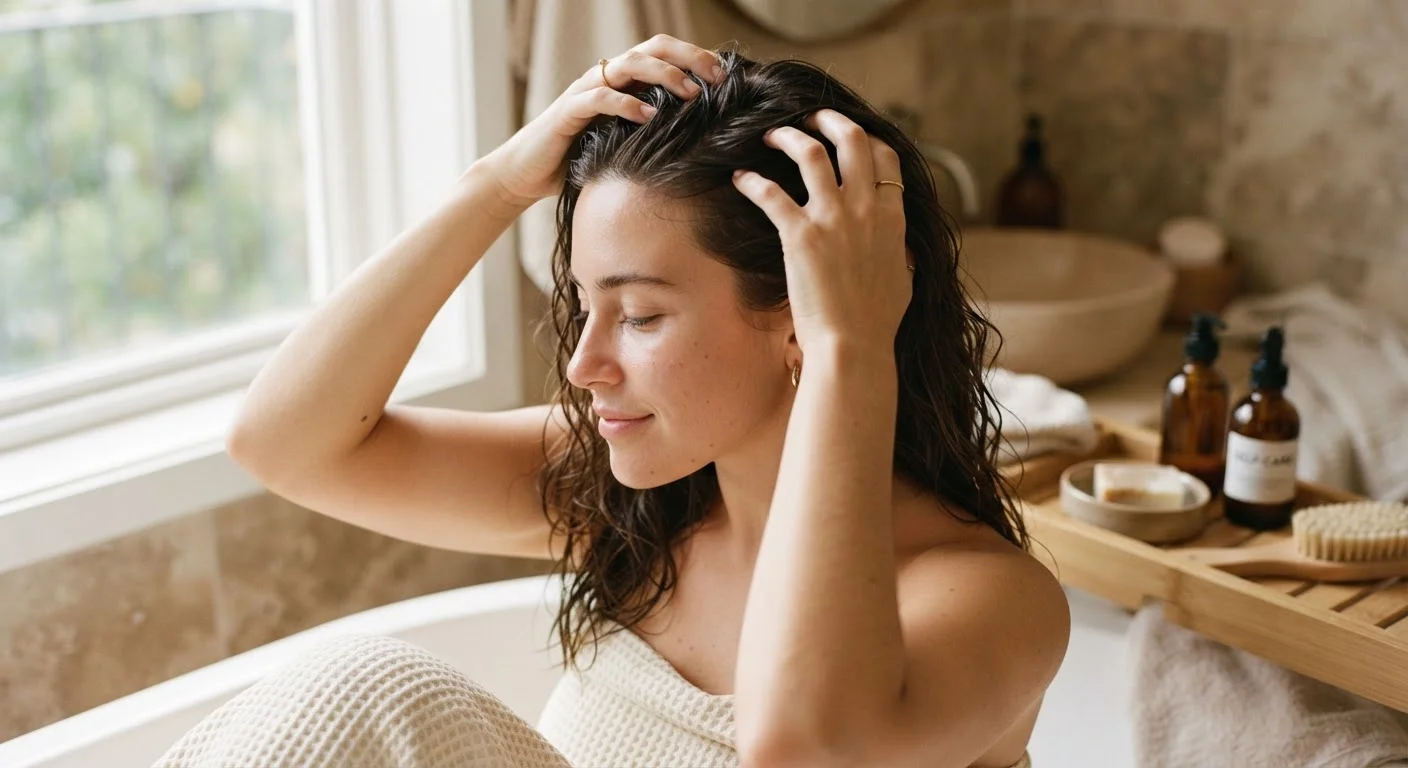
When shampooing, always use the pads of your fingertips — not your nails — to massage the scalp. Nails can micro-scratch the skin, causing irritation that's easy to overlook but adds up over time. Circular, gentle pressure is all you need to lift buildup and promote circulation.
What Actually Influences Scalp Balance
Several factors shape how your scalp behaves — some within your control, some less so:
- Washing frequency and technique
- Washing too infrequently allows oil, dead skin, and product residue to accumulate. Washing too often can strip the scalp's natural oils, prompting it to overproduce sebum. Finding your scalp's sweet spot is personal and worth experimenting with.
- Water quality
- Hard water — which contains higher levels of minerals like calcium and magnesium — can leave residue on the scalp and hair shaft, contributing to dryness and dullness. This is more common in certain regions of the U.S.
- Heat and styling tools
- Frequent heat exposure can dry out both the hair shaft and the scalp. Hot water during washing has a similar drying effect, which is why many stylists suggest finishing with cooler water.
- Stress
- Psychological stress is linked to a range of skin and scalp changes, including increased oiliness and conditions like seborrheic dermatitis flaring up. The scalp-stress connection is real, even if its mechanisms are still being studied.
- Hormones
- Hormonal shifts — puberty, pregnancy, perimenopause, or changes in medication — can dramatically affect sebum production and scalp behavior.
It's worth noting that many popular claims about scalp care don't hold up to scrutiny. For a grounded look at what's supported by evidence, this piece on self-care myths is a useful reality check.
“The scalp is the soil for your hair. If you don't tend to the soil, you can't expect the plant to thrive — and yet it's the part of the routine most people skip entirely.”
— Board-Certified Dermatologist, Clinical dermatologist specializing in hair and scalp conditions
Building a Simple, Consistent Scalp Care Habit
You don't need a complicated ten-step routine to support a healthier scalp. In fact, simplicity usually wins. Here's what a practical approach might look like:
- Cleanse with intention: Use a shampoo suited to your scalp's needs — not just your hair type. Apply it directly to the scalp and massage gently with fingertips (not nails) to lift buildup and stimulate circulation.
- Condition strategically: Focus conditioner on the mid-lengths and ends of hair, not the scalp, to avoid adding unnecessary weight or residue at the root.
- Exfoliate occasionally: A gentle scalp scrub or exfoliating shampoo used once or twice a month can help clear dead skin cells and product buildup — but don't overdo it.
- Give your scalp breaks: Tight hairstyles, heavy products, and constant heat can all stress the scalp over time. Rotating styles and taking product-free days are easy wins.
- Notice patterns: Pay attention to how your scalp responds to changes in season, stress level, diet, or product switches. This kind of attentive self-knowledge pays off over time.
Integrating scalp care into a broader self-care routine — the way you might track a weekly skincare checklist — helps turn it from an afterthought into a habit that actually sticks.
This article is for general informational and educational purposes only. It is not medical advice. If you are experiencing persistent scalp discomfort, significant hair loss, or any symptoms that concern you, please consult a qualified dermatologist or healthcare professional.
Frequently Asked Questions
There's no universal answer — it depends on your hair type, activity level, and scalp's oil production. Many people do well washing two to three times per week, while others with very oily scalps may need daily cleansing. Paying attention to how your scalp feels and looks is the best guide.
No, they're different conditions that can look similar. Dandruff is often linked to an overgrowth of a naturally occurring yeast called Malassezia and typically produces oily, yellowish flakes. A dry scalp produces smaller, whiter flakes and is usually caused by lack of moisture. Treatment approaches differ, so identifying the cause matters.
Scalp conditions can contribute to hair shedding or thinning in some cases — for example, severe inflammation or fungal infections can disrupt follicle function. However, hair loss has many causes, including genetics, hormones, and nutrition. If you're noticing significant hair loss, consulting a dermatologist or healthcare provider is strongly recommended.
Nutrition does play a role in skin and scalp health. Deficiencies in nutrients like zinc, iron, and certain B vitamins have been associated with scalp and hair changes in research settings. A varied, balanced diet supports overall skin function, but consult a healthcare professional before making significant dietary changes or starting supplements.
Gentle scalp exfoliation can help remove buildup and dead skin cells for some people. However, over-exfoliating or using harsh formulas can irritate and strip the scalp. If you have any existing scalp condition, check with a dermatologist before adding exfoliation to your routine.
The content on this site is for informational purposes only and is not a substitute for professional advice. Always consult a qualified professional for guidance specific to your situation.