

Why Grooming Got Gendered in the First Place
For most of the 20th century, the beauty and personal care industry grew by targeting distinct audiences — women's products in one aisle, men's products in another. The division was largely a marketing construct, not a scientific one. Separate packaging, different scents, and distinct price points created the impression that men and women needed fundamentally different products. In many cases, the formulas inside were nearly identical.
This segmentation had real consequences. It made basic skin care feel like a gendered activity — something women did and men didn't need to worry about. That perception left a lot of people without grooming habits that genuinely serve them, while also making anyone outside the gender binary feel like an afterthought. The industry is slowly shifting, but the cultural hangover lingers.
Understanding where this divide came from makes it easier to set aside and focus on what actually matters: what does your skin need, regardless of the label on the bottle?
Gendered Pricing Is Real
Research has documented that personal care products marketed to women are often priced higher than comparable products marketed to men — a phenomenon sometimes called the 'pink tax.' This is one more reason to shop by ingredient and skin type rather than by gendered branding. Comparing ingredient lists across product categories can sometimes reveal nearly identical formulas at very different price points.
What Skin Actually Needs — No Matter Who You Are
Human skin has a job: it protects everything underneath it from the environment. To do that job well, it needs to stay clean, hydrated, and shielded from UV damage. That's true whether you're a 22-year-old who's never thought about moisturizer or a 55-year-old who's been following the same routine for decades.
Skin does vary — in oiliness, sensitivity, tone, and how it responds to climate and stress. But those variations track to skin type and environment, not gender. Oily skin needs different care than dry skin regardless of who it belongs to. A person living in a dry, cold climate has different hydration needs than someone in a humid coastal city.
1 in 5
Americans develops skin cancer in their lifetime
According to the American Academy of Dermatology, skin cancer is the most common cancer in the United States, and daily sunscreen use is one of the most widely recommended preventive measures.
~40%
of men report using no facial skin care products
Survey data consistently shows a significant portion of men use no dedicated facial care products, reflecting how deeply the gendered marketing divide has shaped grooming behavior.
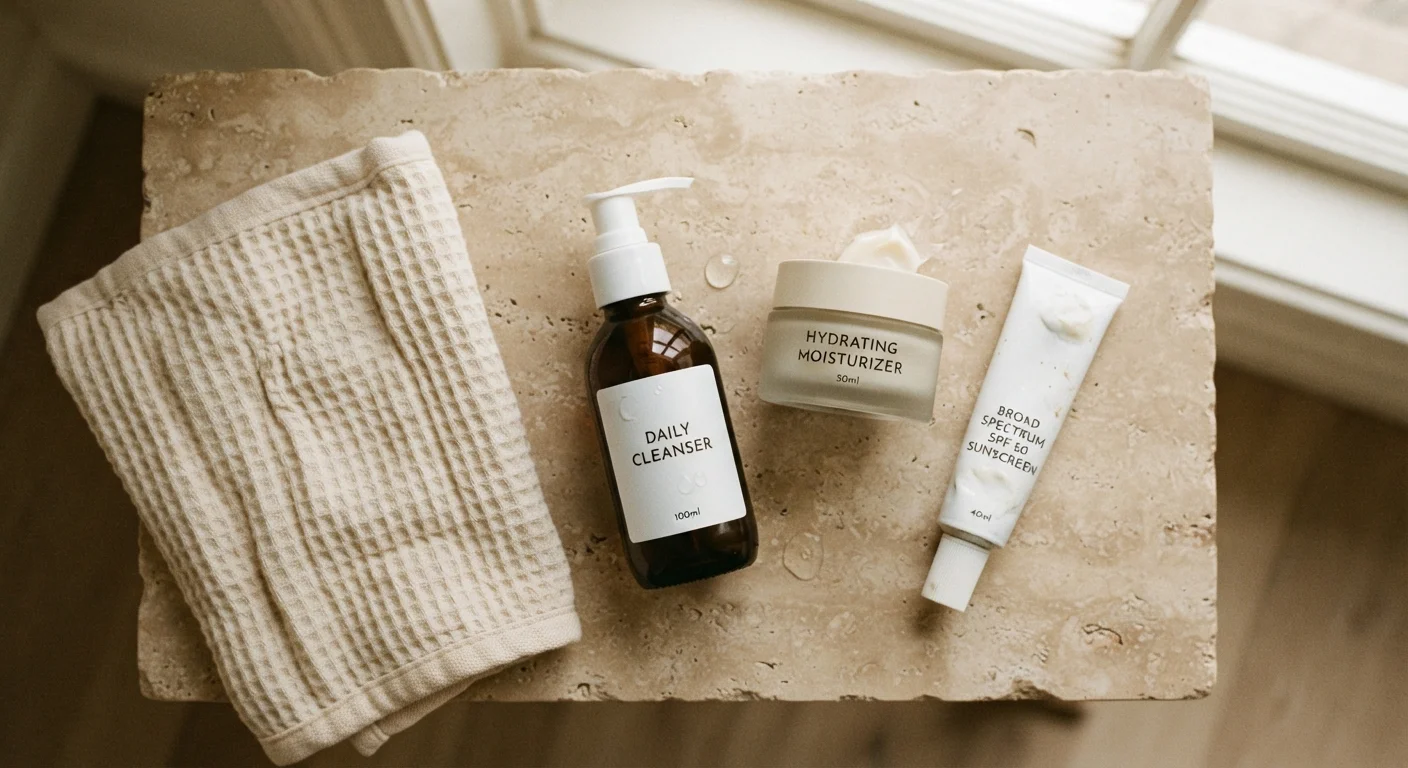
The three fundamentals that dermatologists consistently recommend hold across all of this variety: gentle cleansing to remove dirt and excess oil, moisturizing to support the skin's barrier, and daily broad-spectrum sunscreen to limit UV damage. If you're looking for where to build from here, our no-assumptions grooming introduction is a solid next step.
Busting the 'Low-Maintenance' Identity
There's a widespread cultural script — especially for men and masculine-presenting people — that equates caring about your appearance with vanity, or worse, weakness. Being "low-maintenance" gets treated as a personality trait to be proud of rather than a description of a habit gap that might catch up with you later.
The reality is that grooming isn't about vanity. Washing your face, applying SPF, and keeping your skin hydrated are closer in spirit to brushing your teeth than to contouring. They're maintenance habits. Avoiding them doesn't make someone tougher — it just means their skin works harder without support.
Start With Three, Not Ten
If you're building a routine from scratch, resist the urge to buy a full product lineup at once. Start with just a gentle cleanser, a basic moisturizer, and a daily SPF. Use them consistently for a few weeks before deciding if you need anything else. Most people find the basics cover the majority of their skin's needs.
It's also worth noting that grooming habits established early tend to compound positively over time. Daily sunscreen use in your 20s and 30s reduces cumulative UV damage that shows up decades later. You don't have to overhaul your lifestyle — you just have to start somewhere. See our piece on which grooming habits pay off by decade for a clearer picture of timing and priorities.
Keeping It Simple — and Actually Sustainable
One reason people abandon grooming routines is that they start too complicated. The skin care market is enormous, and it can feel like you need a 10-step routine to be doing it right. You don't. Complexity isn't the goal — consistency is.
A three-step routine done daily beats an elaborate routine done occasionally. And once the basics feel automatic, it becomes much easier to build on them thoughtfully — adding a targeted treatment or adjusting for seasonal changes — rather than starting from scratch every time life gets busy. Our guide on building a routine that holds up under a real schedule is worth bookmarking for when that moment comes.
It's also worth approaching grooming claims with a little healthy skepticism. The self-care space is full of products and practices that promise more than they deliver. For a grounded look at what actually works, the self-care myths worth questioning is a useful companion read.
This article is for general informational and educational purposes only. For concerns about your skin health, consult a qualified dermatologist or healthcare professional.
Frequently Asked Questions
Skin needs vary by type — oily, dry, combination, sensitive — not by gender. Marketing segments products by gender, but many formulas are functionally similar. Focus on ingredients suited to your skin type rather than which aisle a product is shelved in.
A practical starting point is three steps: a gentle cleanser, a moisturizer appropriate for your skin type, and a broad-spectrum sunscreen used daily. This foundation supports skin health without requiring a complex or expensive routine.
It's both. Consistent grooming practices support physical skin health — barrier integrity, hydration, UV protection — and many people find that a simple routine also benefits their sense of well-being and confidence. Neither angle is more valid than the other.
Dermatologists consistently point to daily sunscreen use and consistent moisturizing as practices with meaningful long-term impact on skin health. No routine eliminates aging, but protective habits reduce cumulative damage over time.
Start with the basics: a gentle face wash, a simple moisturizer, and an SPF product. Once those feel habitual, you can layer in additional steps if needed. Our <a href="/style-beauty/grooming-self-care/grooming-from-scratch-a-no-assumptions-introduction-for-anyone-starting-out">beginner grooming guide</a> walks through each step without assumptions.
A basic test: wash your face, wait about an hour without applying anything, then observe. Tight or flaky skin often signals dryness; shine across the face may indicate oily skin; shine only in the T-zone suggests combination. A dermatologist can give a more definitive assessment if needed.
The content on this site is for informational purposes only and is not a substitute for professional advice. Always consult a qualified professional for guidance specific to your situation.