

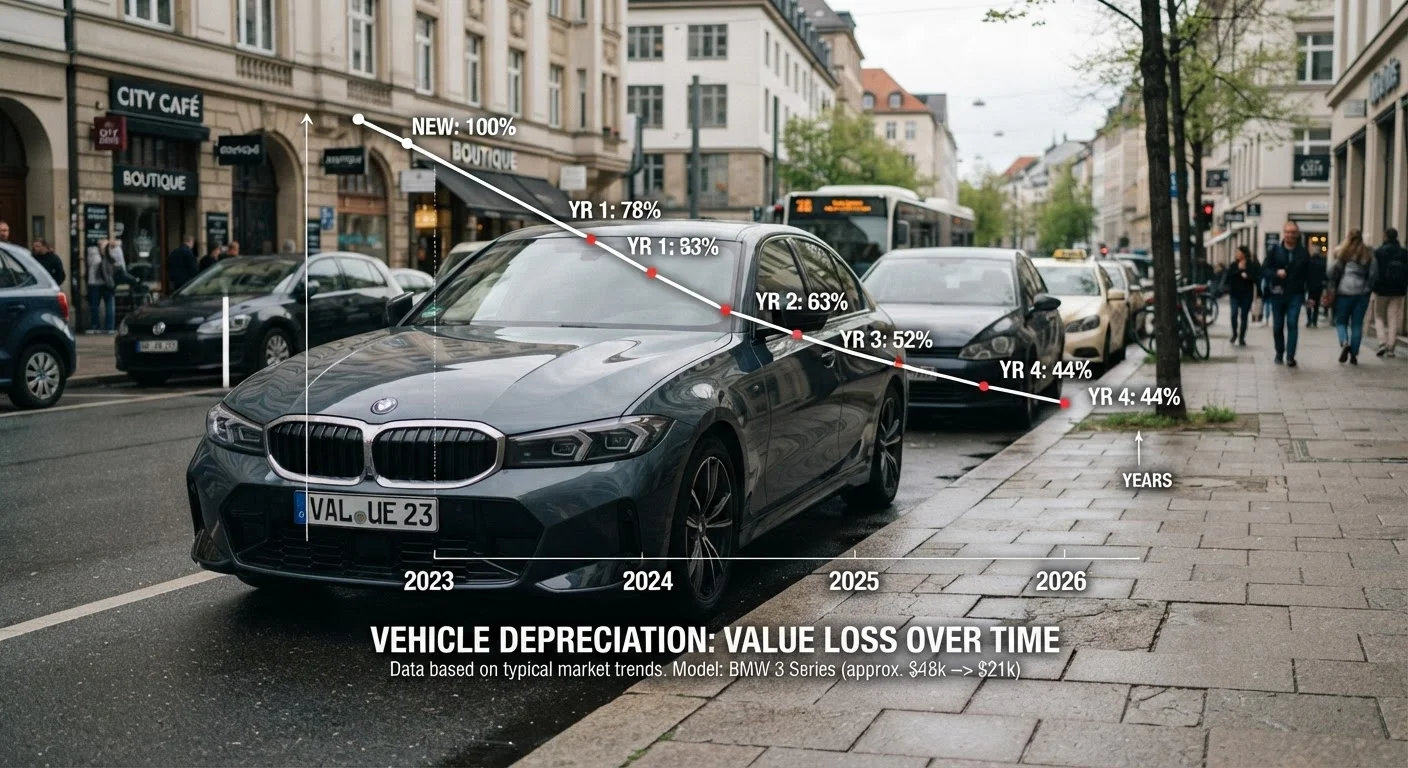
Why Every Car Loses Value - and How Fast
Depreciation is inevitable for every vehicle on the road. The moment a new car is purchased and driven away, it shifts from a new product with full retail pricing to a used item subject to market forces. That transition alone can shave a significant percentage off its value within the first few months.
After the initial drop, depreciation continues at a more gradual pace - typically 10-15% per year over the following years. By the time a vehicle is five years old, it may be worth only half of its original purchase price. By year ten, residual value is often a fraction of that.
Several factors shape how fast a particular car depreciates:
- Mileage: Higher annual mileage signals more wear and shortens a vehicle's expected remaining life, reducing its market value.
- Condition: Dents, faded paint, worn interiors, and deferred maintenance all subtract from value.
- Accident history: A reported collision or structural repair can permanently reduce a car's market appeal, even after quality repairs.
- Market demand: Fuel-efficient vehicles may hold value better when gas prices rise; certain body styles fall out of favor as consumer preferences shift.
Keep Your Service Records
A documented maintenance history is one of the most effective ways to support a vehicle's resale or trade-in value. Buyers and dealers view consistent service records as evidence of a well-cared-for vehicle, which can offset some depreciation-related value loss.
Depreciation Beyond Resale: Insurance, Loans, and Trade-Ins
Most drivers think of depreciation only when it's time to sell. In reality, it shapes three major financial areas of car ownership long before that moment arrives.
Insurance Payouts
When a car is declared a total loss after an accident, most standard collision and comprehensive policies pay out the vehicle's actual cash value (ACV) - the current market value, not what you paid. This means depreciation has already reduced the maximum settlement you can receive. Understanding this connection between depreciation and insurance coverage is important for every vehicle owner. For a broader look at how collision and comprehensive coverage work, see our guide to auto insurance coverage types.
Loan Balances and Negative Equity
When a vehicle depreciates faster than a loan is paid down - especially in the early months of a long-term loan - a driver can end up upside-down, or underwater: owing more than the car is currently worth. This scenario is particularly common with zero-down-payment financing or extended loan terms. If the car is totaled while in this position, the insurance payout alone won't cover the remaining debt. That gap is precisely what gap insurance is designed to address.
Trade-In Offers
Dealers calculate trade-in value based on current market data, which fully accounts for depreciation. A car purchased for $35,000 and traded in three years later may be offered significantly less than the owner expects - especially if high mileage or market shifts have accelerated its value loss.
~20%
Average value lost in year one
Industry estimates generally place new vehicle depreciation in the first year between 15% and 25%, depending on the make, model, and market conditions.
~50%
Typical value remaining after five years
Many vehicles retain roughly half their original purchase value after five years of average use, though this varies considerably by vehicle type and condition.
Up to 72 months
Common new car loan term length
Extended loan terms have become increasingly common, which can increase the window during which a driver is financially exposed to negative equity from depreciation.
How to Factor Depreciation Into Ownership Decisions
Depreciation is a cost of ownership, much like fuel or maintenance. Treating it that way changes how you evaluate vehicle choices. The full cost of car ownership includes depreciation as one of the largest annual expenses - often exceeding what drivers spend on fuel or insurance in a given year.
A few practical considerations:
- New vs. used: Buying a vehicle that is two to three years old means the steepest part of the depreciation curve is already past. You inherit a vehicle that still has plenty of useful life but at a meaningfully lower entry price.
- Loan term length: Longer loan terms lower monthly payments but increase the risk of being underwater on the loan as depreciation outpaces payoff. Shorter terms reduce that exposure.
- Coverage decisions: If your vehicle's market value has fallen significantly, carrying comprehensive and collision coverage may be worth revisiting - though that calculation depends on your financial situation and risk tolerance. Your auto insurance premium may also shift as the vehicle ages and its insured value changes.
Depreciation Rates Shift With the Market
Economic conditions, fuel prices, and consumer preferences all influence how quickly specific vehicle types lose value. A body style or drivetrain that holds value well today may not do so in five years. Use current market data - not historical averages alone - when making decisions about buying, selling, or insuring a vehicle.
This article is for general informational purposes only and does not constitute financial, insurance, or legal advice. For guidance tailored to your individual situation, consult a licensed financial adviser or insurance professional.
Frequently Asked Questions
Most vehicles lose roughly 15-25% of their value in the first year alone. This initial drop is the steepest phase of depreciation, largely because the car transitions from 'new' to 'used' status as soon as it's purchased and driven.
Yes. If your car is totaled, most standard insurance policies pay out the vehicle's actual cash value - which is its market value after depreciation, not what you originally paid. This can leave a gap between the payout and what you still owe on a loan.
Vehicles with strong brand reputations, high reliability ratings, and sustained demand - such as certain pickup trucks and popular SUVs - tend to hold value better than average. However, depreciation rates shift with market conditions and fuel prices, so no category is immune.
Keeping mileage reasonable, maintaining service records, avoiding accidents, and preserving interior and exterior condition all help slow depreciation. None of these eliminate it, but they can meaningfully improve trade-in and resale outcomes.
Gap insurance covers the difference between what your insurer pays for a totaled vehicle and what you still owe on your loan or lease. It exists because depreciation can cause a car's market value to fall below the outstanding loan balance, particularly early in the financing term.
Buying used means the steepest depreciation curve has already occurred, so you avoid the largest value drop. The vehicle will still depreciate further, but typically at a slower rate than a brand-new car in its first year.
The content on this site is for informational purposes only and is not a substitute for professional advice. Always consult a qualified professional for guidance specific to your situation.