

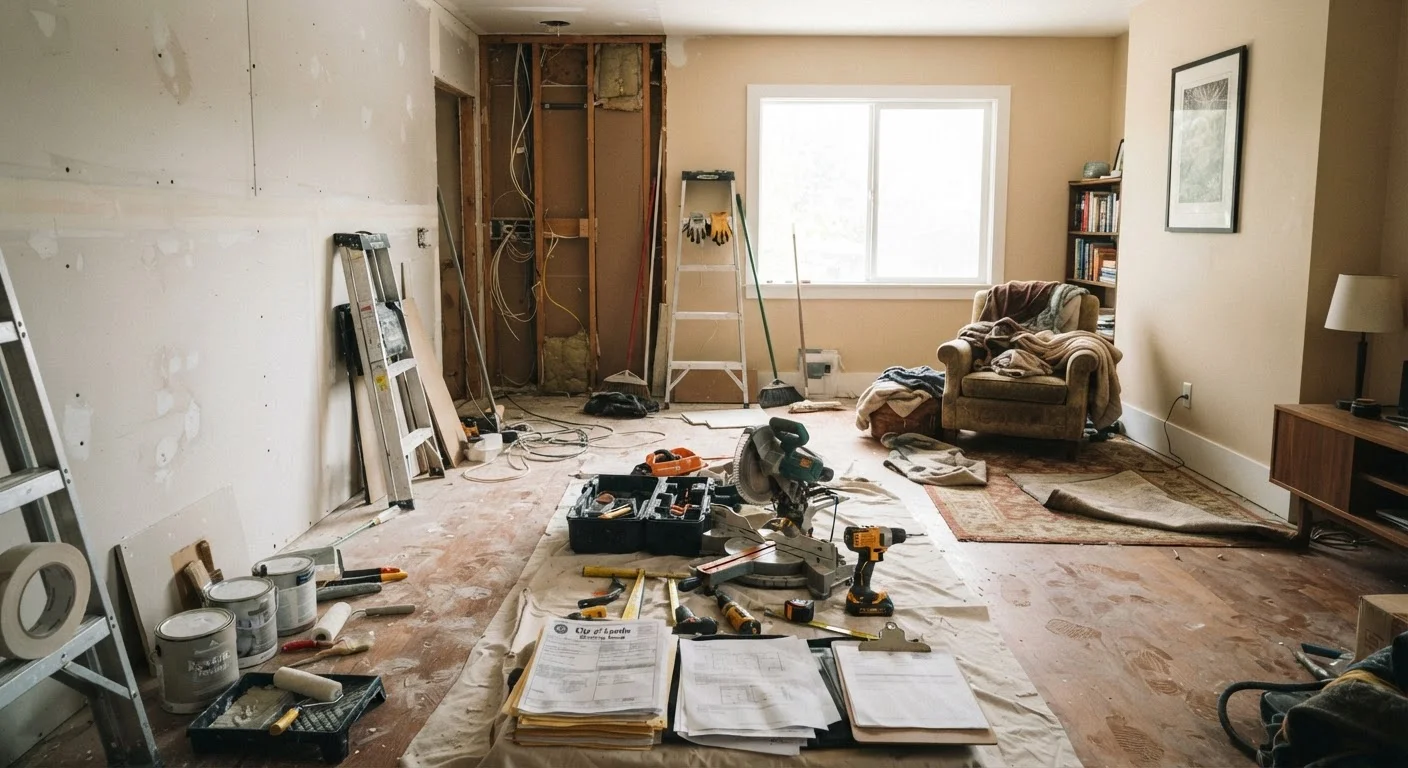
Why Renovation TV Sets Unrealistic Expectations
Home renovation shows are genuinely entertaining - but they are produced as television, not tutorials. Weeks of labor are compressed into 44 minutes. Crews of licensed tradespeople appear uncredited. Dumpsters, inspector visits, and material lead times disappear entirely from the narrative. The result is that many homeowners arrive at their first real project with a mental model built on fiction.
This guide debunks the most damaging myths those shows perpetuate, so you can plan your own projects with accurate expectations. Whether you're tackling a first upgrade or a full remodel, the essential foundation every new homeowner needs starts with understanding what the cameras leave out.
Myth
A full kitchen or bathroom renovation can realistically be completed in a single weekend.
Fact
Most mid-scope renovations take two to eight weeks when permits, inspections, material curing, and trade scheduling are accounted for properly.
TV timelines omit permit processing (which can take days to weeks depending on your municipality), mandatory inspection holds between project phases, and the simple reality that grout, mortar, and paint all require curing time before the next step can proceed. Rushing these stages leads to cracked tile, peeling finishes, and callbacks that cost more than waiting would have.
Myth
You can knock down any interior wall to create an open-plan layout without professional help.
Fact
Many interior walls are load-bearing or contain electrical wiring, plumbing, or HVAC ducts - removal requires engineering assessment and licensed tradespeople.
Identifying a load-bearing wall requires more than tapping and guessing. A structural engineer or experienced contractor must evaluate the framing before any wall comes down. Removing a load-bearing wall without proper support can compromise your home's structural integrity. Even non-load-bearing walls may conceal electrical panels, supply lines, or ductwork that must be safely rerouted.
Myth
Permits are optional bureaucracy that only matter if something goes wrong.
Fact
Unpermitted work can result in fines, forced removal of completed work, and serious complications when you sell your home.
When you sell, a home inspector or title search can surface unpermitted additions or alterations. Buyers, lenders, and insurers may require the work to be brought up to code - at your expense - before a sale can close. In some jurisdictions, municipalities can order unpermitted structural or electrical work demolished entirely. The permit process exists to verify safety, and bypassing it transfers all risk to you.
Myth
Renovation budgets shown on TV are a reliable benchmark for your own project costs.
Fact
TV budgets frequently omit design fees, permit costs, professional labor, and sponsor-subsidized materials that are unavailable to the general public.
Material costs vary significantly by region and over time. Labor rates depend on your local market and trade demand. Show budgets often reflect bulk contractor pricing, brand partnerships, or donated materials that never appear on the final tally shown to viewers. A realistic homeowner budget should include a contingency of at least 10-20% above your itemized estimate to absorb surprises like hidden water damage, outdated wiring, or asbestos in older homes.
Myth
DIY electrical work is straightforward and safe if you watch enough tutorial videos.
Fact
Electrical work beyond simple fixture swaps is regulated by code in most U.S. states and typically requires a licensed electrician and permit.
Faulty wiring is a leading cause of residential fires. Most jurisdictions require that new circuits, panel upgrades, and service changes be performed by a licensed electrician and inspected before walls are closed. Even competent DIYers can create hidden hazards - improper grounding, overloaded circuits, or incorrect breaker sizing - that present no immediate symptoms but create serious long-term risk.
The Permit and Budget Realities Shows Ignore
Two of the most consequential gaps between TV renovations and real ones involve permits and money. Shows rarely show a homeowner pulling a building permit or waiting for an inspection - but in reality, these steps are legally required for a wide range of projects and skipping them carries serious consequences.
Unpermitted Work Can Haunt a Home Sale
If you sell your home, unpermitted renovations may be flagged during inspection or title review. Buyers, mortgage lenders, and insurers can require costly remediation before closing. In some cases, local authorities may mandate that unpermitted structural or electrical work be removed and redone to current code standards - at the seller's expense. Always verify which permits your project requires before work begins.
Budget overruns are similarly invisible on screen. Producers work with pre-negotiated material costs, sponsor contributions, and large professional crews that a typical homeowner cannot replicate. Our guide to permits and inspections explains exactly which project types typically require official approval and how the process works in most U.S. jurisdictions.
~80%
Renovations that exceed initial budget
Industry surveys consistently find that the large majority of home renovation projects finish over their original cost estimate, often due to unforeseen conditions uncovered once work begins.
10-20%
Recommended contingency buffer
Most contractors and consumer finance guidance recommend reserving 10-20% above your itemized renovation budget as a contingency for unexpected discoveries and cost changes.
For project-specific planning - including realistic sequencing of trades and material lead times - see our end-to-end bathroom remodeling guide as a worked example of how a real renovation unfolds.
Broader home maintenance upkeep and home organization strategies can also help you build realistic project rhythms around your home's actual needs.
The content on this site is for informational purposes only and is not a substitute for professional advice. Always consult a qualified professional for guidance specific to your situation.