

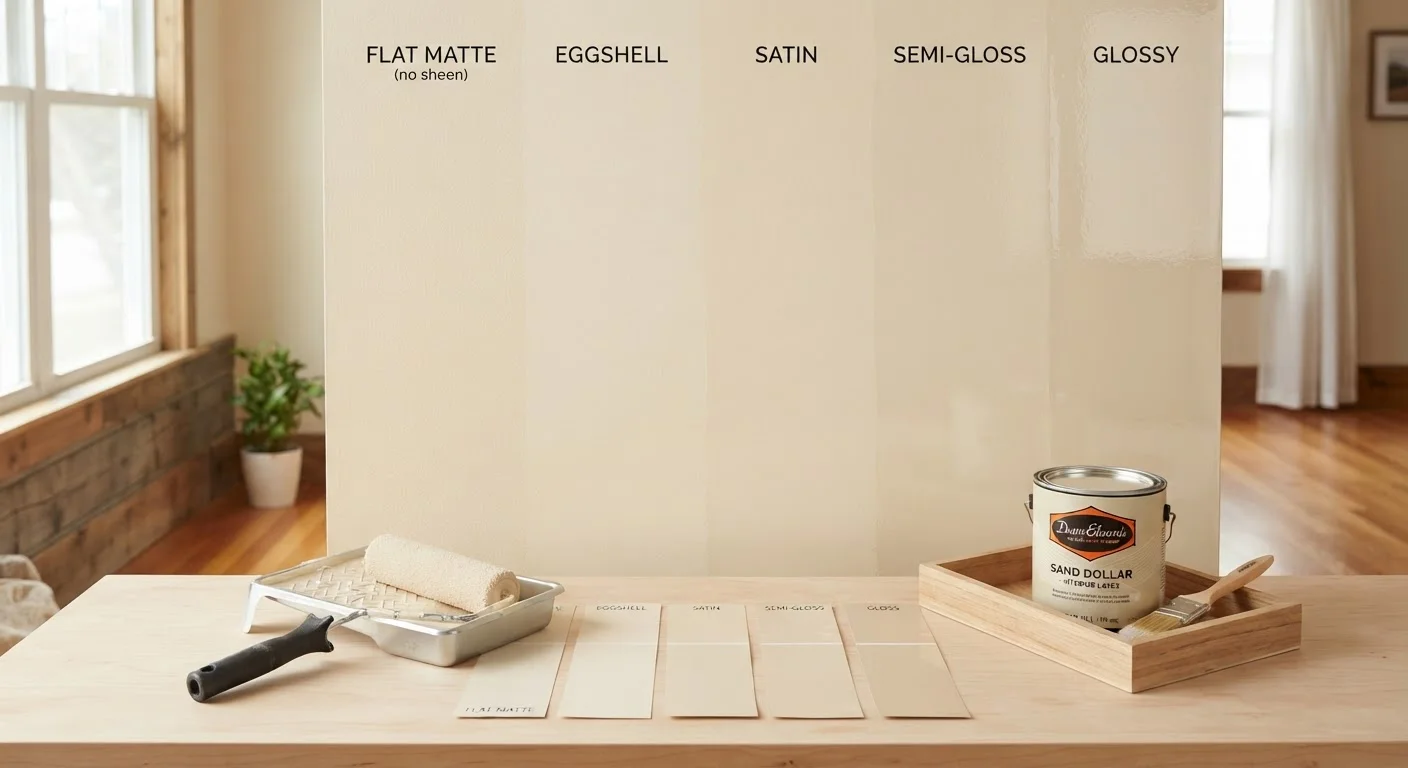
Why Paint Finish Matters as Much as Color
When most homeowners choose interior paint, color gets all the attention. But the finish - also called sheen level - determines how durable the paint is, how much light it reflects, and how forgiving it is of wall imperfections. Choose the wrong sheen for a room and you may find finger smudges that won't wipe clean, or a ceiling that spotlights every drywall patch. Understanding each finish makes selecting the right one straightforward.
| Lowest Sheen Finish | Flat / Matte |
| Highest Sheen Finish | High-Gloss |
| Most Versatile All-Purpose Finish | Eggshell or Satin |
| Best Finish for Ceilings | Flat |
| Best Finish for Trim and Doors | Semi-Gloss or High-Gloss |
| Best Finish for Kitchens & Bathrooms | Satin or Semi-Gloss |
Ready to put your finish choice to work? See our step-by-step painting guide for surface prep and application techniques that ensure clean, lasting results.
The Complete Finish Spectrum
Paint finishes are arranged along a sheen scale, from completely non-reflective to highly glossy. Each level carries a distinct set of performance characteristics.
Sheen
The degree to which a dried paint surface reflects light. Higher sheen levels produce more visible luster and are generally more washable but reveal surface imperfections more readily.
Flat (Matte) Finish
A paint finish with virtually no light reflection. Excellent at hiding wall flaws but difficult to clean without damaging the surface.
Eggshell Finish
A low-luster finish with a slight sheen similar to the surface of an eggshell. It balances aesthetic softness with reasonable washability.
Satin Finish
A mid-range sheen with a smooth, velvety appearance. It offers good moisture resistance and is easy to wipe clean, making it ideal for active rooms.
Semi-Gloss Finish
A noticeably reflective finish that is highly durable and washable. Commonly used on trim, doors, and surfaces exposed to moisture or heavy contact.
High-Gloss Finish
The most reflective paint finish available. Extremely hard and moisture-resistant, it is best suited to trim, cabinetry, and accent surfaces where maximum durability is needed.
Flat (Matte)
Flat paint reflects almost no light, which hides surface flaws like dents, patches, and uneven texture exceptionally well. It is the standard choice for ceilings and low-traffic adult bedrooms. Its trade-off is cleanability - scrubbing can damage the surface. Reserve flat for areas that rarely need washing.
Eggshell
Named for the subtle sheen on an eggshell, this finish offers a hint of luster that makes wiping down walls practical without looking plasticky. It is widely considered the go-to finish for living rooms, dining rooms, and adult bedrooms where moderate durability is needed.
Satin
Satin sits in the middle of the spectrum with a soft, velvety glow. It resists moisture and cleans easily, making it suitable for kitchens, bathrooms, children's rooms, and hallways - high-contact areas that accumulate grease and handprints.
Semi-Gloss
Semi-gloss has a noticeable sheen and is highly washable. Because it reflects light readily, it also highlights surface irregularities. Use it on trim, window casings, and doors where durability matters more than camouflage. It is also a practical choice for kitchens and bathrooms when paired with proper ventilation.
High-Gloss
The most reflective and hardest finish available, high-gloss is extremely durable and moisture-resistant. It is typically reserved for trim, cabinetry, doors, and accent features. Because it amplifies every imperfection, thorough surface preparation is essential before application.
5
Distinct interior paint sheen levels
Most paint manufacturers organize their product lines around five core sheen categories: flat, eggshell, satin, semi-gloss, and high-gloss.
~60°
Gloss measurement angle for semi-gloss
Paint sheen is measured by a glossmeter at standardized angles; semi-gloss typically reads 35-70 gloss units at 60 degrees, distinguishing it clearly from satin and flat finishes.
Matching Finish to Room: A Quick-Reference Guide
Applying the right sheen in each space saves repainting effort and keeps walls looking fresh longer. Use the guidance below as a starting point, then adjust based on your household's specific traffic patterns and aesthetic preferences.
- Ceilings: Flat or ultra-flat - minimizes light reflection and conceals texture variation.
- Living rooms and dining rooms: Eggshell - durable enough for occasional cleaning while remaining warm in appearance.
- Kitchens: Satin or semi-gloss - handles grease, steam, and frequent wiping.
- Bathrooms: Satin or semi-gloss - moisture resistance is the priority; ensure adequate ventilation to prevent mildew regardless of finish.
- Children's rooms and hallways: Satin - stands up to handprints, scuffs, and repeated cleaning.
- Trim, doors, and window casings: Semi-gloss or high-gloss - maximizes durability and creates crisp definition. For maintaining the frames themselves, see our window and door maintenance guide.
- Accent walls or decorative features: Satin or high-gloss depending on the desired visual effect.
Surface Prep Matters More with Higher Sheens
The shinier the finish, the more it reveals dents, seams, and patching work. Before applying satin, semi-gloss, or high-gloss paint, fill holes, sand smooth, and prime properly. Skipping prep with high-sheen paint is one of the most common - and most visible - DIY mistakes. If the surface isn't ready, consider dropping one sheen level while you refine your technique.
The content on this site is for informational purposes only and is not a substitute for professional advice. Always consult a qualified professional for guidance specific to your situation.