

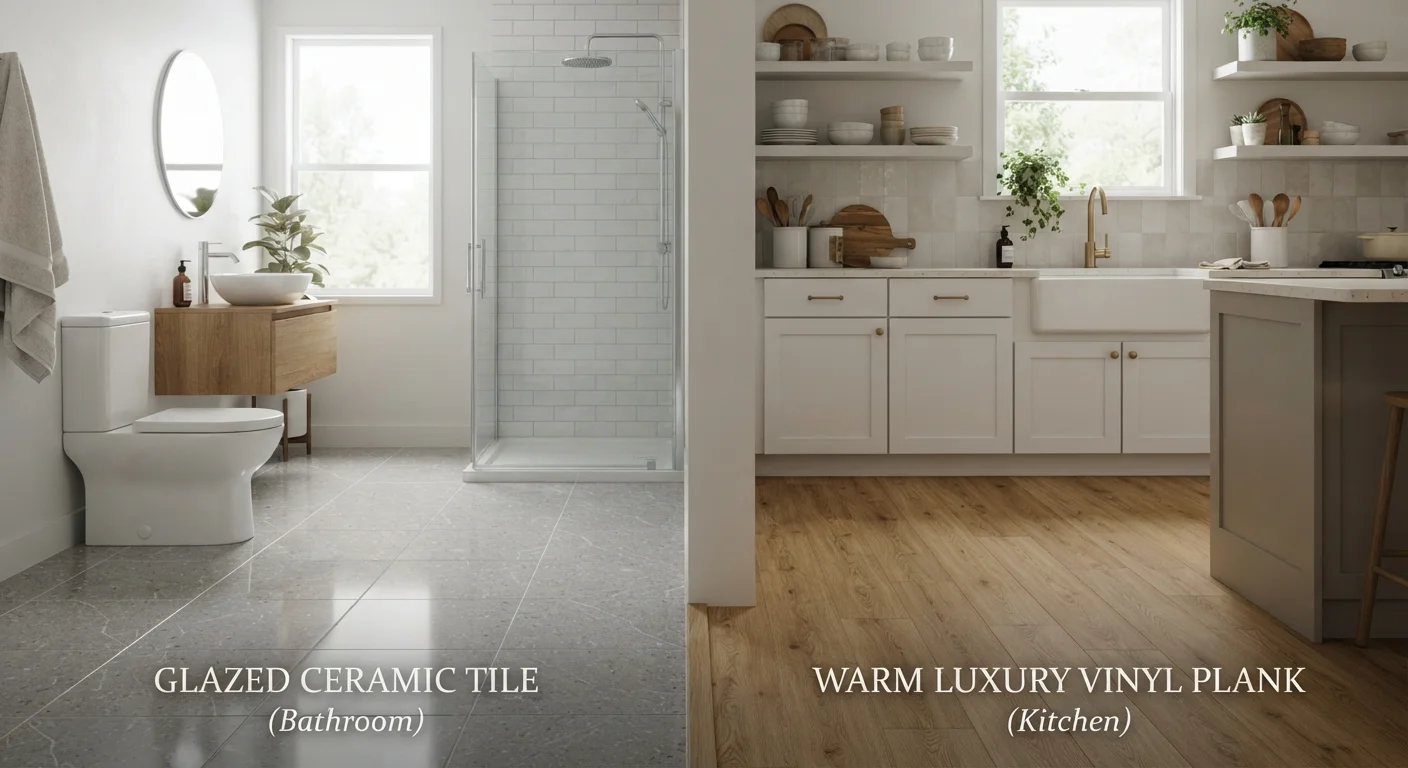
Option A
Ceramic or Porcelain Tile
The time-tested, heavy-duty standard for wet rooms.
Best for: Homeowners prioritizing long-term durability, water resistance, and resale appeal in high-moisture spaces.
Option B
Luxury Vinyl Plank (LVP)
The budget-friendly, comfort-forward modern alternative.
Best for: Homeowners seeking faster installation, lower upfront cost, and a warmer underfoot feel in kitchens and bathrooms.
Cost and Installation: Where LVP Has the Edge
Material costs for ceramic or porcelain tile typically run $3-$10 per square foot, while professional installation - which includes setting mortar, laying tile, and grouting - can add another $5-$15 per square foot depending on the tile size and pattern. Large-format tiles and intricate layouts increase labor costs significantly.
Luxury vinyl plank generally falls in the $2-$7 per square foot range for materials, with installation running $1-$4 per square foot. Many LVP products use a floating click-lock system that experienced DIYers can manage over a weekend, reducing or eliminating labor costs. Tile, by contrast, requires surface preparation, thinset mortar, and grout - a multi-day process that often benefits from professional skill to avoid lippage (uneven tile edges) or cracked grout lines.
Subfloor readiness affects both options. Tile demands a nearly perfectly level, rigid substrate; even minor flex can cause grout to crack over time. LVP tolerates slightly uneven subfloors but still performs best when the surface is clean, flat, and dry. If you're planning a broader renovation, the Bathroom Remodeling from Start to Finish guide covers subfloor prep as part of a full project sequence.
| Criterion | Ceramic / Porcelain Tile | Luxury Vinyl Plank (LVP) |
|---|---|---|
| Material cost (per sq ft) | $3-$10 | $2-$7 |
| Installation cost (per sq ft) | $5-$15 (professional) | $1-$4 or DIY |
| Typical lifespan | 50+ years | 15-25 years |
| Water resistance | Excellent (grout needs sealing) | Very good (surface only) |
| Heat tolerance | Very high | Moderate (check specs) |
| Comfort underfoot | Hard, cold | Cushioned, warmer |
| DIY friendliness | Moderate to difficult | Beginner-friendly |
| Resale appeal | High (especially bathrooms) | Good and improving |
| Maintenance | Grout sealing required | Low; routine cleaning |
Durability, Water Resistance, and Long-Term Wear
Tile's biggest advantage is its hardness and longevity. Glazed ceramic and porcelain tiles resist scratches, stains, and heat - porcelain in particular is dense enough to handle steam showers and floors near ranges without degradation. A properly installed tile floor can last several decades with routine grout maintenance.
LVP is waterproof at the surface and handles spills well, but it is not immune to moisture damage over time. Water that seeps under planks through gaps at walls or around fixtures can cause the backing layer to swell or the adhesive to fail. LVP also has a lower heat tolerance - exposure to direct sunlight through windows or radiant heating systems above certain temperature thresholds can cause warping or discoloration. Most manufacturers specify a maximum surface temperature, so check the product specifications before pairing LVP with in-floor heating.
Tile's grout lines require periodic sealing - typically every one to three years in heavy-use areas - to prevent moisture absorption, staining, and mold growth. Unsealed grout in showers or near sinks is a common source of long-term moisture problems. Both materials reward proper installation; shortcuts in either case tend to shorten the floor's functional life.
50+ years
Typical lifespan of well-maintained tile
Porcelain and ceramic tile are among the longest-lasting flooring materials available when properly installed and maintained.
15-25 years
Average LVP lifespan
Quality LVP products from reputable manufacturers typically carry wear warranties in the 15-25 year range for residential use.
1-3 years
Recommended grout sealing interval
Industry guidelines generally suggest resealing tile grout in high-moisture areas every one to three years to prevent water intrusion and mold.
Comfort, Aesthetics, and Practical Considerations
Tile is notoriously cold underfoot, which can be an issue in bathrooms during winter months. In-floor radiant heating systems pair well with tile - the material conducts and holds heat effectively - but this adds cost. LVP has a built-in cushion layer that makes it noticeably softer underfoot, reducing fatigue for cooks who spend long stretches standing at counters.
Aesthetically, both materials have expanded dramatically in recent years. Tile is available in an enormous range of colors, sizes, finishes, and textures, including options that closely mimic natural stone or wood. LVP realistically replicates wood grain, stone, and even tile patterns using photographic print layers - making it an attractive option for spaces where a wood-look floor is desired without the moisture risk of real hardwood. For a deeper look at how hardwood alternatives compare, see Engineered Hardwood vs. Solid Hardwood Flooring.
In bathrooms, tile remains the stronger choice for wet zones like shower surrounds and directly around freestanding tubs. LVP works well in bathroom flooring outside the wet zone but should not be used inside shower enclosures. In kitchens, both materials perform reliably, with the choice often coming down to budget, comfort preference, and installation timeline.
This article is for general informational purposes only. Costs, installation requirements, and product specifications vary by region and manufacturer. Always consult local building codes and licensed professionals for permitted or structural work.
Radiant Heat Compatibility
If you're planning to install in-floor radiant heating, tile is generally the recommended choice due to its high heat conductivity and tolerance. LVP can be compatible with low-temperature radiant systems, but you must verify the product's maximum temperature rating - typically listed in the manufacturer's technical specifications - before installation. Exceeding that threshold can void the warranty and damage the planks.
The content on this site is for informational purposes only and is not a substitute for professional advice. Always consult a qualified professional for guidance specific to your situation.