

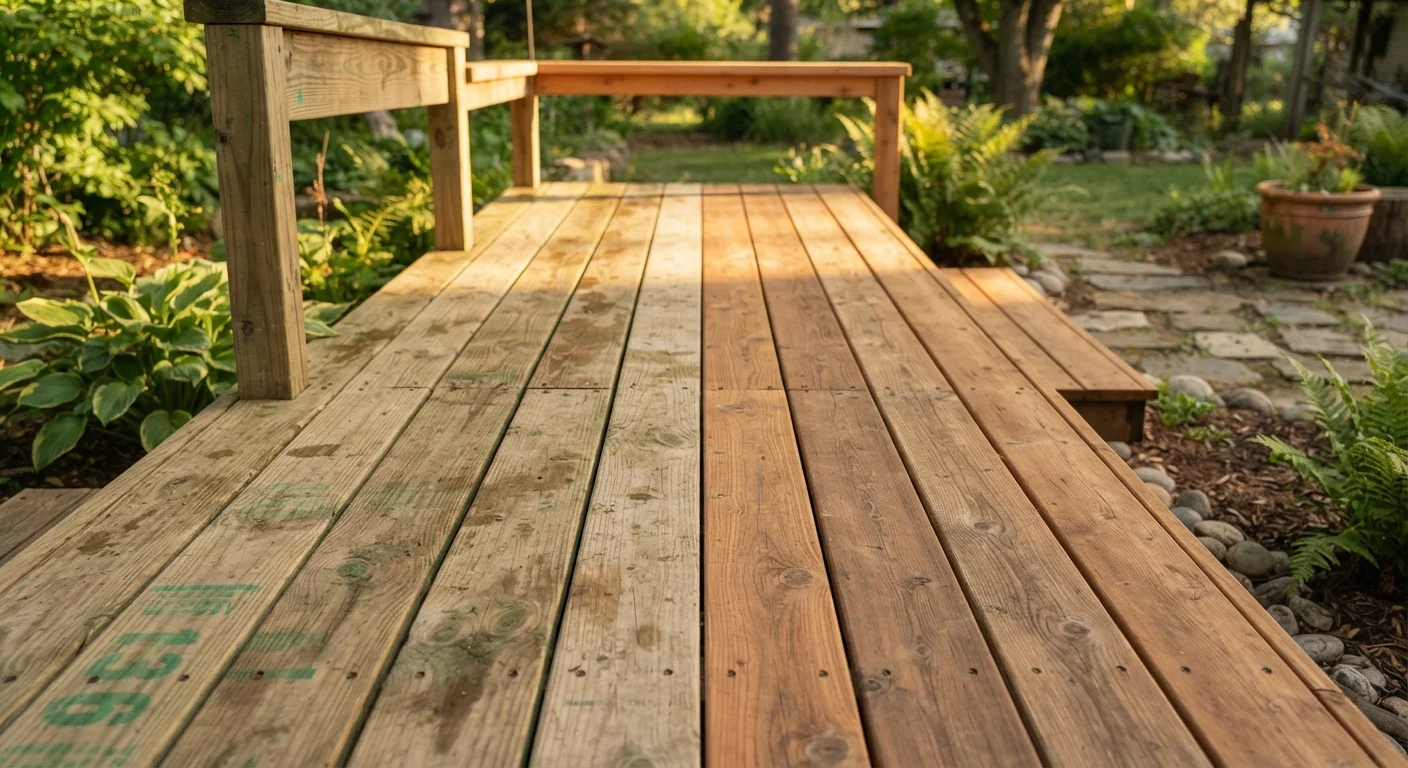
Option A
Pressure-Treated Wood
The hardworking, budget-conscious workhorse of outdoor lumber.
Best for: Structural applications like deck framing, posts, and ground-contact projects where maximum rot resistance is the priority.
Option B
Cedar
The naturally beautiful, low-chemical option for visible outdoor surfaces.
Best for: Decking boards, fence pickets, raised garden beds, and any application where appearance and food safety matter.
How Each Material Is Made - and Why It Matters
Understanding what these two materials actually are helps you make the right call before a single board is cut.
Pressure-treated wood is typically southern yellow pine or a similar softwood that has been infused with chemical preservatives under pressure. The most common modern treatment is ACQ or copper azole, which replaced the older arsenic-based CCA formula phased out for residential use in the early 2000s. These copper-based compounds penetrate deep into the wood fibers and make the lumber highly resistant to fungi, termites, and moisture-driven decay.
Cedar - most often western red cedar in the U.S. - contains naturally occurring oils and tannins that act as built-in preservatives. No chemical treatment is added. This makes cedar inherently resistant to rot and insect damage, though less so than pressure-treated lumber in the most extreme ground-contact or wet conditions.
The production difference has downstream effects on handling. Pressure-treated lumber should be cut with a dust mask, kept away from open flames until fully dried, and its offcuts should not be burned. Cedar carries no such handling restrictions under normal residential use.
Check the Treatment Rating on the Tag
Pressure-treated lumber is sold in different retention levels for different uses. Look for the stamp on each board: 'Above Ground' (UC3B) is for fencing and deck boards, while 'Ground Contact' (UC4A/UC4B) is required for posts and structural members in soil or concrete. Using the wrong retention level for a ground-contact application can significantly shorten the life of your project.
Comparing Durability, Cost, and Appearance
No single lumber wins on every dimension - the right choice depends on which trade-offs matter most for your specific project.
| Criterion | Pressure-Treated Wood | Cedar |
|---|---|---|
| Rot & Insect Resistance | Very high (chemical treatment) | Good (natural oils) |
| Ground-Contact Suitability | Excellent | Limited |
| Typical Upfront Cost | Lower | Higher |
| Appearance / Finish | Rough; needs drying before staining | Fine grain; stains easily |
| Chemical Considerations | Copper-based preservatives present | No added chemicals |
| Raised Garden Bed Use | Debated for edible crops | Widely recommended |
| Fastener Requirement | Must use corrosion-resistant fasteners | Corrosion-resistant recommended |
| Dimensional Stability | Can warp/check as it dries | More stable; less warping |
On durability, pressure-treated wood has the edge in ground-contact situations. Posts set directly in soil, deck ledger boards fastened to the house, and any framing within six inches of grade should generally be pressure-treated. Cedar, while naturally durable, degrades faster when in prolonged contact with wet soil.
For above-grade, visible surfaces - decking boards, fence pickets, pergola rafters - cedar competes well on longevity while offering a significantly more attractive appearance. It takes stains and sealers evenly and doesn't require the extended drying time that freshly milled pressure-treated lumber does before finishing.
Cost varies by region and lumber market conditions, but pressure-treated lumber is typically less expensive per linear foot than cedar. On a large deck, that difference adds up. Some homeowners use a hybrid approach: pressure-treated framing and joists beneath, with cedar decking boards on top. This captures the structural strength of treated lumber and the aesthetic warmth of cedar where it's most visible. See our seasonal deck care guide for maintenance steps that apply to both materials.
15-25 yrs
Typical lifespan of pressure-treated deck boards
Lifespan estimates from the U.S. Forest Products Laboratory suggest properly maintained pressure-treated decking can last 15 to 25 years or more above grade.
20-30 yrs
Typical lifespan of cedar decking above grade
Western red cedar, when sealed and maintained regularly, is commonly reported to last 20 to 30 years in above-grade residential applications.
~30-50%
Typical cost premium of cedar over pressure-treated
Regional pricing varies, but cedar decking boards frequently cost 30 to 50 percent more per linear foot than comparable pressure-treated lumber at most lumber yards.
Safety, Garden Use, and Long-Term Maintenance
One of the most common questions homeowners ask is whether pressure-treated wood is safe for raised garden beds. The current copper-based treatments used in residential lumber are considered significantly safer than the old CCA formula, but many gardeners and extension horticulturalists still recommend cedar or untreated wood for beds growing edible crops - particularly root vegetables that have direct soil contact. If you choose pressure-treated lumber for a raised bed growing ornamentals or non-edible plants, the risk concern is much lower.
For long-term maintenance, both materials benefit from periodic sealing. New pressure-treated lumber should be allowed to dry for several weeks (or until it passes the water-bead test) before applying a water-repellent sealer. Cedar can be sealed sooner but will also age gracefully to a silver-gray if left unfinished - a look many homeowners intentionally choose for fences and garden structures.
Check fasteners when you inspect either material. Pressure-treated wood's copper compounds can corrode standard steel nails and screws over time; always use hot-dipped galvanized, stainless steel, or fasteners specifically rated for treated lumber. Cedar is less corrosive but benefits from the same quality fasteners for longevity. For a broader view of keeping your home's exterior in good shape, our guide on maintaining windows and exterior doors covers similar principles of sealing and seasonal inspection.
This article is for general informational purposes only. Always verify local building codes and permit requirements with your municipality before beginning structural outdoor projects, and consult a licensed contractor for work involving load-bearing construction.
The content on this site is for informational purposes only and is not a substitute for professional advice. Always consult a qualified professional for guidance specific to your situation.