

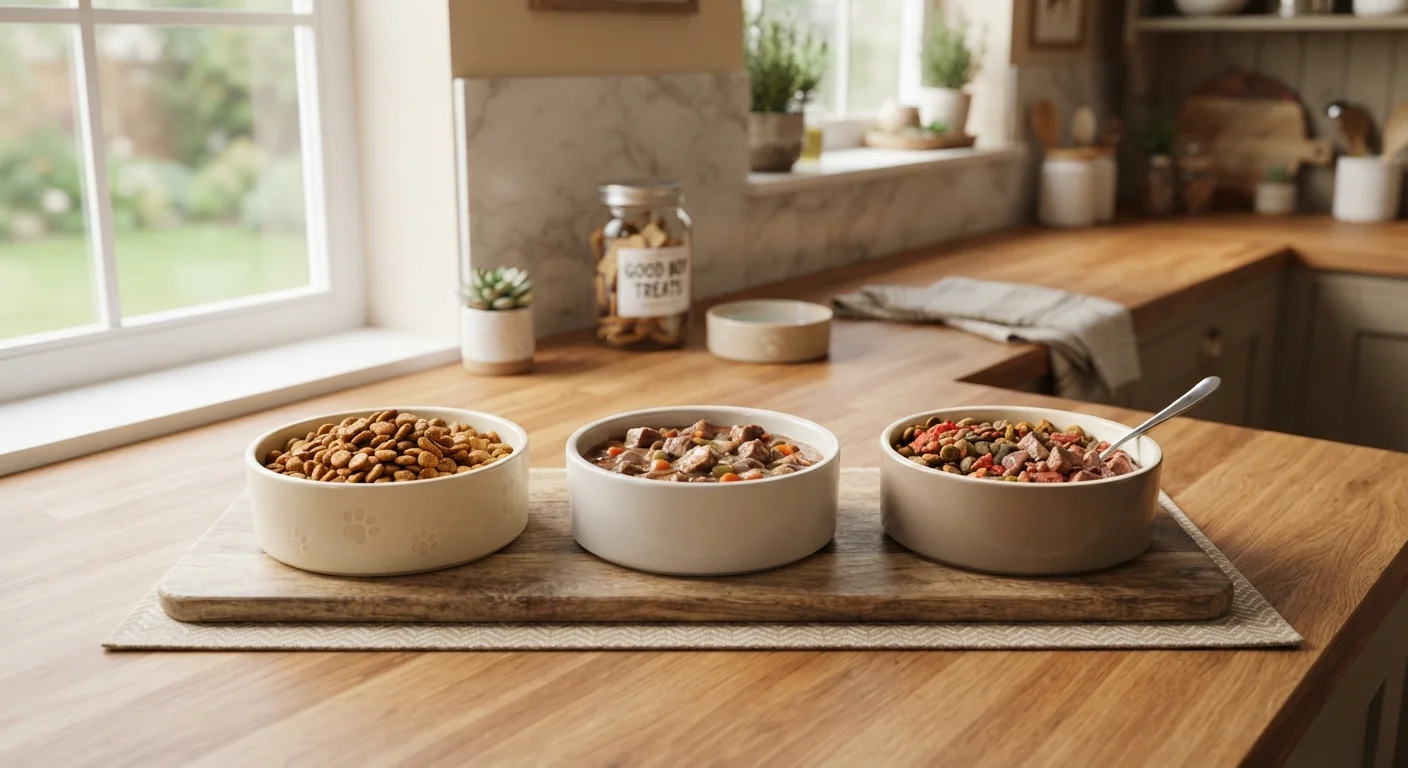
Our Verdict
Neither wet nor dry food is objectively better — each format has real strengths and real trade-offs. The right choice depends on your pet's individual health status, life stage, and daily routine. When in doubt, a veterinarian's input is the most reliable guide.
| Best for | Recommended |
|---|---|
| Pets with urinary issues, kidney disease, or low thirst drive | Wet food |
| Pet owners managing a tight budget or needing convenient long-term storage | Dry kibble |
| Owners seeking a nutritional middle ground with palatability benefits | Mixed feeding |
| Pets with dental disease or difficulty chewing hard food | Wet food |
Why the Format of Pet Food Actually Matters
When pet owners debate food formats, the conversation usually starts and ends with convenience or cost. But the format of your pet's food — wet, dry, or a combination — affects far more than your grocery bill. It influences hydration, caloric intake, palatability, dental health, and how well a pet with a specific condition can absorb nutrients.
Understanding these differences helps you make a more deliberate choice rather than defaulting to habit. For a deeper look at how to decode what's actually in any pet food product, see our guide on reading pet food labels.
| Dry Kibble | Wet Food | Mixed Feeding | |
|---|---|---|---|
| Moisture content | 6–10% | 70–80% | Varies by ratio |
| Cost per calorie | Lower | Higher | Moderate |
| Shelf life (opened) | Weeks in sealed container | 1–2 days refrigerated | Varies by component |
| Palatability | Moderate | High | High |
| Suitable for dental health | Mild mechanical benefit | Easier to chew | Depends on ratio |
| Hydration support | Low | High | Moderate to high |
| Portion control ease | Easy to measure | Requires careful portioning | Requires tracking both |
Dry Food (Kibble): Convenience With Caveats
Kibble typically contains 6–10% moisture. It's shelf-stable, calorie-dense, and cost-effective — practical advantages that explain its dominance in the pet food market. Some evidence suggests that chewing dry kibble may provide a mild mechanical cleaning effect on teeth, though this doesn't replace veterinary dental care.
The primary limitation is moisture content. Many cats, in particular, have a low natural thirst drive and depend on food to meet their hydration needs. A diet composed entirely of dry kibble can leave cats chronically under-hydrated, which veterinary research has linked to increased risk of urinary tract disease and kidney stress over time.
Add Water to Stretch Hydration
If your pet only tolerates dry food, adding a small amount of warm water to the kibble at mealtime can meaningfully increase their daily moisture intake. This is a simple, low-cost way to support urinary health without switching formats entirely. Check with your vet if your pet has a condition where fluid intake needs to be carefully monitored.
Dogs generally tolerate dry-only diets better than cats, but individual factors such as kidney function, age, and health conditions still matter. Pets on dry food should always have access to fresh water throughout the day.
Wet Food: High Moisture, Higher Cost
Canned or pouched wet food typically contains 70–80% moisture — far closer to what a cat or dog would consume through fresh prey in the wild. This makes it a valuable tool for supporting hydration, especially in cats prone to urinary or kidney problems.
Wet food is also more palatable for many pets, which makes it useful for senior animals with diminished appetites, recovering patients, or picky eaters. The texture is easier to chew, making it a practical option for pets with dental disease, missing teeth, or jaw discomfort.
The trade-offs are real: wet food is more expensive per calorie, requires refrigeration once opened, and spoils within a few hours at room temperature. Owners managing weight in their pets also need to track portions carefully, since caloric density varies considerably between products. This feeds directly into the importance of structured meal timing rather than free-feeding — a habit that carries additional risks covered in our piece on when free-feeding goes wrong.
Mixed Feeding: A Practical Middle Ground
Many veterinarians and pet nutritionists support a mixed feeding approach — combining a measured portion of kibble with wet food at one or more meals. This strategy can help increase overall moisture intake while keeping food costs lower than an all-wet diet.
The key risk with mixed feeding is unintentional overfeeding. Each food format has its own caloric density, and combining them without adjusting portions can lead to gradual weight gain. Treat the two formats as components of a single daily caloric budget rather than separate meals.
Mixed feeding also adds variety in texture and scent, which may reduce the risk of a pet becoming overly fixated on one food type — a problem that can make dietary transitions later in life more difficult. For a broader view of how food choices connect to long-term pet health, see small habits that make a big difference in pet longevity.
70–80%
Moisture in typical wet pet food
This high water content is the primary reason veterinarians often recommend wet food for cats prone to urinary tract disease.
~6–10%
Moisture in dry kibble
The low moisture level in kibble means pets eating only dry food must drink significantly more water to maintain adequate hydration.
Making the Right Call for Your Pet
No format works equally well for every animal. Kittens, senior cats with kidney disease, and dogs recovering from illness may have very different needs from a healthy two-year-old dog with no medical history. Life stage, breed size, activity level, dental health, and existing conditions all shape what format — or combination — is most appropriate.
If your pet has a diagnosed health condition, always discuss dietary format with your veterinarian before making changes. Nutrition debates around trends like grain-free diets are also worth understanding clearly — our piece on raw diets and grain-free pet food separates the evidence from the marketing. Whatever you choose, a food that meets AAFCO (Association of American Feed Control Officials) nutritional standards for your pet's life stage is a sound baseline.
This article is for general informational purposes only and is not a substitute for professional veterinary advice. Always consult your veterinarian before making significant changes to your pet's diet.
The content on this site is for informational purposes only and is not a substitute for professional advice. Always consult a qualified professional for guidance specific to your situation.