

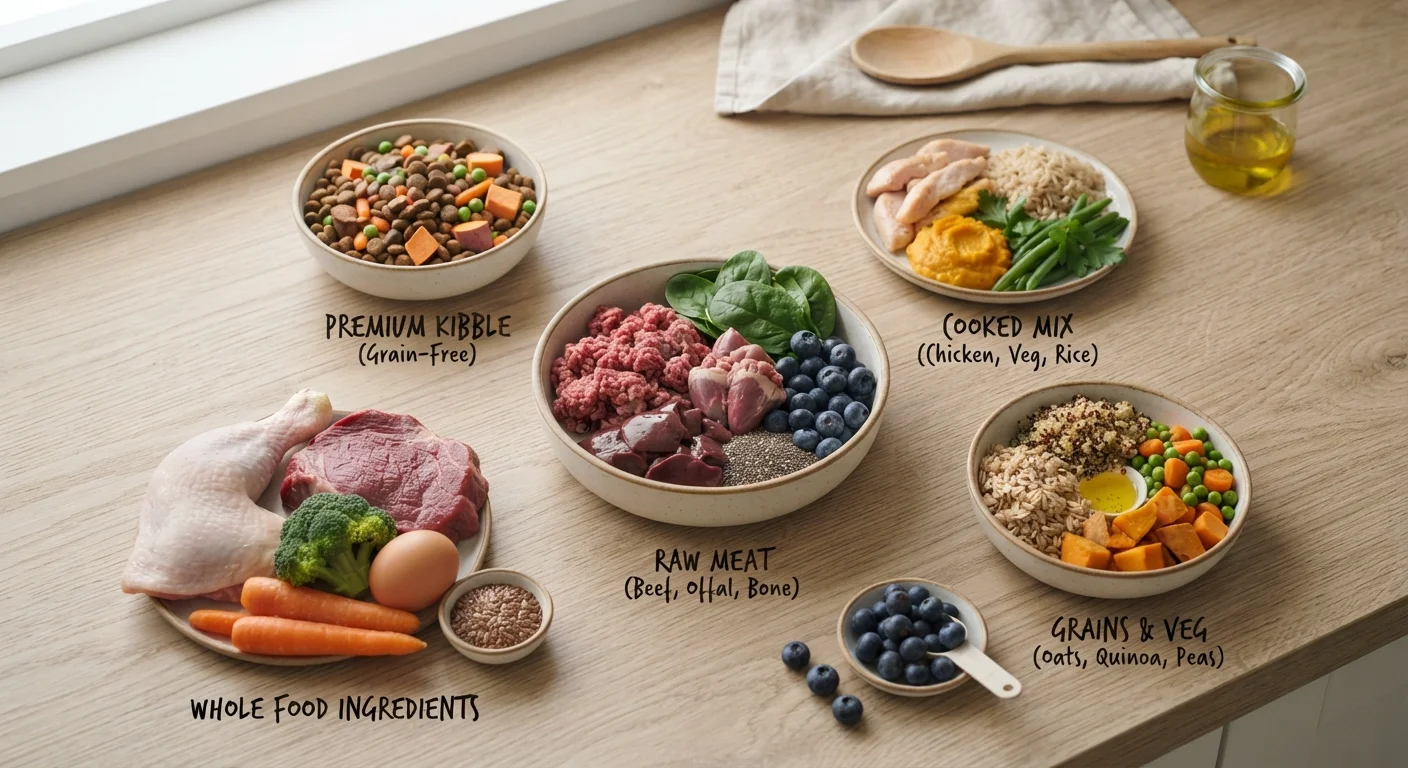
Why Pet Nutrition Debates Are So Persistent
Few topics generate more passionate disagreement among pet owners than what to put in the bowl. Raw feeding advocates, grain-free enthusiasts, and proponents of home-cooked meals each present compelling-sounding arguments — often backed by testimonials and marketing language that can be difficult to distinguish from evidence.
Understanding which claims are grounded in nutritional science — and which are rooted in analogy, marketing, or anecdote — helps you make genuinely informed decisions for your animal. The Pet Care Basics hub offers broader context on feeding, grooming, and daily wellness. For now, let's address the most common misconceptions directly.
Myth
Raw diets are more natural and therefore healthier for dogs and cats.
Fact
"Natural" does not mean safe or nutritionally complete. Raw diets carry documented risks that commercially prepared foods are specifically processed to eliminate.
The appeal of raw feeding often rests on the assumption that ancestral eating patterns represent optimal nutrition. But domesticated dogs have evolved over thousands of years and show significant genetic adaptations for digesting cooked and processed foods — including starch. More critically, raw meat, bones, and organs can harbor Salmonella, Listeria, E. coli, and other pathogens that pose risks to pets and to the people handling their food.
Multiple veterinary and public health organizations, including the American Veterinary Medical Association (AVMA), have issued guidance advising against raw protein diets for these reasons. Additionally, many raw diets — particularly homemade ones — are nutritionally unbalanced, lacking essential vitamins and minerals that become apparent only after extended feeding.
Myth
Grain-free food is healthier because dogs and cats don't need carbohydrates.
Fact
Grain-free does not mean low-carbohydrate, and the elimination of grains has been associated with a serious heart condition in dogs.
Many grain-free formulas replace grains with legumes such as peas, lentils, and chickpeas — ingredients that are also high in carbohydrates. The net carbohydrate content may be similar to or higher than grain-inclusive foods. More importantly, the U.S. Food and Drug Administration (FDA) opened an investigation into a potential link between grain-free diets high in legumes and dilated cardiomyopathy (DCM), a serious and potentially fatal heart disease in dogs. Research is ongoing, and a causal mechanism has not been definitively established, but the signal was significant enough to prompt formal scientific review.
Grains such as rice, oats, and barley are digestible and well-tolerated by most dogs. True grain allergies exist but are far less common than marketing suggests.
Myth
Cats are basically small dogs, so similar diet rules apply to both.
Fact
Cats are obligate carnivores with distinct nutritional needs that differ fundamentally from dogs, which are omnivores.
Cats require specific nutrients — taurine, arachidonic acid, and preformed vitamin A — that their bodies cannot synthesize adequately on their own. Dogs can produce these from precursors; cats cannot. A diet appropriate for a dog can be dangerously deficient for a cat over time. This is why feeding cats dog food regularly, or placing them on plant-heavy diets without veterinary supervision, carries real health risks including heart disease (from taurine deficiency) and vision problems.
High-quality animal protein is genuinely non-negotiable for cats in a way it is not for dogs. This doesn't mean raw protein — it means a diet where meat-sourced nutrients are nutritionally adequate and safely prepared.
Myth
Human-grade or home-cooked pet food is automatically superior to commercial pet food.
Fact
Ingredient quality does not guarantee nutritional completeness. Most home-cooked pet diets have been found to be deficient in key nutrients.
Several studies examining recipes from veterinary textbooks, websites, and published books have found that the majority fail to meet AAFCO minimum nutrient profiles without supplementation. Cooking also destroys or degrades certain nutrients, requiring deliberate refortification. Preparing a genuinely balanced home-cooked diet for a pet typically requires guidance from a board-certified veterinary nutritionist.
This doesn't mean home cooking is impossible — it means it requires the same rigor as formulating any complete diet. The term "human-grade" on packaging is a marketing descriptor with limited regulatory meaning in the pet food context; it does not guarantee the final product is nutritionally complete for your pet's life stage.
Myth
Protein content on the label tells you everything about the food's protein quality.
Fact
Crude protein percentage reflects quantity, not quality. The source and digestibility of protein are equally important.
The guaranteed analysis panel on a pet food label shows crude protein as a percentage, but this figure can be met by protein sources that vary enormously in digestibility and amino acid completeness. A food with named meat as its primary protein source generally offers better bioavailability than one padded with plant proteins or by-product meals of uncertain origin. Just as protein source and amino acid profile both matter for human diets, the same principle applies to pet nutrition. Look at the ingredient list alongside the analysis panel, and prioritize foods with an AAFCO feeding trial statement where possible.
What the Evidence Actually Supports
Across these debates, a consistent theme emerges: nutritional adequacy matters far more than ingredient philosophy. A food can be raw, grain-free, or home-cooked and still fail to meet your pet's complete nutrient requirements. Conversely, a well-formulated commercial kibble can support excellent long-term health.
90%+
Of home-cooked pet diet recipes found deficient
Multiple peer-reviewed studies have found that the vast majority of home-cooked dog and cat diet recipes — including those from published books — fail to meet AAFCO minimum nutrient guidelines without added supplementation.
~10%
Of dogs with food allergies allergic to grains
Veterinary dermatology research suggests that true grain allergies are relatively uncommon in dogs; proteins such as beef and chicken are far more frequent triggers of food-related allergic reactions.
The best practical benchmark remains the Association of American Feed Control Officials (AAFCO) nutritional adequacy statement. As explained in our guide to reading pet food labels, this statement indicates whether a food has been formulated or tested to meet established nutrient profiles for a given life stage. No trendy ingredient list substitutes for that baseline.
Consult a Veterinarian Before Changing Your Pet's Diet
Switching to a raw, grain-free, home-cooked, or novel-protein diet based on online claims or testimonials alone can create nutritional gaps that take months to manifest as visible health problems. A veterinarian — and in complex cases, a board-certified veterinary nutritionist — can assess your individual pet's needs, life stage, and health status before any major dietary shift. Nutritional deficiencies in pets are often silent until significant damage has occurred.
If you're weighing wet versus dry food alongside these other factors, the comparison of wet food, dry food, and mixed feeding can help you think through the nutritional trade-offs. And if your pet's free-choice eating habits concern you, understanding when free-feeding backfires is worth reading alongside any diet change.
This article is for general informational purposes only and does not constitute veterinary or nutritional advice. Always consult a licensed veterinarian before making significant changes to your pet's diet.
The content on this site is for informational purposes only and is not a substitute for professional advice. Always consult a qualified professional for guidance specific to your situation.