

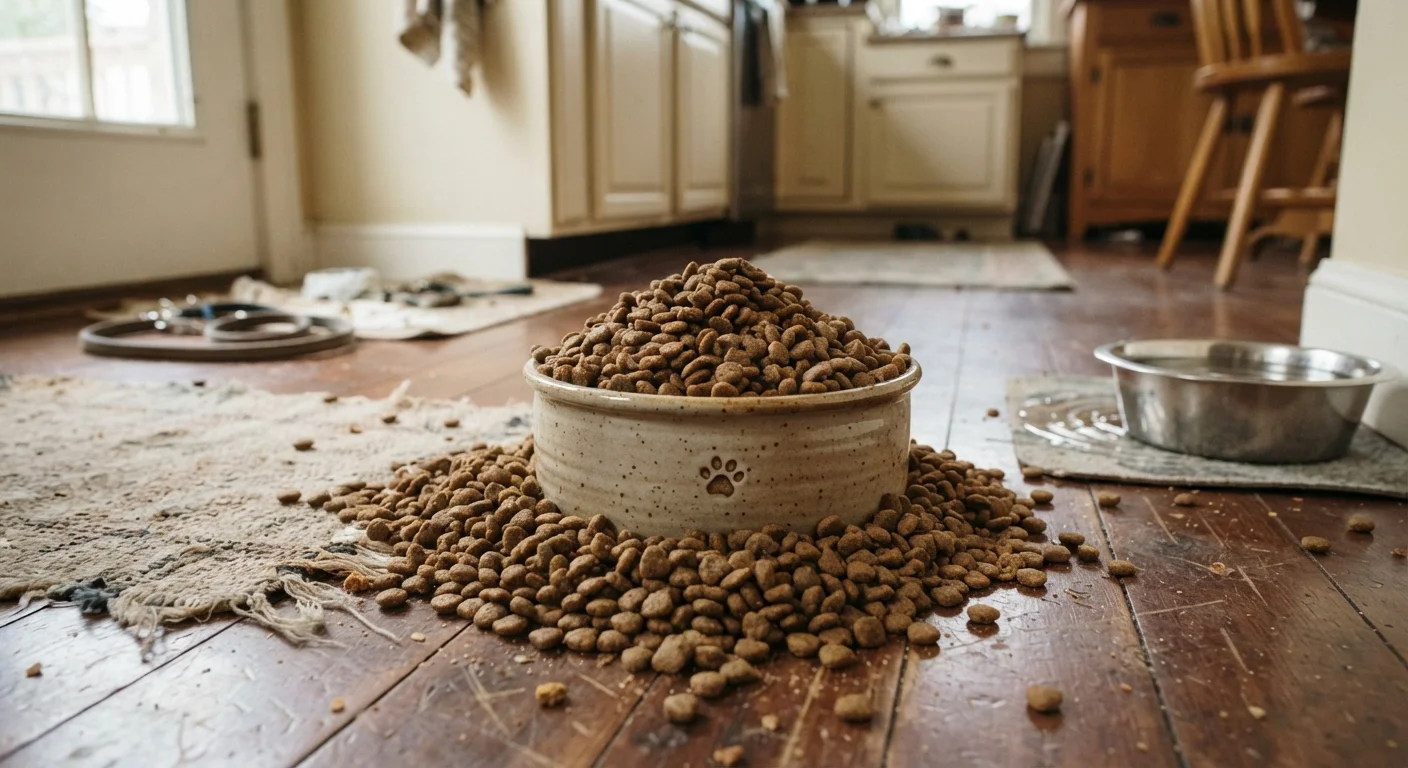
Why Free-Feeding Is More Complicated Than It Looks
Free-feeding — leaving food available at all times so a pet can eat whenever it wants — is popular for its simplicity. Owners appreciate not having to be home at set hours, and it can genuinely work well for a small subset of pets. But for many dogs and cats, an always-full bowl creates a slow accumulation of health problems that are difficult to reverse once established.
The core issue is that free-feeding removes one of the most useful daily health checkpoints an owner has: the meal. Watching a pet eat tells you something about its energy, comfort, and wellbeing. Without that window, subtle changes go unnoticed. As part of the small daily habits that support long-term pet health, structured feeding is one of the simplest changes an owner can make.
Appetite Changes Are a Key Health Signal
When food is available around the clock, a subtle drop in appetite — one of the earliest indicators of illness — is nearly impossible to detect. Veterinarians often rely on owners reporting changes in eating behavior to identify problems early. Scheduled feeding gives you a clear, daily baseline for what 'normal' looks like for your pet.
The Most Common Free-Feeding Mistakes — and How to Correct Them
The problems associated with free-feeding rarely stem from bad intentions. They usually develop from reasonable-sounding assumptions that don't hold up across different animals, life stages, or household situations. Understanding where things go wrong is the first step toward a better approach.
Assuming all pets self-regulate their food intake naturally.
Why it happens: Some pets, particularly certain cat breeds, can moderate their eating. Owners generalize this behavior and assume all animals will stop when full.
Failing to notice gradual weight gain because food intake is never measured.
Why it happens: When a bowl is simply topped off each day, owners rarely know exactly how many calories their pet is consuming. Weight gain accumulates slowly and can go unnoticed for months.
Using free-feeding in a household with multiple pets without tracking individual consumption.
Why it happens: Owners often place one large communal bowl and assume every animal eats a fair share. In practice, dominant or faster-eating pets often consume more, while timid animals may not get enough.
Leaving wet or raw food out for extended periods as if it were dry kibble.
Why it happens: Owners apply the same free-feeding logic to all food types without considering food safety. Wet food left at room temperature can harbor bacterial growth within a couple of hours.
Overlooking the behavioral benefits of structured mealtimes.
Why it happens: The connection between feeding schedules and pet behavior is underappreciated. Owners focus on the convenience of free-feeding and miss that mealtime is a powerful training and bonding tool.
59%
Pet obesity prevalence in the U.S.
According to the Association for Pet Obesity Prevention, approximately 59% of dogs and cats in the United States were classified as overweight or obese in recent clinical assessments.
2 hrs
Safe window for wet food at room temperature
Food safety guidelines generally recommend discarding moist pet food left at room temperature after two hours to reduce the risk of bacterial contamination.
If you have questions about whether your pet's current diet matches their nutritional needs, our overview of pet nutrition debates offers useful context on what the evidence actually supports.
Transitioning Away From Free-Feeding
Switching a pet accustomed to constant food access to a structured schedule takes patience. Abrupt changes can cause stress and food-guarding behaviors, particularly in pets that have learned to graze anxiously. A gradual transition over one to two weeks is generally recommended: begin by offering food for defined windows (such as 20–30 minutes, twice daily) and remove the bowl between meals. Most pets adapt within a week or two.
Cats, in particular, may be vocal in their objection initially — this is normal and typically resolves as they adjust to the new routine. Do not interpret persistent meowing as a sign the cat is starving; it usually reflects a behavioral adjustment rather than a nutritional need. If a pet genuinely refuses to eat for more than 24–48 hours during the transition, consult your veterinarian.
Watch for Food-Guarding During Transitions
Pets that have had unrestricted food access for long periods may develop resource-guarding behavior when meals become limited. Signs include growling, stiffening, or snapping near the food bowl. If you observe these behaviors, pause the transition and speak with a veterinary behaviorist or your vet before continuing, rather than pushing through independently.
For pet owners curious about how lifestyle factors interact with feeding habits, our article on indoor vs. outdoor cat health trade-offs addresses how activity level and environment affect caloric needs.
This article is for general informational purposes only and is not a substitute for professional veterinary advice. Always consult a qualified veterinarian for guidance specific to your pet's health and dietary needs.
The content on this site is for informational purposes only and is not a substitute for professional advice. Always consult a qualified professional for guidance specific to your situation.