

Our Verdict
Neither lifestyle is universally right — each involves genuine trade-offs in enrichment, safety, and long-term health. Indoor living generally offers a longer, safer life, but requires committed enrichment to keep a cat mentally and physically healthy. Outdoor or mixed-access arrangements can benefit certain cats but demand attentive parasite control, vaccination, and hazard awareness.
Owners who want to maximize feline longevity and can invest in enriched indoor environments will generally find indoor-only living the stronger choice; those with access to safe, enclosed outdoor spaces and the commitment to proactive veterinary care may successfully support a mixed-access lifestyle.
How Lifestyle Shapes a Cat's Lifetime Health
The indoor-versus-outdoor question is one of the most consequential decisions a cat owner makes — yet it's rarely framed that way. Environment affects exposure to disease, injury, parasites, behavioral stress, and obesity, all of which compound over a cat's lifetime. Understanding the specific mechanisms behind each trade-off helps owners make a genuinely informed choice rather than defaulting to habit or convenience.
For a broader look at how daily routines drive feline wellness, see small habits that extend healthy pet lives. And if you're setting up care for a cat from the start, a new owner's wellness roadmap covers foundational steps worth knowing early.
The Case for Keeping Cats Indoors
Veterinary and animal welfare organizations generally recommend indoor living as the safer default, and the data on lifespan supports this position. Indoor cats are shielded from a wide range of acute and chronic hazards that outdoor cats encounter routinely.
Significantly longer average lifespan
Indoor cats live an estimated 12–18 years on average, compared to estimates of 2–5 years for free-roaming outdoor cats, according to widely cited veterinary sources. Reduced exposure to vehicles, predators, and disease accounts for much of this difference.
Lower risk of infectious disease
Indoor cats have minimal contact with unknown animals carrying pathogens such as feline leukemia virus, feline immunodeficiency virus, or upper respiratory viruses. This dramatically reduces transmission opportunities even in cats that are vaccinated.
Reduced parasite burden
Fleas, ticks, intestinal worms, and ear mites are far less common in cats without outdoor exposure. This reduces both discomfort and the risk of parasite-borne illness, as well as lowering the likelihood of household infestation.
Protection from trauma and toxin exposure
Traffic, territorial fights with other cats, and accidental ingestion of rodenticides, antifreeze, or toxic plants are among the leading causes of injury and death in outdoor cats. Indoor environments largely eliminate these hazards.
Easier health monitoring
Owners can more readily observe changes in appetite, litter box habits, mobility, and behavior — early warning signs that often signal illness before it becomes severe.
12–18 years
Average lifespan of indoor cats
Veterinary estimates consistently place indoor cat life expectancy well above that of outdoor cats, primarily due to reduced hazard exposure.
2–5 years
Estimated average lifespan of free-roaming outdoor cats
This estimate, cited across veterinary and animal welfare literature, reflects the compounding effect of traffic, disease, and territorial conflict.
~60%
U.S. pet cats kept primarily indoors
Surveys by the American Pet Products Association suggest the majority of owned cats in the U.S. are kept indoors, though practices vary by region and household.
Beyond physical safety, indoor environments allow owners to monitor food intake closely — an advantage worth noting given how easily cats can develop obesity when left to graze freely. If you're weighing feeding strategies for an indoor cat, when free-feeding goes wrong explains why unrestricted access to food carries its own risks.
The Risks That Come With Outdoor Access
Cats that roam outdoors face a substantially different risk profile. While some of these hazards are manageable with diligent veterinary care, others are difficult or impossible to fully mitigate.
Higher risk of trauma from vehicles and animals
Road traffic is one of the most common causes of death in outdoor cats. Encounters with dogs, wildlife, or territorial neighborhood cats also result in bites and injuries that frequently require veterinary treatment.
Greater infectious disease exposure
Outdoor cats regularly encounter strays and wildlife whose vaccination and health status is unknown. This elevates exposure to upper respiratory infections, FeLV, FIV, and rabies, even when the resident cat is vaccinated.
Higher parasite load requires ongoing management
Fleas, ticks, roundworms, and hookworms are significantly more prevalent in cats with outdoor access. Effective prevention requires consistent, year-round parasite control — an added cost and management commitment.
Ingestion of toxins is harder to prevent
Outdoor cats may eat rodents that have ingested rodenticide, drink from puddles contaminated with antifreeze, or chew on toxic garden plants — exposures that are essentially impossible for owners to monitor or control.
Reduced lifespan on average
The cumulative effect of increased hazards means free-roaming outdoor cats have a substantially shorter average life expectancy than their indoor counterparts, a finding reflected consistently across veterinary literature.
A Note on Cats Accustomed to Outdoor Life
Cats that have lived outdoors for extended periods — especially those adopted as adults — may experience significant behavioral stress if suddenly confined indoors. A gradual transition, combined with enriched indoor environments and veterinary guidance, tends to produce better outcomes than an abrupt change. Forcing an experienced outdoor cat inside without adequate adjustment support can itself become a welfare concern.
Outdoor cats are also more likely to encounter neighborhood cats with unknown vaccination histories, increasing transmission risk for diseases like feline leukemia virus (FeLV) and feline immunodeficiency virus (FIV), both of which are incurable and affect immune function long-term.
What Indoor Cats Genuinely Miss — And How to Compensate
Acknowledging the benefits of outdoor access is important for an honest assessment. Outdoor cats engage in predatory behavior, navigate varied terrain, and experience sensory stimulation that is difficult to fully replicate inside a home. Cats deprived of adequate enrichment can develop stress-related behaviors including over-grooming, aggression, or litter box avoidance. For more on the latter, litter box problems that have nothing to do with spite breaks down the medical and environmental causes owners often miss.
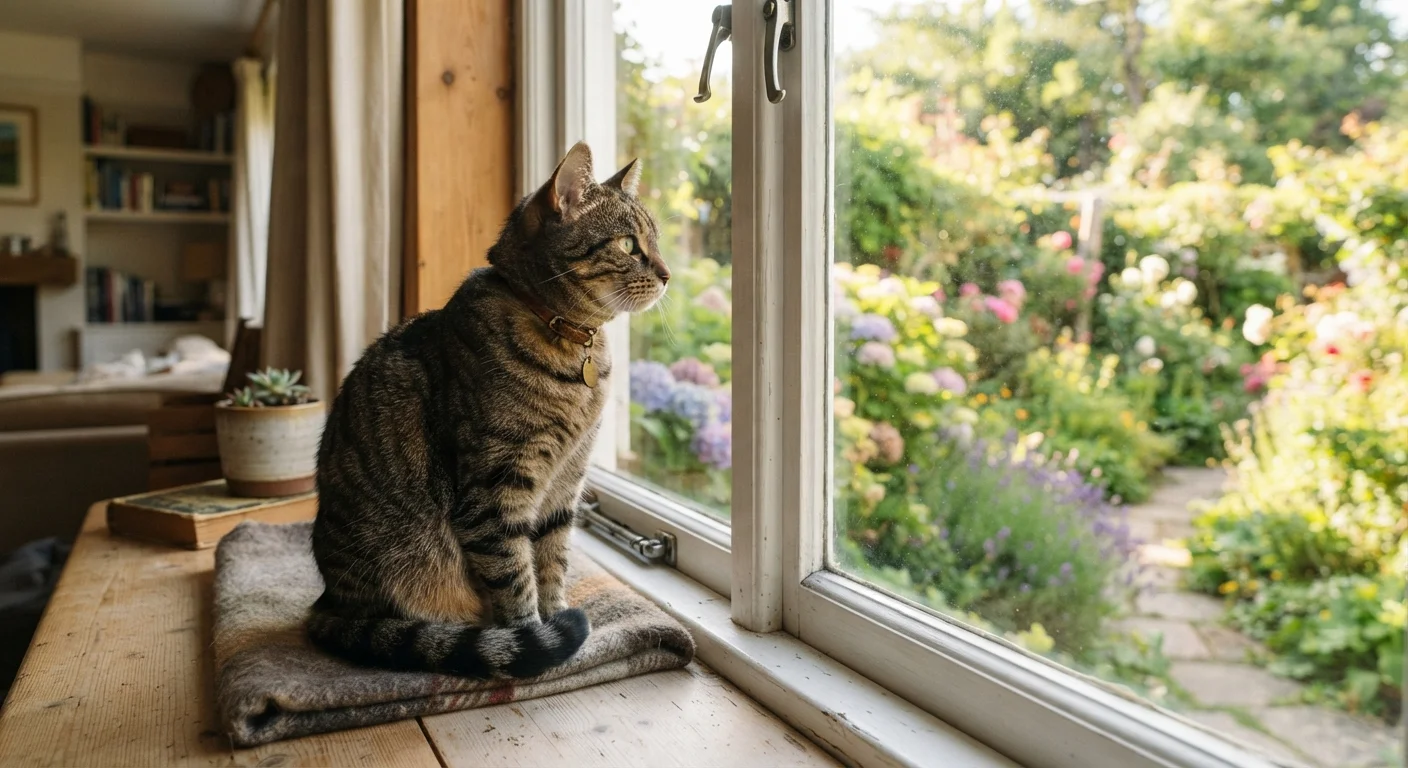
Effective indoor enrichment includes rotating puzzle feeders, vertical climbing structures, window perches with bird feeders placed outside for viewing, and regular interactive play sessions using wand-style toys. These tools target the same predatory instincts outdoor activity fulfills. Supervised leash walking and enclosed outdoor structures called catios — screened enclosures that attach to windows or doors — are increasingly popular middle-ground options that provide fresh air and stimulation without free-roaming risks.
For a broader species-level comparison of how environment affects wellness across different pets, see pet wellness across species.
This article is for general informational purposes only and does not constitute veterinary advice. Consult a licensed veterinarian for guidance tailored to your cat's individual health needs and circumstances.
The content on this site is for informational purposes only and is not a substitute for professional advice. Always consult a qualified professional for guidance specific to your situation.