

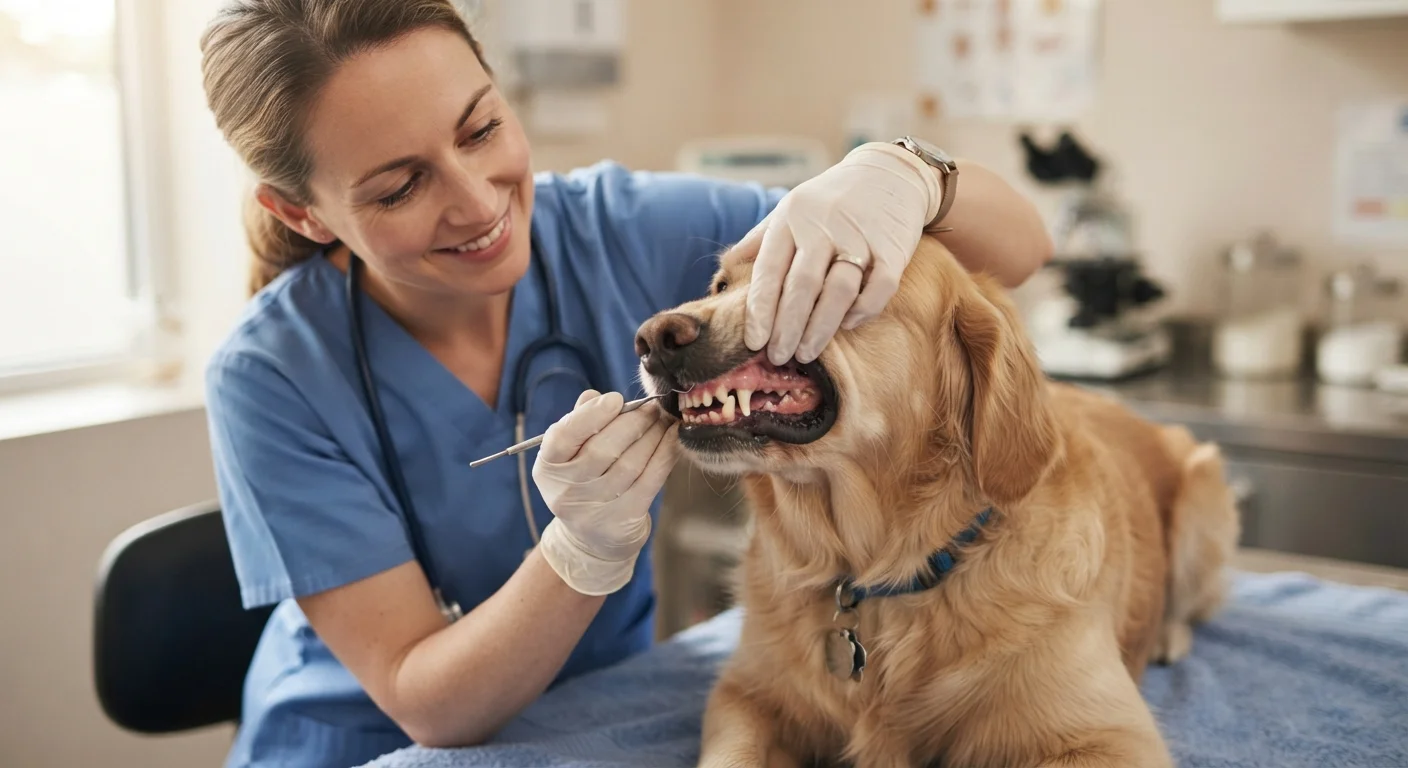
Why Dental Disease Flies Under the Radar
Most pet owners watch closely for limping, vomiting, or lethargy — visible signs that something is wrong. Dental disease offers few such obvious signals. Pets are instinctively driven to mask discomfort, a survival behavior that makes oral pain nearly invisible to even the most attentive owner. As explained in our article on how pets conceal illness, this instinct can cause serious conditions to escalate before owners realize anything is wrong.
Compounding this, bad breath — often dismissed as normal — is one of the earliest warning signs of periodontal disease. By the time owners notice swollen gums, tooth discoloration, or a reluctance to chew hard food, the disease has typically been progressing for months or longer.
Absence of Pain Signals Is Not Absence of Pain
Pets in significant oral pain frequently continue eating, playing, and behaving normally. This does not mean they are comfortable — it reflects their instinct to suppress signs of vulnerability. Veterinary dental professionals frequently describe finding severe disease in animals whose owners reported no behavioral changes whatsoever.
The Progression From Plaque to Periodontal Disease
Dental disease follows a predictable path. Bacteria in the mouth combine with saliva and food debris to form plaque — a soft, sticky film that coats teeth daily. Without removal, plaque mineralizes into tartar (also called calculus) within days, adhering firmly to tooth surfaces. Tartar harbors additional bacteria and creates a pathway for infection to travel below the gumline.
Once infection reaches the structures supporting the tooth — the gums, periodontal ligament, and jawbone — it is classified as periodontal disease. In early stages (gingivitis), the gums are inflamed but the damage is still reversible. As the disease progresses, tissue and bone loss become permanent, eventually resulting in loose or missing teeth and chronic pain.
~80%
Dogs showing dental disease signs by age 3
The American Veterinary Medical Association (AVMA) cites periodontal disease as the most common clinical condition seen by veterinarians in dogs and cats, with most animals affected by age three.
Stage 1
Only reversible stage of periodontal disease
Veterinary dental grading recognizes that once disease progresses beyond gingivitis, structural damage to the tooth's supporting tissues becomes permanent.
1 in 3
Pet owners who brush their pet's teeth regularly
Surveys of pet owner behavior consistently show that daily tooth brushing — the most effective preventive measure — is practiced by only a minority of dog and cat owners.
The Systemic Consequences of Untreated Oral Disease
Dental health is not isolated to the mouth. Chronic oral infection creates a reservoir of bacteria that can enter the bloodstream — a process called bacteremia. Research in veterinary medicine has found associations between advanced periodontal disease and pathological changes in the kidneys, liver, and heart tissue of dogs and cats.
This is one reason veterinary professionals frame oral care as a core component of overall preventive health. For a fuller picture of how oral health fits into a broader wellness strategy, see our complete overview of preventive pet care.
“Periodontal disease is not just a mouth problem. The inflammation and bacteria associated with advanced dental disease have real consequences for the whole body, and prevention is far simpler than treatment once disease is established.”
— American Veterinary Dental College, Leading body for veterinary dental education and standards in North America
What Effective Prevention Actually Involves
Prevention operates on two levels: what happens at home and what happens at the veterinary clinic.
At-Home Care
Daily tooth brushing using a pet-safe toothpaste (never human toothpaste, which contains ingredients toxic to animals) is the gold standard for home oral care. It disrupts plaque before it can mineralize. Dental chews, rinses, and diets carrying the VOHC seal of acceptance can serve as adjuncts but are not substitutes for brushing. These small daily habits contribute meaningfully to long-term pet wellness.
Professional Veterinary Cleanings
Even with consistent home care, professional cleanings performed under general anesthesia are necessary to clean below the gumline, probe for pocket depth, and take dental X-rays that reveal bone loss invisible to the naked eye. The American Veterinary Dental College (AVDC) does not recognize anesthesia-free cleanings as equivalent to a proper dental procedure.
Start Tooth Brushing Early — and Go Slowly
Puppies and kittens accept tooth brushing more readily when introduced gradually with positive reinforcement. Start by letting your pet lick pet-safe toothpaste from your finger, then slowly introduce a finger brush, and eventually a soft-bristled pet toothbrush. Even brief daily sessions provide meaningful plaque control over time.
Oral health needs vary by species too — rabbits and birds have dental structures and concerns quite different from dogs and cats. Our guide on pet wellness across species covers these differences in practical detail.
Making Dental Care a Routine Priority
The most important shift for pet owners is treating oral health as a routine wellness item — not something addressed only when a problem becomes obvious. Ask your veterinarian to conduct an oral exam at every annual visit, and discuss whether dental radiographs (X-rays) are appropriate for your pet's age and breed. Smaller dog breeds and brachycephalic (short-nosed) breeds like Bulldogs and Persians are particularly prone to dental crowding and accelerated disease.
For a detailed look at what happens when dental disease goes unaddressed, see our article on what happens when pet dental health is ignored. Early intervention — and consistent prevention — remain the most effective tools available.
This article provides general educational information about pet health and is not a substitute for advice from a licensed veterinarian. Always consult your veterinarian for guidance specific to your pet's needs.
Frequently Asked Questions
Veterinary studies consistently show that most dogs and cats show signs of periodontal disease by age three. It is considered the single most diagnosed health problem in companion animals. Many cases go undetected because pets rarely display visible pain.
Yes. Oral bacteria from advanced periodontal disease can enter the bloodstream and are associated with changes in heart, kidney, and liver tissue. Managing oral health is considered part of whole-body preventive care by veterinary professionals.
Signs may include persistent bad breath, visible tartar, red or bleeding gums, difficulty chewing, dropping food, or pawing at the mouth. However, many pets show no outward signs at all, which is why annual veterinary oral exams are essential.
Yes — a thorough dental cleaning, including below the gumline where disease actually develops, requires general anesthesia so the veterinarian can safely clean, probe, and X-ray all tooth surfaces. Anesthesia-free cleanings only address visible surfaces and are not considered a substitute by veterinary dental organizations.
Frequency depends on the individual animal's breed, age, and rate of tartar buildup. Many pets benefit from annual professional cleanings, but your veterinarian is best positioned to recommend a schedule after an oral exam.
Daily brushing with a pet-safe toothpaste is the most effective home strategy. Dental chews, water additives, and dental diets with the Veterinary Oral Health Council (VOHC) seal of acceptance can also provide supplemental support, but none replace brushing or professional care.
The content on this site is for informational purposes only and is not a substitute for professional advice. Always consult a qualified professional for guidance specific to your situation.