

Our Verdict
Classic pieces are the reliable foundation that makes getting dressed easier and more economical over time. Trend-driven items add energy and personal expression, but work best when chosen intentionally rather than reactively. Most people find the sweet spot somewhere in the middle — a wardrobe built on classics with room for a few trend pieces that genuinely reflect who they are right now.
Anyone who wants a functional, expressive wardrobe without the stress of constant shopping or the boredom of a wardrobe that never evolves.
What We Actually Mean by 'Classic' vs. 'Trend'
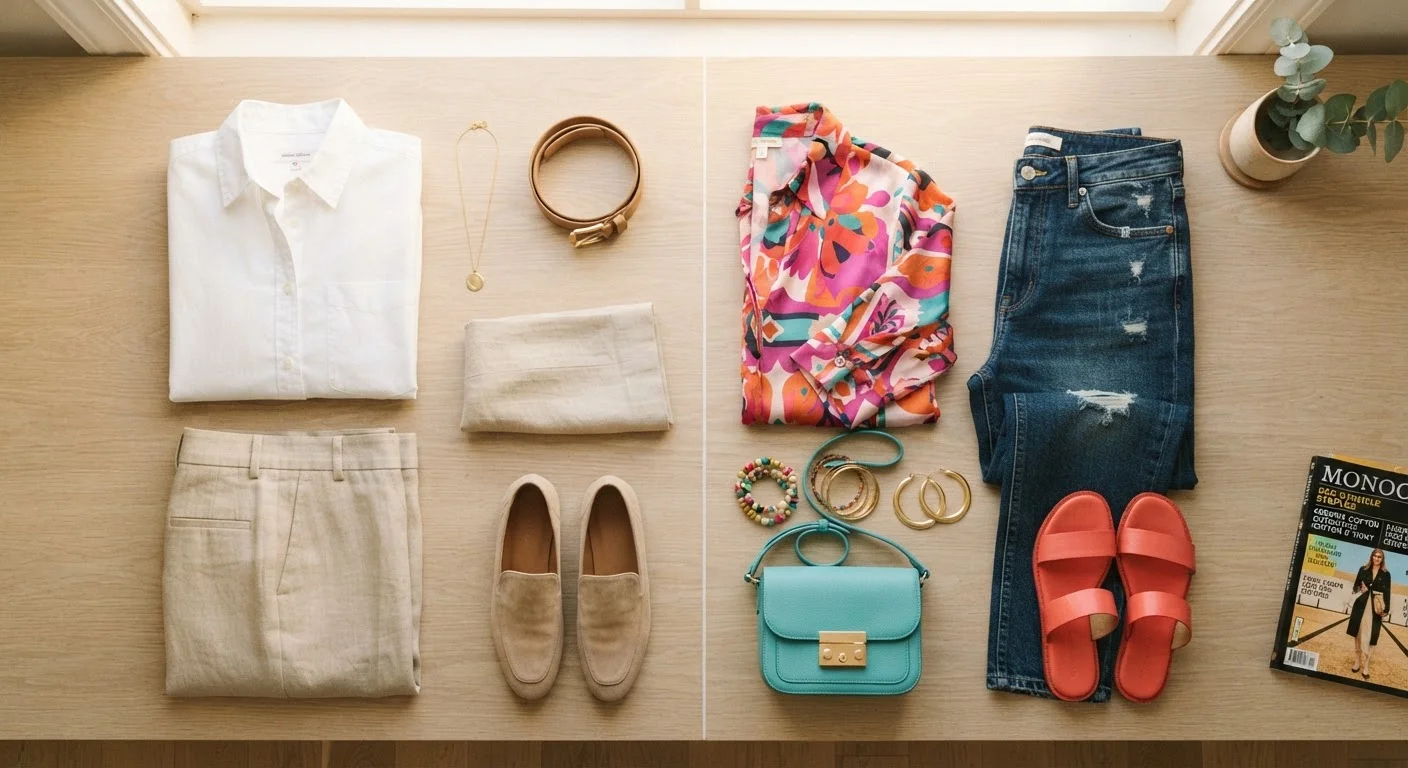
Before diving into tradeoffs, it helps to define the terms. A classic piece is one whose design has remained wearable across decades — think a well-fitted white Oxford shirt, dark straight-leg denim, a trench coat, or a simple black blazer. These items don't reference a specific moment in fashion; they transcend it.
A trend-driven item, on the other hand, is directly tied to what's culturally resonant right now — wide-leg cargo pants, oversized shrunken blazers, color-blocked everything, or whatever silhouette dominated the last two seasons. These pieces aren't bad; they're just time-stamped. Some trends cycle back and become classics. Others fade quickly.
Understanding this distinction matters because it changes how you evaluate a purchase. A $90 classic shirt worn 150 times costs less per wear than a $30 trendy top worn five times before it starts looking dated. That math is worth keeping in mind. For a deeper look at how to think about building a foundation, our wardrobe-from-scratch guide walks through core pieces and color logic in practical detail.
The Case for Classic Pieces
Classic pieces earn their reputation not through hype but through consistent usefulness. They mix with almost anything, reducing the mental load of getting dressed. They hold up under repeated wear and washing. And they rarely make you cringe in photos five years later.
Long lifespan reduces cost-per-wear over time
A well-made classic piece worn regularly for five or more years almost always outperforms a cheaper trendy item on a cost-per-wear basis, even at a higher upfront price.
Versatility simplifies daily dressing decisions
Classic pieces work across multiple outfit combinations, which means fewer items can do more work — reducing closet clutter and morning decision fatigue.
Timeless aesthetic holds up in photos and memory
Classic silhouettes and neutral palettes age gracefully, so you're less likely to look back at photos and feel your outfit looks jarring or dated.
Easier to build coherent outfits with fewer pieces
Because classics are designed to coordinate, even a small wardrobe of staples can generate a surprisingly wide range of workable, polished looks.
That said, classics aren't without compromise. A wardrobe of nothing but neutrals and time-tested silhouettes can start to feel flat or disconnected from who you are today. If your style has genuinely evolved — or your life has changed — leaning too hard into classics can make your closet feel like a uniform rather than a reflection of yourself. Our piece on dressing for your actual daily life is a good gut-check for whether your staples still match your real routine.
The Case for Trend-Driven Pieces
Trends get a bad reputation, but they exist for a reason: they're fun. Fashion is partly about participation — feeling connected to a cultural moment, experimenting with identity, and enjoying the creative act of dressing. Trend pieces do that job well.
Trend pieces often feel dated within one to two seasons
Highly specific silhouettes, prints, or details tied to a particular moment can look noticeably out of step once that moment passes, reducing the item's useful life.
Encourages more frequent shopping and spending
Trend cycles move fast, and staying current requires ongoing purchases — which adds up quickly, particularly if you're trying to keep a budget in check.
Risk of impulse buys that don't integrate with existing wardrobe
Trend pieces are often purchased in isolation and can be hard to style with what you already own, leading to items that hang unworn after the initial excitement fades.
The real issue isn't trends themselves; it's reactive trend-chasing — buying things because they're everywhere rather than because they resonate with you. Common style myths often drive this behavior, including the idea that a bigger, more current wardrobe automatically means dressing better. It rarely does.
Trends Aren't Always Short-Lived
Some trend pieces graduate into classics over time — the white sneaker, the baseball cap, slim-cut chinos. If a trend has been around for three or more years and you genuinely reach for it, it may have earned a place in your long-term wardrobe rather than the trend-experiment bucket. Context and personal resonance matter more than categorical rules.
How to Build a Balance That Actually Works
The practical answer for most people isn't a fully classic or fully trend-forward wardrobe — it's a tiered approach. Think of your wardrobe in three layers:
- Foundation (70–80%): Classic, versatile pieces that carry your daily dressing. These are worth investing in for quality.
- Bridge pieces (10–20%): Slightly trend-aware items that still have longevity — a slightly wider trouser leg, an interesting texture, an updated color palette. These keep things from feeling stale without full commitment to a moment.
- Trend experiments (5–10%): A few deliberate, lower-stakes pieces that let you play. Accessories, a printed scarf, one statement layer. Easy to swap out when the trend passes.
Your budget and lifestyle shape how this splits. If your daily life involves a lot of casual socializing and creative work, you might lean toward more trend experimentation. If you dress for a more structured environment — or simply prefer ease — a heavier classic foundation makes life simpler. The broader question of how neutrals and color factor into this is worth exploring too: see our look at neutral vs. colorful wardrobes for that angle.
~$1,700
Average annual U.S. apparel spending per person
According to the U.S. Bureau of Labor Statistics Consumer Expenditure Survey, American consumers spend significantly on clothing annually, underscoring why cost-per-wear thinking matters.
50%
Clothes never or rarely worn after purchase
Research from multiple consumer behavior studies consistently finds that a large share of wardrobe items go unworn, often because they were purchased impulsively or don't integrate well with existing pieces.
The content on this site is for informational purposes only and is not a substitute for professional advice. Always consult a qualified professional for guidance specific to your situation.