

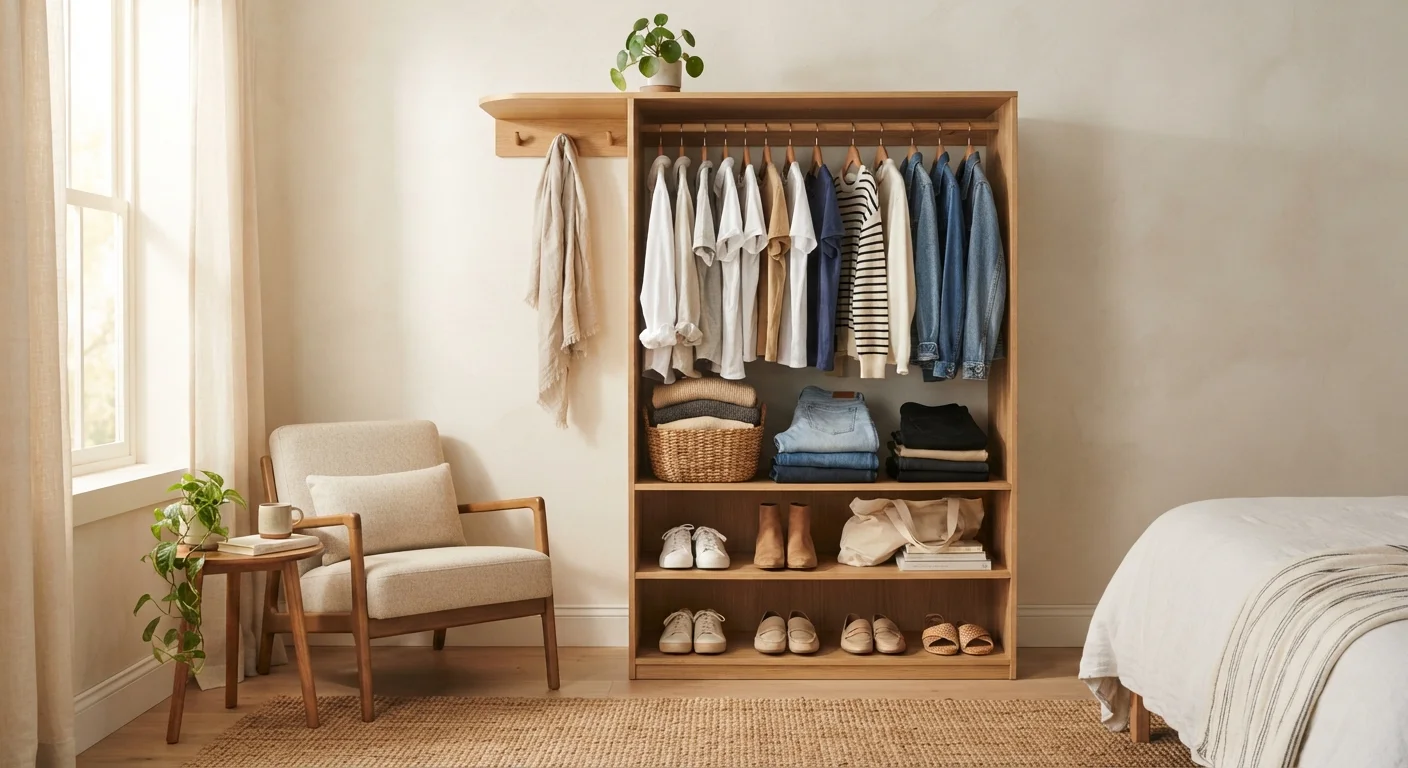
The Gap Between Your Closet and Your Life
Most of us don't have a style problem — we have a mismatch problem. The clothes hanging in our closets were chosen for someone we imagined we'd be: the person who brunches frequently, attends gallery openings, or dresses for an office every day. Meanwhile, real life involves school drop-offs, grocery runs, remote meetings, and weekend errands.
This isn't a character flaw. Aspirational shopping is incredibly common, and it's easy to rationalize purchases that feel exciting in the store but rarely earn their hanger space. The result is a closet full of options that somehow leaves you with nothing to wear.
The fix isn't buying more. It's aligning what you own with where you actually go. This article is a practical guide to doing exactly that — no judgment, no overhaul required. If you're starting more from scratch, our wardrobe-building guide lays useful groundwork.
Audit Your Week Before You Touch Your Closet
Before editing a single item, map your actual week. Not the week you wish you had — the week that actually happens. What do Monday through Sunday genuinely look like? How many days are you working from home versus commuting? How many evenings involve restaurants versus your couch?
Track a full week of your real activities before touching your wardrobe.
Without honest data about how you actually spend your time, any wardrobe edit is guesswork. Most people dramatically overestimate how often they attend formal events or upscale dinners, and underestimate how much time they spend in casual, comfortable settings.
Build your wardrobe proportionally to how you spend your time.
If casual clothes cover 70% of your week, roughly 70% of your closet should serve that need. Mismatched proportions are the root cause of the 'nothing to wear' feeling, even with a packed closet.
Evaluate each item by asking 'Does this fit my life as it is right now?'
Clothes bought for a job you left, a size you were three years ago, or events that rarely happen are occupying space and attention that better-used pieces could fill. This question cuts through nostalgia and wishful thinking.
Invest more in the clothes you wear most, not the ones you wear rarely.
Cost-per-wear is a practical lens: a $90 everyday item worn 150 times costs far less per use than a $60 item worn twice. Allocating budget toward high-frequency pieces pays off in both durability and daily satisfaction.
Keep a short 'gap list' instead of browsing without direction.
Unplanned shopping typically fills closets with duplicates or aspirational items rather than genuine gaps. A written list of specific needs — one warm-weather layer, a versatile dark trouser — keeps purchases purposeful.
This kind of honest accounting is the foundation of everything else. It's also surprisingly clarifying — most people discover their wardrobe proportions are significantly off from their lived reality.
Aspirational Dressing Isn't a Flaw
Wanting to dress for a life you're working toward isn't wrong — it only becomes a problem when aspirational pieces crowd out clothes you actually need today. Keeping one or two 'occasion' items for genuine future use is perfectly reasonable. The goal is balance, not purging every item that isn't strictly utilitarian.
Spend Where You Actually Live
Once you know how your time is really distributed, look at your closet through the same lens. The categories you use most deserve the most closet space, the most variety, and frankly, the most budget. This runs counter to how many people shop — we often spend more on special-occasion pieces because they feel more significant, even when everyday clothes take far more wear and damage.
Cost-per-wear thinking helps reframe this. Understanding when to invest in classics vs. trend pieces is another useful layer here. And when it comes to making everyday clothes last, consistent care pays dividends — see our guidance on caring for everyday clothes.
Shop With a List, Not a Mood
Browsing without intention almost always adds to the mismatch problem. A simple gap list — kept in your phone and updated when you notice a genuine outfit problem — redirects energy toward what actually needs solving. It's one of the lowest-effort habits that pays off consistently.
When your list drives purchases rather than impulse, your closet gradually becomes more coherent. Fewer pieces that actually work together produce more outfit options than a crowded, mismatched collection. The concept behind a capsule wardrobe builds on exactly this logic. And once you have the right pieces, reliable outfit formulas make daily decisions nearly effortless.
“The best style is one that fits your actual life — not a curated version of it. When your clothes match your real routine, getting dressed stops being a problem to solve.”
— Tim Gunn, Fashion educator and co-host of 'Project Runway'
Dressing for your actual life isn't about lowering your standards — it's about raising the standard for how well your clothes serve you, every ordinary day.
The content on this site is for informational purposes only and is not a substitute for professional advice. Always consult a qualified professional for guidance specific to your situation.