

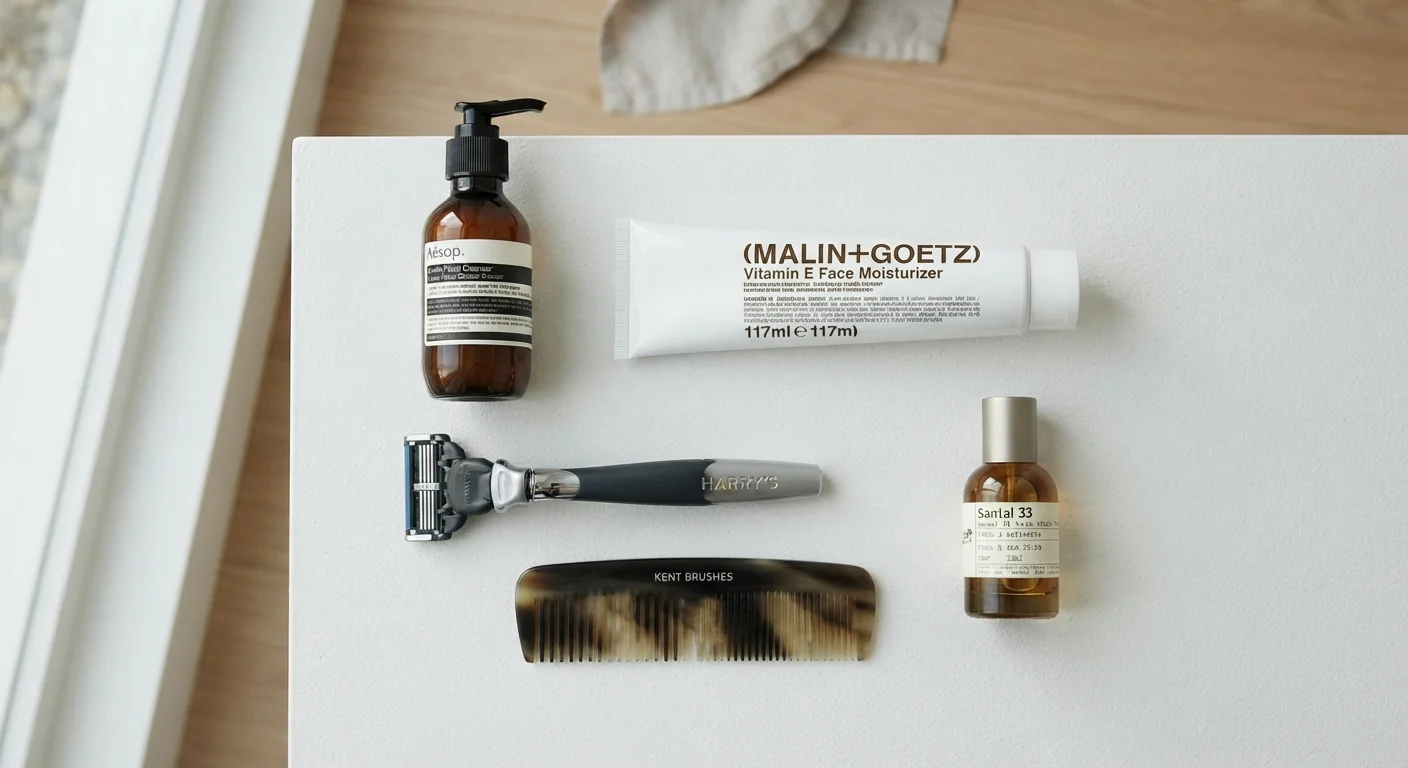
Why Grooming Is Simply Self-Care
Grooming has accumulated a lot of unnecessary baggage. Some people treat it as vanity; others see it as a luxury reserved for certain lifestyles or budgets. In reality, a grooming routine is just organized self-care — a set of repeatable habits that keep your skin, hair, and body functioning well and feeling comfortable.
The conversation around men's grooming has shifted significantly. More people now recognize what dermatologists and behavioral researchers have observed for years: taking care of your appearance supports both physical health and psychological well-being. Clean, moisturized skin is healthier skin. A consistent routine reduces decision fatigue and morning stress. There's nothing complicated or frivolous about any of that.
This guide covers the full picture — facial care, hair, shaving, body hygiene, and fragrance — with practical, no-assumption guidance. Whether you're building a routine from scratch or tightening up an existing one, it's all here. You might also want to explore why these basics apply across all genders for more context on inclusive self-care.
85%
Men who use facial skin-care products
A Mintel consumer report found that the vast majority of male consumers in the U.S. use at least one facial skin-care product regularly.
2–3 min
Average extra time a basic skin-care routine adds to a morning
Dermatologists widely note that a three-step facial routine — cleanse, moisturize, SPF — can be completed in two to three minutes once established.
SPF 30+
Minimum recommended daily sun protection factor
The American Academy of Dermatology recommends broad-spectrum SPF 30 or higher as the daily standard for skin protection.
Facial Skin Care: The Foundation
Facial skin care is the highest-return area of any grooming routine. Three steps cover the essential bases for most people: cleanse, moisturize, and protect with SPF.
- Cleanser: A gentle, non-stripping face wash removes excess oil, pollutants, and dead skin cells. For most skin types, once in the morning and once at night is sufficient. Over-cleansing can disrupt the skin barrier.
- Moisturizer: Hydration isn't optional for oily skin — in fact, skipping it can cause the skin to produce more oil to compensate. Look for a lightweight, non-comedogenic (pore-friendly) formula if breakouts are a concern.
- SPF: Daily sun protection is the single most evidence-supported habit for long-term skin health. A broad-spectrum SPF 30 or higher, applied every morning, significantly reduces the risk of UV-related skin damage over time.
Those dealing with specific concerns — acne, hyperpigmentation, sensitivity — may benefit from targeted additions like a gentle exfoliant or a niacinamide serum, but the three-step core is where everyone should start.
Apply your SPF as the very last step of your morning routine, after moisturizer, and give it 60 seconds to absorb before heading out. Layering it under other products first dilutes its effectiveness.
SPF works as a physical or chemical barrier on the skin's surface — applying it last ensures it can do its job without being interfered with by other products.
If you're switching to a new cleanser or moisturizer, introduce it solo for at least two weeks before adding anything else. That way, if irritation occurs, you know exactly what caused it.
Skin reactions are notoriously hard to trace when multiple new products are introduced simultaneously — isolating changes is a basic patch-testing principle used by dermatologists.
Hair and Scalp Maintenance
Hair health starts at the scalp. Shampooing too frequently strips natural oils and can lead to dryness or flaking; not shampooing enough allows product buildup and irritation. The right frequency depends on your scalp type:
- Oily scalp: Every 1–2 days
- Normal scalp: Every 2–3 days
- Dry or coarse hair: 2–3 times per week or less
Conditioner is not just for long hair. It restores moisture to the hair shaft, reduces breakage, and makes styling easier. Apply from mid-shaft to ends — not the scalp — and rinse thoroughly.
For styling, less is usually more. Start with a small amount of product — whether that's a pomade, clay, or light cream — and build up rather than applying too much at once. Heat tools like blow dryers can speed up drying and add volume, but chronic high heat without a heat protectant contributes to breakage over time.
For a comprehensive maintenance schedule that goes beyond just hair, check out this head-to-toe grooming reference organized by daily, weekly, and monthly tasks.
Shaving, Beard, and Body Hair
Shaving irritation — razor burn, ingrown hairs, redness — is almost always a technique problem rather than a skin problem. A few consistent adjustments make a real difference:
- Always shave after a shower or after applying a warm wet towel to the face; warm water softens the hair and opens follicles.
- Use a proper shaving cream or gel, not dry or with just water.
- Shave with the grain of hair growth on the first pass; against the grain only if a closer shave is needed on a second pass.
- Rinse the blade frequently, and replace blades before they're pulling rather than cutting.
- Apply a fragrance-free post-shave balm or moisturizer to calm the skin afterward.
For those maintaining a beard, the same skin-care principles apply underneath. Dry, flaky beard skin (often called beard dandruff) responds well to regular cleansing and a lightweight beard oil or balm to maintain moisture. Trimming regularly — even if growing the beard out — keeps the shape clean and prevents split ends.
Ingrown Hairs Need Gentle Treatment
If you develop ingrown hairs, resist the urge to dig them out aggressively — this increases the risk of infection and scarring. A warm compress and gentle exfoliation over several days is the recommended first approach. Persistent or inflamed ingrown hairs may warrant a visit to a dermatologist.
Body Hygiene and Nail Care
Body hygiene forms the baseline of any grooming routine. Regular showering, clean clothing, and deodorant are fundamentals — but a few often-overlooked details are worth noting:
- Body wash vs. bar soap: Both work. Body washes with added moisturizers can benefit dry skin, especially in winter months.
- Deodorant vs. antiperspirant: Deodorants mask odor; antiperspirants reduce sweating. Many people do well with combination products. If you notice skin irritation, a fragrance-free formula is worth trying.
- Feet: Often neglected, feet benefit from scrubbing the soles regularly and drying thoroughly between toes to prevent fungal issues. A basic foot cream can address cracked heels.
Nail care is simple but visible. Trimming nails weekly (or as needed), filing rough edges, and keeping nails clean takes under five minutes. Pushing back cuticles gently after a shower — rather than cutting them — reduces the risk of hangnails and minor infections.
If you're newer to building these habits systematically, this beginner-friendly guide to grooming from scratch walks through each area without any assumptions.
Fragrance: Finding What Works for You
Fragrance is one of the most personal elements of grooming — and one of the easiest to get wrong. A few fundamentals make the difference between a scent that feels polished and one that overwhelms a room.
Understanding concentration: Eau de toilette (EDT) has a lighter concentration than eau de parfum (EDP), meaning it's less intense and generally doesn't last as long. Neither is inherently better — it depends on preference and occasion.
Application: Apply fragrance to pulse points — wrists, the base of the neck, and behind the ears. These spots emit heat, which helps diffuse the scent. Don't rub your wrists together after applying; this breaks down the fragrance molecules.
How much is enough: Two to three sprays is typically sufficient. Fragrance should be discoverable by someone close to you, not announced to the entire room. Skin chemistry also affects how a scent smells on you personally — what works on one person may not translate identically on another.
Grooming and personal style are closely connected. If you want to extend this thinking to your full presentation, see our complete guide to building a wardrobe that works for head-to-toe guidance.
Test Fragrance Before Committing
Before settling on a fragrance, wear a sample on your skin for a full day rather than deciding in-store after a spray. Scent evolves through top, middle, and base notes over several hours. What smells great on a test strip may smell very different after six hours on your skin.
Putting It All Together
A complete grooming routine doesn't have to be elaborate. The goal is a set of consistent, repeatable habits — not a bathroom shelf full of products. Here's a simple framework:
| Frequency | Task |
|---|---|
| Daily | Cleanse face, apply moisturizer + SPF, deodorant, brush teeth |
| Every few days | Shampoo and condition hair, shave or trim beard as needed |
| Weekly | Trim nails, exfoliate if applicable, clean and scrub feet |
| As needed | Haircut, beard shaping, deep conditioning treatment |
As your routine takes shape, you'll naturally identify what your skin and hair actually respond to — rather than what a marketing campaign says they need. Skin and hair needs also shift with time, so understanding how grooming habits change with age is a useful next step.
The foundation is always the same: clean, protect, and maintain — consistently. Everything else is refinement.
This article is for general informational purposes only and is not a substitute for advice from a qualified dermatologist or healthcare professional. If you have specific skin, scalp, or health concerns, please consult a licensed professional.
The content on this site is for informational purposes only and is not a substitute for professional advice. Always consult a qualified professional for guidance specific to your situation.