

Our Verdict
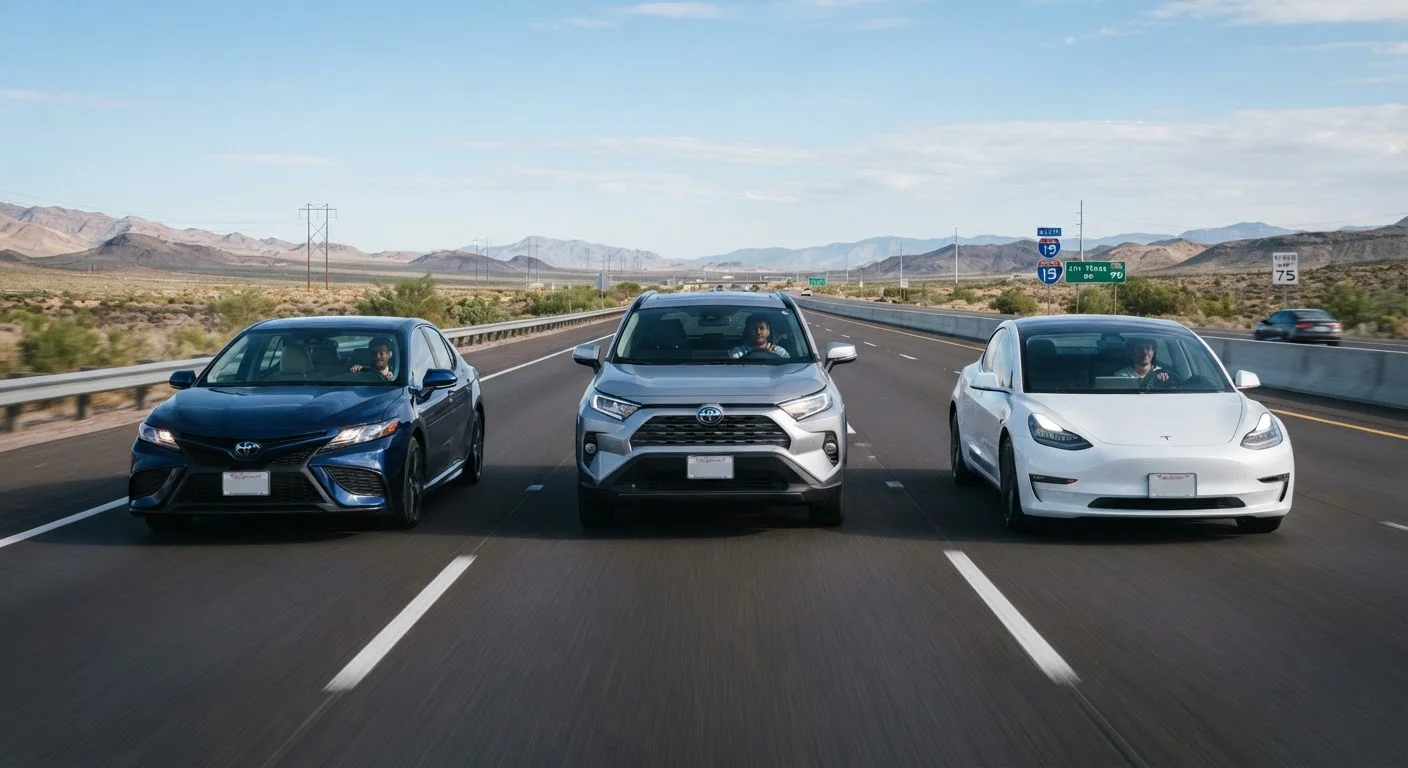
No single powertrain is universally best - the right choice depends on your driving habits, home setup, and budget priorities. Gas vehicles remain practical for those needing maximum range flexibility. Hybrids suit drivers wanting better efficiency without changing their routines. EVs deliver the lowest operating costs for drivers with reliable charging access.
| Best for | Recommended |
|---|---|
| Drivers who frequently travel long distances or in areas with limited charging infrastructure | Gasoline |
| Those wanting improved fuel economy without committing to charging logistics | Hybrid |
| Commuters with home charging who want the lowest day-to-day operating costs | Electric |
Fueling Costs: What You Pay to Move
The most immediate ownership difference is how - and how much - you pay for energy. Gasoline prices fluctuate with oil markets, meaning your monthly fuel bill can shift significantly season to season. The U.S. Energy Information Administration tracks national average gas prices, which have historically ranged from under $2 to over $5 per gallon depending on market conditions.
Hybrids use a gasoline engine supplemented by an electric motor, recovering energy through regenerative braking. This combination typically delivers 40-50% better fuel economy than comparable gas-only vehicles in mixed city and highway driving, reducing trips to the pump without eliminating them.
Electric vehicles run entirely on electricity. Charging at home overnight using a standard 240-volt outlet is generally the most cost-effective approach, with residential electricity rates typically far lower per mile than gasoline. Public fast-charging is more expensive per kilowatt-hour but still often cheaper than gas, though prices vary widely by provider and location.
~43%
Average fuel economy gain from hybrids
EPA data consistently shows full hybrids achieving substantially better combined MPG than non-hybrid counterparts in the same vehicle class.
$0
Oil changes required for most EVs
Because battery-electric vehicles have no internal combustion engine, they eliminate oil changes entirely - one of the most common recurring maintenance costs.
For a fuller picture of how fuel fits into total vehicle costs, see our breakdown of total car ownership expenses.
Maintenance: Where the Differences Add Up
Powertrain type has a direct effect on what your vehicle needs - and how often. Gas vehicles require the most routine servicing: oil changes every 5,000-7,500 miles (or longer with full synthetic oil), spark plug replacements, timing belt or chain service, and exhaust system upkeep. These costs are predictable but persistent.
Hybrids share many of the same service requirements as gas vehicles, since they still have a combustion engine. However, their electric motor assists under low-speed and braking conditions, which often reduces brake wear meaningfully - regenerative braking does much of the decelerating. Battery packs in modern hybrids are generally designed to last the life of the vehicle under normal use.
Electric vehicles have fundamentally fewer moving parts. There's no oil to change, no exhaust system, and no multi-speed transmission in most designs. Primary service items include tire rotations, cabin air filter replacement, brake fluid checks, and battery management software updates. This simplified maintenance profile can reduce service costs over time, though EV-specific repairs - particularly high-voltage battery issues - can be expensive if they arise outside warranty.
Know Your Daily Driving Pattern First
Before comparing powertrains, calculate your average daily miles driven. Most American commuters drive fewer than 40 miles per day - well within EV range for a single charge. If your trips regularly exceed 200 miles without stopping, range logistics become a more relevant factor. Matching the powertrain to your actual usage is more useful than optimizing for rare scenarios.
New owners can find a practical overview of maintenance schedules and upkeep basics in our first-time car owner's roadmap.
Range, Charging, and Practical Considerations
Range anxiety - the concern about running out of charge - is the most commonly cited barrier to EV adoption. Most current electric vehicles offer 200-300+ miles of EPA-estimated range per charge, which covers the vast majority of daily American driving. The challenge arises on longer road trips, where planning around fast-charger locations becomes necessary in a way that gas station stops simply don't require.
Hybrids sidestep this concern entirely. They refuel at any gas station and don't require a charging infrastructure investment, making them a practical middle ground for drivers who want efficiency gains without behavioral changes.
Home charging setup is a real consideration for EV buyers. Installing a Level 2 charger (240-volt) adds convenience but requires an upfront electrical installation cost. Renters or those in multi-unit buildings may have limited or no access to dedicated charging, which can make daily EV ownership genuinely difficult.
| Gasoline | Hybrid | Electric | |
|---|---|---|---|
| Typical upfront cost | Lower | Moderate | Higher (incentives may apply) |
| Fuel/energy cost per mile | Higher | Moderate | Lower (varies by electricity rate) |
| Routine maintenance frequency | Most frequent | Moderate | Least frequent |
| Refueling convenience | Gas stations everywhere | Gas stations everywhere | Home or public charging needed |
| Range flexibility | Highest | High | Moderate (improving) |
| Infrastructure dependency | None beyond gas stations | None beyond gas stations | Home or public charging access required |
| Environmental impact | Highest emissions | Reduced emissions | Zero tailpipe emissions |
If you're also weighing whether to buy or lease your next vehicle, our leasing vs. buying comparison covers how powertrain choice can interact with that decision.
Upfront Cost and Long-Term Financial Picture
Electric and hybrid vehicles typically carry a higher purchase price than equivalent gas models, though this gap has been narrowing as production scales. Federal tax incentives - subject to income, vehicle price, and sourcing requirements under current law - can reduce the effective cost of qualifying EVs for eligible buyers. Tax rules in this area change, so verifying current eligibility with a tax professional or the IRS website before purchasing is worth the effort.
Depreciation patterns vary. EVs have faced steeper depreciation in some segments as newer, longer-range models enter the market quickly. Hybrids have historically held value reasonably well. Gas vehicles follow established depreciation curves that are well-understood by the used-car market. These factors matter significantly if you plan to sell or trade in within a few years - see our new vs. used car guide for more on how depreciation plays into the buy decision.
Over a 5-10 year ownership period, lower operating and maintenance costs can offset a higher EV or hybrid sticker price for high-mileage drivers. Lower-mileage drivers may see less payback from that premium. Running the numbers against your specific annual mileage and local fuel and electricity rates gives the most accurate picture.
The content on this site is for informational purposes only and is not a substitute for professional advice. Always consult a qualified professional for guidance specific to your situation.