

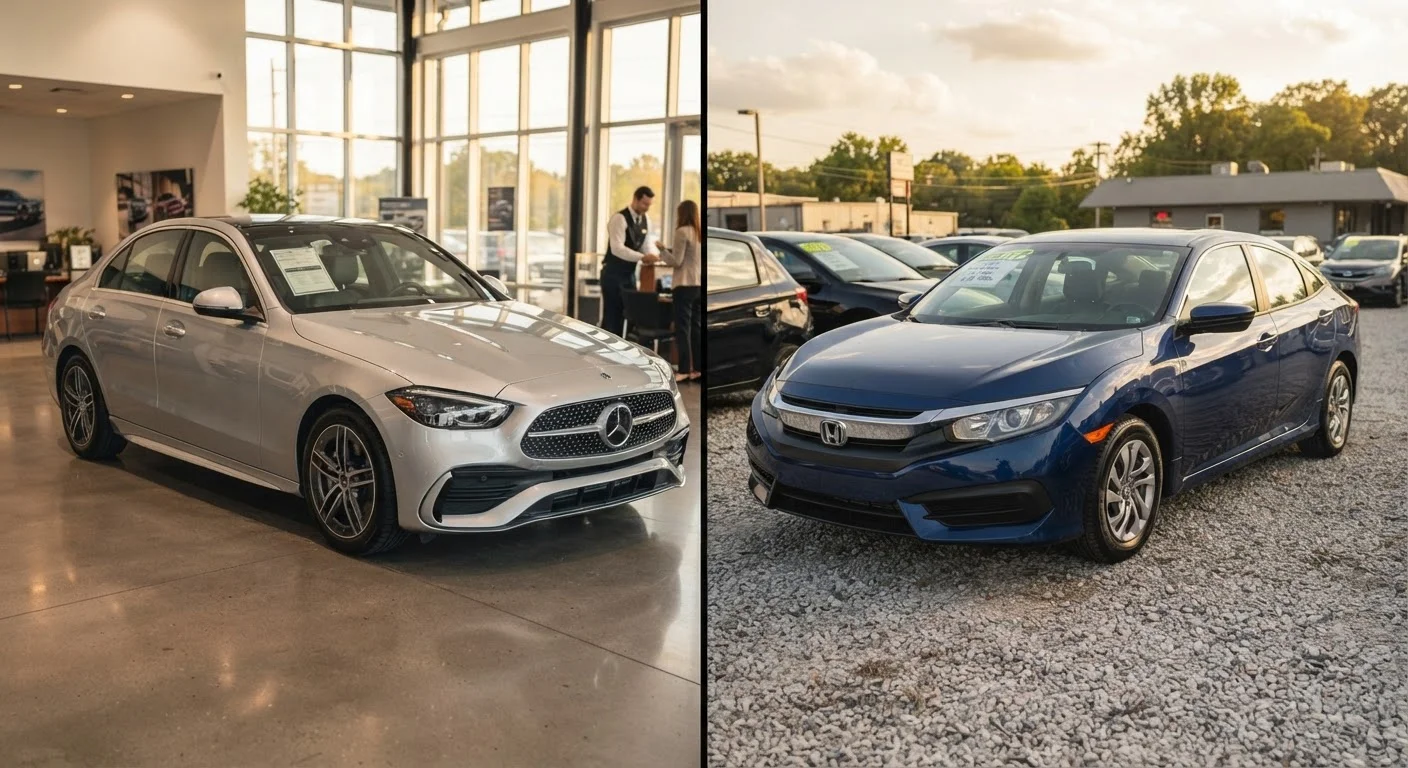
Our Verdict
Neither new nor used is universally the smarter choice - the math and the fit depend entirely on your financial situation, how long you plan to keep the vehicle, and how much uncertainty you're comfortable absorbing. New cars reward buyers who want predictability, modern safety tech, and full warranty coverage. Used cars reward buyers who prioritize lower upfront cost and slower ongoing depreciation, and who are willing to do a little homework before signing.
Buyers who value lower total cost and can tolerate some uncertainty will generally favor used; those who want peace of mind, the latest features, and plan to own long-term may find new worth the premium.
Why This Decision Deserves an Honest Look
The new-vs.-used question is one of the most consequential financial decisions many Americans make outside of housing. Yet it's often driven by emotion - the appeal of that new-car smell - rather than a clear-eyed look at the numbers and trade-offs involved.
Both options come with real advantages and real downsides. Understanding them doesn't require being a finance expert; it requires knowing what you actually need from a vehicle and being honest about your budget. See our full breakdown of what car ownership actually costs to get the complete financial picture before committing either way.
The Case for Buying New
New vehicles come with a set of concrete advantages that used cars simply cannot replicate.
Full manufacturer warranty from day one
New vehicles typically include bumper-to-bumper and powertrain warranties that cover most repair costs for several years, significantly reducing financial exposure early in ownership.
Latest safety and driver-assistance technology
Newer model years include more advanced automatic emergency braking, lane-keeping systems, and other features that older vehicles may lack entirely or offer only in limited form.
No ownership history to worry about
You know exactly how the vehicle has been driven and maintained from the start, eliminating the uncertainty that comes with inheriting someone else's habits or undisclosed repairs.
Potentially lower financing rates
Manufacturer-backed financing programs sometimes offer promotional interest rates on new vehicles, though eligibility and availability vary and should always be compared against other loan offers.
The manufacturer's warranty - typically covering the powertrain for five years or more - means that if something goes wrong early on, you're protected. New cars also come loaded with the most current driver-assistance technology, fuel efficiency improvements, and connectivity features. And because you're the first owner, there's no mystery about how the vehicle was driven or maintained.
Financing a new car can also be straightforward: manufacturers sometimes offer promotional interest rates that make borrowing cheaper, though these deals vary and are never guaranteed. Always compare the total cost of the loan, not just the monthly payment. For context on responsible borrowing, understanding how credit and debt work before you finance any vehicle is a sound first step.
The Case for Buying Used
The single biggest argument for used vehicles is depreciation. A new car can lose a significant portion of its value within the first two to three years of ownership - meaning a used buyer lets the original owner absorb that loss.
Sharp depreciation in the first few years
New vehicles can lose a substantial share of their market value within the first two to three years, meaning buyers who sell or trade in early absorb that loss directly.
Higher upfront purchase price
For equivalent size and feature levels, used vehicles typically carry a lower sticker price, freeing up cash for other priorities or reducing the loan amount needed.
Maintenance history is unknown
Without full service records, it can be difficult to know whether a used vehicle has been well cared for - making a pre-purchase inspection by an independent mechanic especially important.
Higher financing interest rates on used loans
Lenders generally charge higher interest rates on used vehicle loans than on new ones, which can partially offset the lower purchase price depending on the loan term.
A well-chosen used car in good condition can deliver reliable transportation at a meaningfully lower purchase price, lower insurance premiums in many cases, and slower ongoing value loss. Certified Pre-Owned (CPO) programs offered by many manufacturers add a layer of inspection and limited warranty coverage that narrows the reliability gap between new and used.
That said, used cars require more due diligence. Always request a vehicle history report, have an independent mechanic inspect the car before purchase, and factor in that financing rates on used vehicles tend to be higher than on new ones. Budgeting for potential near-term maintenance is smart - building those costs into your personal budget before you buy can prevent surprises later.
~20%
Approximate value lost in first year of new car ownership
Industry estimates from automotive research organizations suggest new vehicles can depreciate roughly 15-20% in their first year, with the steepest drop occurring in the initial months.
2-3 yrs
Period of steepest new-car depreciation
Most automotive analysts identify the first two to three years of a vehicle's life as when depreciation is fastest, after which the rate typically slows considerably.
How the Two Options Compare on Key Factors
Breaking the decision into specific categories makes the trade-offs easier to weigh:
| Factor | New Car | Used Car |
|---|---|---|
| Upfront price | Higher | Lower |
| Depreciation rate | Steepest in years 1-3 | Slower; prior owner absorbed early loss |
| Warranty coverage | Full manufacturer warranty | Limited or none (CPO can help) |
| Financing rates | Often lower | Typically higher |
| Safety technology | Latest available | Varies by model year |
| Maintenance uncertainty | Low initially | Higher without full history |
Certified Pre-Owned: A Middle-Ground Option
Certified Pre-Owned (CPO) programs offered by many automakers sit between standard used and brand-new vehicles. CPO vehicles typically must pass a multi-point inspection and come with a manufacturer-backed limited warranty. They generally cost more than a comparable non-certified used vehicle but offer more predictability. CPO terms vary by manufacturer, so it's worth reading the specific coverage details carefully before assuming the protection matches a new-car warranty.
If you're also considering leasing as a third path, see our comparison of leasing vs. buying for a side-by-side look at how ownership structure changes the equation entirely.
Making the Call: Questions Worth Asking Yourself
Before visiting a dealership or browsing listings, work through a few honest questions:
- How long do I plan to own this vehicle? Long-term ownership typically reduces the cost-per-year advantage of new cars, since the warranty value is spread over more miles.
- What's my actual monthly budget - not the maximum I could qualify for? Approval amount and comfortable payment are two different numbers.
- Am I comfortable with some mechanical uncertainty? If not, a CPO vehicle or extended warranty may be worth exploring.
- Do I have a reserve for unexpected repairs? This matters more for used vehicles but is wise regardless.
Powertrain type also plays a role - the new-vs.-used calculus can shift depending on whether you're looking at a gas, hybrid, or electric vehicle. Our guide to ownership differences across powertrain types covers what changes with each.
This article is for general informational purposes only and does not constitute financial or purchasing advice. Consult a licensed financial professional before making significant financial decisions.
The content on this site is for informational purposes only and is not a substitute for professional advice. Always consult a qualified professional for guidance specific to your situation.