

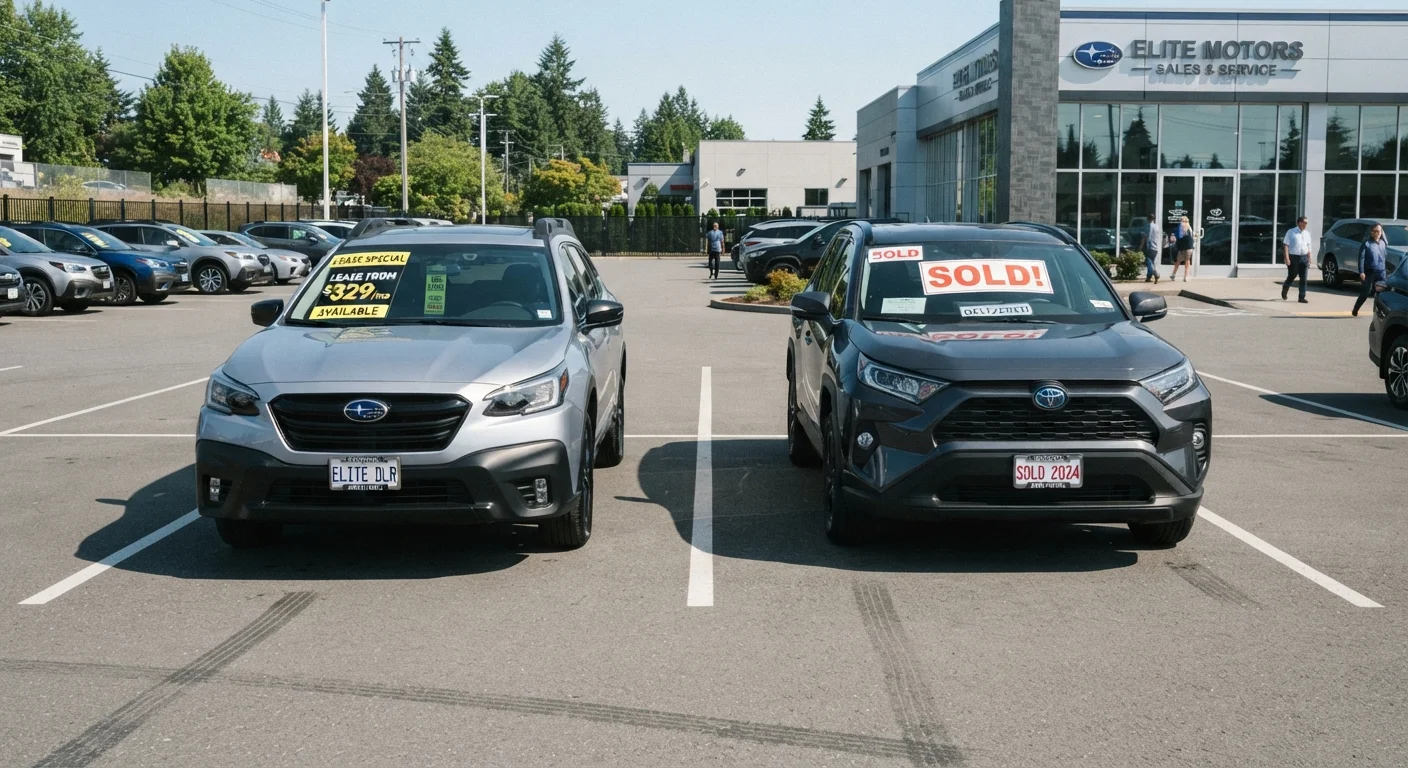
Option A
Leasing a Car
The flexible, lower-payment path with built-in vehicle turnover.
Best for: Drivers who want a new vehicle every few years, prefer lower monthly payments, and don't mind mileage limits or not building equity.
Option B
Buying a Car
The ownership route that builds long-term value and freedom.
Best for: Drivers who want full ownership, drive high mileage, and plan to keep the vehicle well past the loan payoff date.
How Each Arrangement Actually Works
When you lease a car, you're essentially renting it from the finance arm of an automaker or a lender for a set term - typically 24 to 36 months. Your monthly payment covers the vehicle's expected depreciation over that period plus interest (called the money factor) and fees. At lease end, you return the car or sometimes have the option to purchase it at a predetermined residual value.
When you buy a car - whether with cash or through an auto loan - you own it outright or are working toward full ownership. If financing, your monthly payment reduces the loan principal and covers interest. Once the loan is paid off, the asset is yours with no further obligation to a lender.
This fundamental difference in ownership shapes nearly every other trade-off between the two paths. For a broader look at how auto expenses stack up beyond the sticker price, see the full cost of owning a car.
| Criterion | Leasing | Buying |
|---|---|---|
| Ownership | No - vehicle returned at term end | Yes - full ownership after payoff |
| Monthly payment | Typically lower | Typically higher |
| Mileage limits | Yes - usually 10,000-15,000/yr | None |
| Equity built | None | Yes - grows as loan is paid down |
| Customization allowed | No - must return in original condition | Yes - owner's discretion |
| Long-term cost | Higher if you always lease | Lower once loan is paid off |
| Warranty coverage | Usually aligned with lease term | Expires - repair costs fall to owner |
| Exit flexibility | Early termination fees apply | Can sell or trade at any time |
Where Leasing Has a Practical Edge
For the right driver, leasing offers genuine advantages that go beyond the lower monthly payment headline.
- Lower monthly outlay: Because you're only paying for depreciation during the term - not the vehicle's total value - lease payments on a comparable vehicle are often noticeably lower than loan payments.
- Warranty coverage alignment: Most leases are structured to fall within the manufacturer's warranty period, which means major mechanical repairs are largely covered throughout the term.
- Regular vehicle turnover: Drivers who want access to newer safety technology, updated fuel economy, or the latest features find leasing convenient since they're cycling through vehicles every two to three years.
- Potentially useful for business drivers: Depending on how a vehicle is used professionally, leased vehicles may carry certain tax treatment advantages - though this is a tax matter to confirm with a qualified accountant.
The tradeoff is real, however: when the lease ends, you walk away with no asset and no equity. You've paid consistently but own nothing.
~30%
Share of new vehicles financed via lease in recent years
Lease penetration of new-vehicle transactions has historically hovered around 25-30%, reflecting consistent demand for the lower-payment structure, per industry tracking data.
2-3 yrs
Typical lease term length
Most consumer leases run 24 to 36 months, timed to align with manufacturer warranty coverage and new model cycles.
$0
Equity accumulated over a full lease term
Unlike a loan that reduces principal with each payment, lease payments generate no ownership stake - the vehicle is returned to the lessor at term end.
Where Buying Holds the Long-Term Advantage
Purchasing a vehicle - especially keeping it well past the loan payoff - is typically the more economical path over a long horizon. Once monthly loan payments end, your cost of keeping the car drops substantially. That payment-free window can last years for drivers who maintain their vehicles properly.
Ownership also removes the constraints that come with leases: there are no mileage caps, no return-condition inspections, and no per-mile overage charges. You can drive as much as your life demands. For first-time owners building that ownership relationship with a vehicle, a first-time car owner's maintenance roadmap is worth reviewing.
There's also the equity dimension. A financed car builds equity as you pay down the loan and even as the vehicle depreciates - eventually you hold an asset that can be traded in, sold privately, or simply kept. That equity doesn't exist in a lease agreement.
One important note: buying isn't automatically cheaper in the short run. Down payments, higher monthly loan payments, and out-of-warranty repair costs are real factors. See our overview of new vs. used car trade-offs for additional context on purchase decisions.
Lease-End Purchase Option: A Middle Path
Most lease agreements include a buyout clause that lets you purchase the vehicle at a predetermined residual value when the term ends. If the car has depreciated less than expected - or if you've grown attached to the vehicle - exercising this option can make financial sense. Review the residual price against current market values before deciding, and confirm financing terms in advance if you plan to buy out rather than pay cash.
Factors That Should Shape Your Decision
Neither leasing nor buying is universally superior - the right answer depends on your specific situation. Here are the variables that matter most:
- Annual mileage
- Leases commonly cap mileage at 10,000-15,000 miles per year. Drivers who routinely exceed that face per-mile fees at lease end, which can be significant.
- How long you plan to keep the vehicle
- If you replace your car every two to three years anyway, the equity argument for buying weakens. If you hold vehicles for six-plus years, buying typically wins on total cost.
- Credit profile
- Both options require credit approval. Strong credit generally unlocks better loan interest rates and lease money factors. Understanding how borrowing decisions interact with your overall financial health is covered in our guide to borrowing responsibly.
- Cash flow vs. long-term cost
- Leasing optimizes monthly cash flow; buying optimizes total lifetime cost. Prioritizing one or the other is a personal financial decision best evaluated against your budget. The budgeting basics hub can help frame that analysis.
- Powertrain considerations
- If you're considering an electric or hybrid vehicle, leasing can reduce exposure to evolving technology and battery uncertainty. Gas, hybrid, and electric ownership differences are worth reviewing before committing.
This article provides general informational content about vehicle financing options and is not personalized financial or legal advice. Consult a qualified financial professional before making decisions based on your individual circumstances.
The content on this site is for informational purposes only and is not a substitute for professional advice. Always consult a qualified professional for guidance specific to your situation.