

Start here
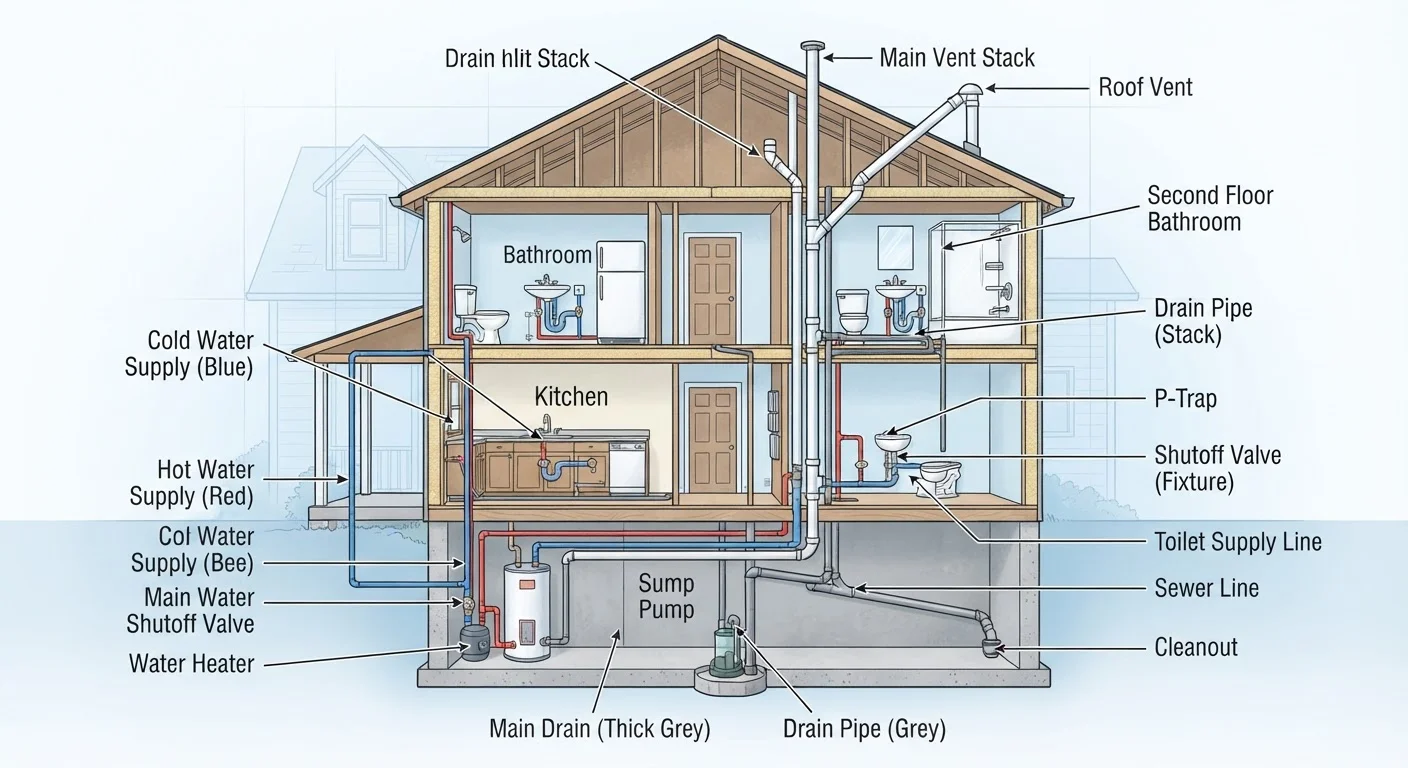
How Your Home's Plumbing System Is Organized
Next
Shutoff Valves: Your First Line of Defense
Then
Reading Warning Signs Early
Build on it
Seasonal Maintenance That Prevents Costly Repairs
Know your limits
When to Call a Licensed Plumber
How Your Home's Plumbing System Is Organized
Your home's plumbing operates as two distinct systems working side by side. The supply system delivers pressurized fresh water from the municipal main (or a private well) to every fixture. The drain-waste-vent (DWV) system removes used water and sewage by gravity and channels sewer gases safely outside through vent pipes that exit through the roof.
Supply system
The network of pressurized pipes that carries fresh, clean water from the main line into your home and to every faucet, toilet, and appliance.
Drain-waste-vent (DWV) system
The set of pipes that removes used water and sewage by gravity, plus vent pipes that allow sewer gases to escape safely through the roof.
P-trap
The curved pipe section under sinks and other drains that holds a small amount of water, creating a seal that prevents sewer gases from entering the home.
Pressure-reducing valve (PRV)
A device installed on the main supply line that lowers street water pressure to a safe level for household pipes and fixtures, typically between 40 and 80 psi.
Hose bib
The exterior faucet on the outside of your home where you connect a garden hose. Many homes have interior shutoff valves for these that must be closed and drained before winter.
Shut off valve
A valve in the plumbing system that allows water flow to be stopped at the main supply line or at an individual fixture, used during emergencies and repairs.
Understanding this separation matters practically. A problem in the supply system - a leak, a burst pipe - usually involves water under pressure and can escalate quickly. A problem in the DWV system - a clog, a venting issue - tends to announce itself through slow drains, gurgling sounds, or sewer odors. Knowing which system is behaving oddly helps you describe the problem clearly when speaking to a plumber, which saves time and money.
For first-time owners, the broader picture of home systems maintenance connects directly to this foundation. Our guide on home improvement for first-time homeowners covers the full maintenance landscape beyond plumbing.
Shutoff Valves: Your First Line of Defense
Knowing where to cut water flow is the single most important plumbing skill a homeowner can have. There are two levels to understand:
- Main shutoff valve: Stops all water entering the home. Typically a gate valve or ball valve located where the supply line enters the foundation. A ball valve (lever handle) closes with a quarter-turn; a gate valve (round wheel handle) requires several full turns. Locate yours today and confirm it operates smoothly.
- Fixture shutoff valves: Small oval or straight valves under sinks, behind toilets, and behind washing machines. These let you isolate one fixture without cutting water to the whole house. Turn each one gently once a year - valves that are never used can seize over time.
Label Your Valves Now, Not Later
Walk through your home and test every fixture shutoff valve today - before any emergency occurs. Use adhesive labels or waterproof tape to mark each valve with what it controls (e.g., 'Kitchen Sink Hot'). Valves that are difficult to turn may need a plumber's attention, since a seized valve is useless in a crisis.
After locating each valve, consider labeling them with adhesive tags. Share the main shutoff location with every adult in your household. In a burst-pipe emergency, seconds matter.
Reading Warning Signs Early
Most plumbing failures give advance notice. Catching these signals early is almost always less expensive than waiting for a full failure.
- Water stains on ceilings or walls: A brownish ring or bubble in drywall often indicates a slow leak from a pipe or fixture above. Do not ignore it.
- Low water pressure at one fixture: Usually a clogged aerator (the small screen at the faucet tip) or a partially closed shutoff valve - both easy homeowner fixes.
- Low pressure throughout the house: May indicate a failing pressure-reducing valve or a leak somewhere in the main supply. This warrants a professional evaluation.
- Unexplained spikes in the water bill: A running toilet or a small supply-line leak can waste tens of gallons per day without obvious visible damage. Add a few drops of food coloring to the toilet tank; if color appears in the bowl without flushing, the flapper valve needs replacing.
- Gurgling drains or sewer odor: Points to a venting problem or a dried-out P-trap (the curved pipe section under sinks that holds water to block sewer gas).
Don't Ignore Water Stains or Wet Spots
A small water stain that seems stable can conceal active mold growth or slow structural damage inside a wall or ceiling. If a stain reappears after you paint over it, or if drywall feels soft, treat it as an active leak until proven otherwise. Contact a plumber promptly rather than waiting to see if it worsens.
Seasonal Maintenance That Prevents Costly Repairs
A brief maintenance routine each season keeps small issues from becoming large ones. Consider this a practical calendar:
- Fall (before first freeze)
- Disconnect and drain outdoor hoses. Shut off and drain exterior hose bibs if your home has interior shutoffs for them. Insulate any exposed pipes in unheated spaces - foam pipe insulation is inexpensive and straightforward to install on accessible pipes. For work inside walls, consult a plumber.
- Winter
- During sustained extreme cold, let faucets on exterior walls drip slightly to keep water moving. Open cabinet doors under kitchen and bathroom sinks on exterior walls to let interior heat reach pipes.
- Spring
- Inspect visible supply lines (under sinks, behind appliances) for cracks, bulges, or corrosion. Check washing machine hoses - braided stainless steel hoses are more durable than rubber and worth considering when rubber hoses show wear.
- Annual (any season)
- Flush your tank water heater to remove sediment. Attach a garden hose to the drain valve near the base, run it to a floor drain, and open the valve briefly until the water runs clear. Turn off power or gas to the heater first, and follow the manufacturer's instructions. If you are unsure, a plumber can do this during a routine service call.
Home maintenance follows a similar rhythmic logic whether you're managing plumbing, heating, or safety systems. For a parallel look at seasonal HVAC upkeep, see HVAC filters, furnaces, and ducts.
When to Call a Licensed Plumber
Some plumbing tasks are genuinely accessible to a careful, prepared homeowner: replacing a faucet cartridge, swapping a toilet flapper, unclogging a drain with a hand snake. Others carry real risk of water damage, structural harm, or code violations if done incorrectly.
Always contact a licensed plumber for:
- Any work inside walls, floors, or ceilings involving supply or drain lines
- Water heater installation or gas line connections
- Main sewer line blockages or camera inspection
- Adding new fixtures or extending supply lines
- Any task your local building code requires a permit for
Permits exist to protect you. Unpermitted plumbing work can complicate home sales, void homeowner's insurance claims, and create liability. When in doubt about scope, our article DIY vs. hiring a pro provides a clear framework for making that call confidently.
Permits Protect Your Investment
In most U.S. jurisdictions, plumbing work beyond basic fixture swaps requires a permit and must be done or inspected by a licensed professional. Unpermitted work can complicate future home sales and may not be covered if a related water-damage claim is filed. Always check your local municipality's requirements before beginning any project.
If you are planning a bathroom renovation - which inevitably involves plumbing decisions - bathroom remodeling from start to finish walks through how to sequence trades and coordinate with a licensed plumber effectively.
Frequently Asked Questions
In most homes it is located where the water supply line enters the foundation - often in a basement, crawl space, utility room, or near the water meter outside. In warmer climates it may be in a ground-level box near the street. Walk your home now and identify it before you ever need it urgently.
Most plumbers recommend flushing a tank water heater once a year to remove sediment buildup, which reduces efficiency and shortens the unit's lifespan. If your water is particularly hard, flushing every six months is advisable. Consult your unit's manual and a licensed plumber for model-specific guidance.
Whole-house low pressure can stem from a partially closed main shutoff, a failing pressure-reducing valve, mineral buildup inside pipes, or a leak somewhere in the supply system. If pressure drops suddenly or affects every fixture, contact a plumber to diagnose the cause.
A single slow drain is often caused by a hair or soap clog near the drain opening and can be cleared with a drain snake or plunger. Multiple slow drains or gurgling sounds suggest a deeper blockage in the main line, which requires professional equipment to clear safely.
Pipes most commonly freeze when outdoor temperatures drop below 20°F (about -7°C), especially in unheated spaces like exterior walls, attics, and crawl spaces. Insulating exposed pipes, keeping cabinet doors open under sinks on exterior walls, and letting cold-water taps drip slightly during extreme cold are widely recommended precautions.
In most U.S. jurisdictions, any work that involves moving, adding, or replacing supply or drain lines requires a permit and must be done by or inspected by a licensed plumber. Minor repairs like replacing a faucet fixture typically do not. Always verify your local code requirements before starting any project.
The content on this site is for informational purposes only and is not a substitute for professional advice. Always consult a qualified professional for guidance specific to your situation.