

Our Verdict
Most homeowners can handle cosmetic repairs, basic maintenance, and simple fixes safely and affordably. But work involving structural elements, electrical systems, gas lines, or major plumbing carries real safety and legal stakes that make professional involvement the responsible choice. The smartest approach is building a clear mental framework - not defaulting to one extreme.
| Best for | Recommended |
|---|---|
| Confident homeowners with time and basic tools | DIY |
| Electrical, gas, structural, or permitted work | Hire a Pro |
| First-time homeowners building skills gradually | DIY with professional guidance |
| Any repair where a mistake could cause injury or property damage | Hire a Pro |
The Real Question Isn't Cost - It's Consequence
Most homeowners frame the DIY-vs.-pro decision as a money question. That's understandable - labor costs are real - but cost is actually the third or fourth factor worth weighing, not the first. The more useful starting questions are: What happens if this goes wrong? and Does this work require a permit or licensed trade?
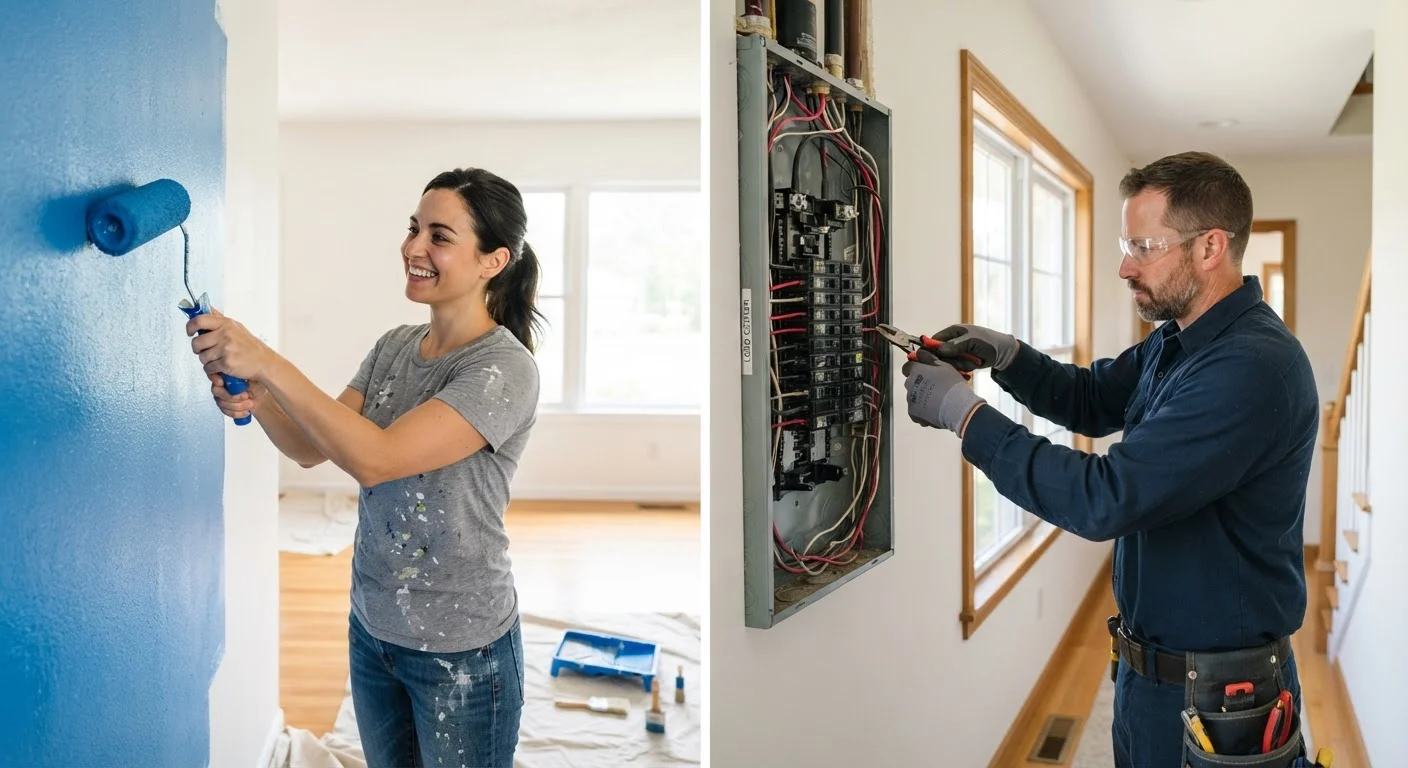
A botched paint job is frustrating and fixable. A botched wiring job can start a fire. That asymmetry - not the hourly rate on an estimate - should anchor your decision-making. For a deeper look at the permit side of this equation, see when permits and inspections are actually required.
Think of home repairs in three tiers:
- Tier 1 - Low stakes: Cosmetic work, simple maintenance, and minor fixes where a mistake is inconvenient but not dangerous or code-regulated.
- Tier 2 - Moderate stakes: Projects requiring solid skill, proper tools, and some risk awareness - but not necessarily a license.
- Tier 3 - High stakes: Work involving safety systems, structural integrity, or regulated trades, where errors can be costly, dangerous, or legally problematic.
What Most Homeowners Can Reasonably DIY
Tier 1 and many Tier 2 jobs are well within reach for a careful, patient homeowner. The key word is careful - rushing or skipping preparation steps is where DIY projects break down.
Generally DIY-Friendly Tasks
- Interior painting (walls, ceilings, trim) - see surface prep and cut-in technique for best results
- Replacing light fixtures, switches, or outlets on an existing circuit (where local code permits homeowner work)
- Caulking windows, tubs, and exterior seams
- Patching drywall holes up to a few inches in diameter
- Installing or replacing door hardware, weatherstripping, and cabinet hardware
- Basic landscaping and gutter cleaning
- Replacing toilet flappers, showerheads, and faucet aerators
- Laying floating floor systems such as laminate or vinyl plank
Even within this list, honest self-assessment matters. If you've never used a tile saw, a first-time bathroom floor project mid-winter isn't the moment to learn. First-time homeowners especially benefit from starting small, building skills on lower-consequence repairs, and scaling up gradually.
Start With a Small Test Project
If you're new to a type of repair - tile work, drywall finishing, trim carpentry - try it in a low-visibility area first, such as a closet or utility room. This builds real skill without putting a prominent surface at risk. Most experienced DIYers developed confidence through exactly this kind of low-stakes practice.
Where DIY Becomes Genuinely Risky
Tier 3 work is defined less by difficulty and more by what's at stake if something fails - and by the regulatory system that exists precisely because these failures have serious consequences.
| Task Type | DIY | Hire a Pro | |
|---|---|---|---|
| Interior painting | Yes - low risk, no permit needed | Rarely necessary | |
| Replacing a faucet or toilet | Yes - straightforward with basic tools | Optional for complex setups | |
| Adding or upgrading electrical circuits | Not recommended - permit + safety risk | Yes - licensed electrician required | |
| Gas line work | No - serious safety hazard | Yes - licensed contractor required | |
| Removing a load-bearing wall | No - structural and permit risk | Yes - structural engineer + contractor | |
| Patching drywall | Yes - low stakes, learnable skill | Only for large or complex repairs | |
| Rerouting plumbing | Not recommended - permit usually required | Yes - licensed plumber |
Electrical Work
Replacing a light switch is generally considered homeowner territory in most jurisdictions - but adding a circuit, upgrading a panel, or working near the service entrance is a different matter entirely. Improper wiring is a leading cause of residential fires, and unpermitted electrical work can void your homeowner's insurance. For a balanced look at where homeowner electrical work is defensible and where it isn't, see The Case For and Against DIY Electrical Work.
Gas Lines and Appliances
Any work involving gas supply lines - adding, extending, or repairing them - should be handled by a licensed professional in virtually all circumstances. A small leak is invisible and odorless until odorant is added, and the consequences of an undetected leak are severe. This is not a task where "it seems fine" is an acceptable outcome.
Structural Changes
Removing a wall that looks non-essential can have serious consequences if it turns out to be load-bearing. Understanding load-bearing walls before touching anything structural is essential. A licensed structural engineer or experienced contractor should assess the situation before any framing is altered.
Major Plumbing
Replacing a faucet or a toilet is well within DIY territory. Rerouting supply lines, working on main drain stacks, or tying into existing drain-waste-vent systems generally requires a licensed plumber - and often a permit. Understanding your home's plumbing layout helps you recognize where homeowner work ends and professional work begins.
Making the Call: A Practical Framework
Before starting any repair, run through these four questions:
- Is a permit required? If yes, the work is regulated for a reason. Permits also create a paper trail that protects you at resale.
- What is the worst-case failure scenario? If the answer involves fire, flooding, structural collapse, or carbon monoxide, hire a professional.
- Do I have the right tools and skills - not just the enthusiasm? YouTube tutorials are useful, but they don't replace hands-on experience with safety-critical tasks.
- Will DIY actually save money after accounting for mistakes? Deferred or botched repairs often cost more to fix than the original professional job would have.
If you do hire a contractor, the verification process matters as much as the work itself. What to verify before a contractor starts work - licensing, insurance, references, and a written contract - are non-negotiable protections, not optional extras.
Unpermitted Work Can Cost You at Resale
Work that required a permit but didn't get one can surface during a home inspection and complicate or derail a sale. In some cases, you may be required to open up walls for inspection or even redo the work to current code - at your expense. Always verify local permit requirements before starting any significant project.
The goal isn't to avoid DIY - it's to do the right work yourself and hand off the rest with confidence.
The content on this site is for informational purposes only and is not a substitute for professional advice. Always consult a qualified professional for guidance specific to your situation.