

What Gutters Are Actually Doing for Your Home
Gutters are easy to overlook - they sit at the edge of the roofline, do their job quietly in the rain, and rarely demand attention until something goes wrong. But their role in protecting a home is broader than most people realize.
During a moderate rainstorm, a typical roof can shed hundreds of gallons of water. Without gutters, that water falls directly against the home's siding and pools at the foundation. Gutters intercept that flow, channeling it through downspouts and depositing it safely away from the structure. When this system works correctly, it protects your foundation, siding, fascia boards, landscaping, and basement simultaneously.
The connection to basement moisture is especially important. As explained in our guide on keeping a basement dry, exterior drainage - including gutters - is the first line of defense before any interior waterproofing strategy becomes necessary.
$10,000+
Average foundation repair cost in the U.S.
Foundation repairs are among the most expensive home fixes homeowners face, according to general contractor cost surveys.
2x per year
Recommended minimum gutter cleaning frequency
Most home maintenance authorities recommend at least twice-yearly gutter cleaning as a baseline for average tree coverage.
~$200
Typical professional gutter cleaning cost
Professional cleaning for a standard single-story home generally falls in the $100-$250 range, depending on home size and region.
The Real Consequences of Gutter Neglect
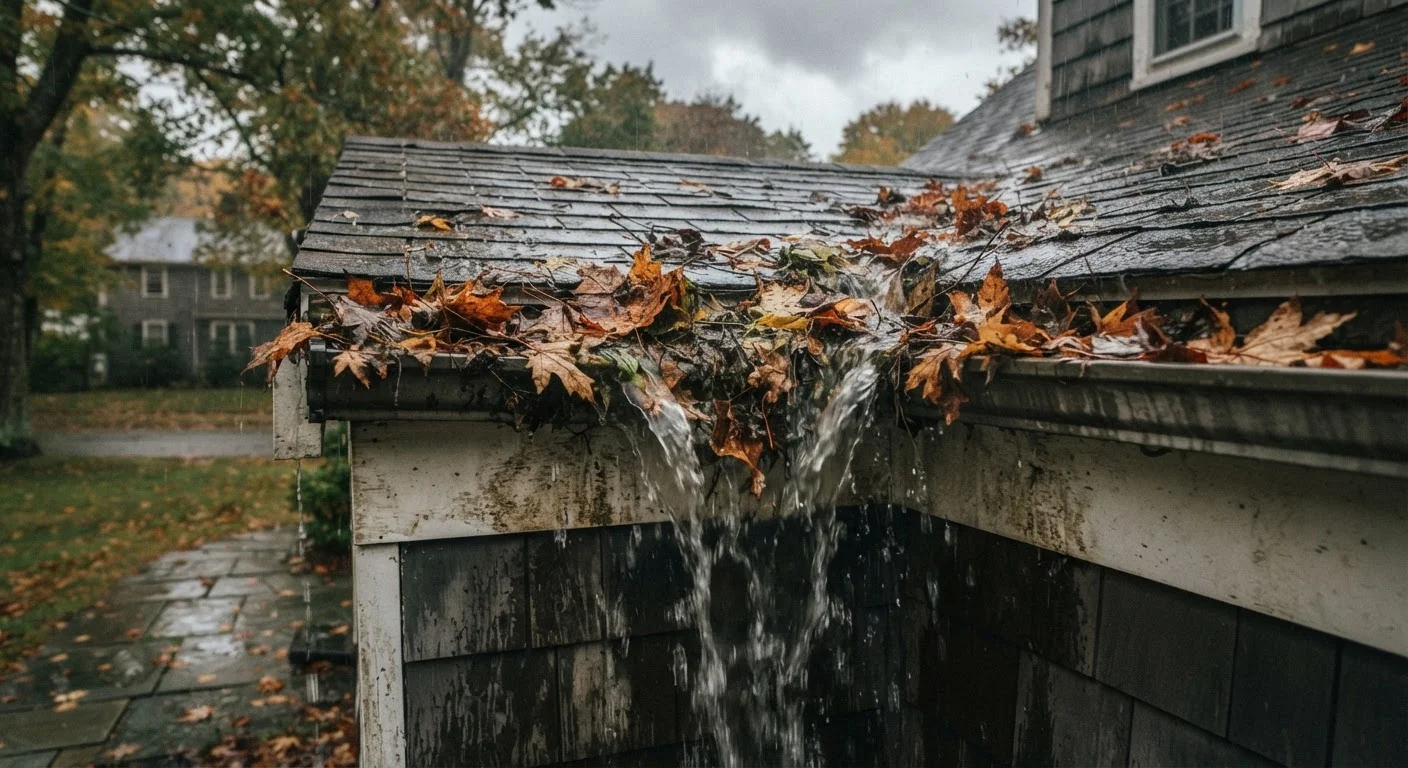
A gutter clogged with leaves and debris doesn't just overflow - it creates a slow chain of problems that compound over time. Water that spills over the front of a clogged gutter saturates the soil directly beside the foundation. In cold climates, that water freezes and expands, contributing to frost heave and cracking. In warm climates, persistent moisture encourages mold growth and wood rot in fascia and soffit boards.
Standing water inside gutters also adds significant weight to the trough and its fasteners. Over time, gutters can begin to sag, separate from the fascia, or pull away from the roofline entirely - creating gaps that allow water to run directly behind the gutter and into wall cavities.
These aren't hypothetical risks. They are exactly the kind of deferred maintenance costs covered in The Hidden Costs of Deferred Home Maintenance, where small neglected systems lead to major repair bills.
Check Downspout Drainage After Heavy Rain
After a significant rainstorm, walk the perimeter of your home and observe where water is actually going. Look for pooling near the foundation, overflow at any gutter section, and whether downspout extensions are directing water away effectively. This five-minute check is one of the most informative inspections you can do without any tools.
Maintenance That Actually Prevents Problems
The good news: gutter maintenance is among the most accessible home upkeep tasks available to homeowners willing to use a stable ladder safely. The standard routine involves two cleanings per year - once after spring pollen and seed drop, and once in late fall after leaves have finished falling.
During each cleaning, check for:
- Clogs in downspouts - flush with a garden hose to confirm water flows freely
- Proper pitch - water should not pool in any section of the trough
- Fastener integrity - spikes or screws should hold the gutter firmly to the fascia
- Seam and joint leaks - look for rust streaks or sealant failure at connections
- Downspout extensions - confirm water is deposited well away from the foundation
Gutter work intersects with roof health more than most homeowners realize. Our article on roof maintenance myths explains how roofline problems - including debris accumulation - are often dismissed until serious damage has already occurred.
For a complete view of when to schedule gutter cleaning alongside other seasonal tasks, see A Homeowner's Seasonal Maintenance Calendar.
Ladder Safety Is Non-Negotiable
Gutter cleaning requires working at height on a ladder - one of the leading causes of home injury. Always use a four-legged ladder on stable, level ground, have a second person present, and never lean a ladder against the gutter trough itself. If your roofline is high or steeply pitched, hire a professional for this task.
When to Call a Professional
While cleaning is often manageable as a DIY task, some gutter work warrants professional assessment. Gutters that have pulled away from the fascia, sections showing significant rust or cracking, or homes with steep or high rooflines present real safety risks that are worth the cost of hiring a qualified contractor.
Any work that involves replacing fascia boards, re-pitching gutters, or integrating with roofline flashing should be evaluated by a licensed professional. Unpermitted or poorly executed repairs can void roof warranties and create new moisture entry points.
From a financial perspective, the math is straightforward: a routine professional gutter cleaning typically costs far less than even a modest foundation repair or basement waterproofing job. Protecting that investment is consistent with sound home financial stewardship - the kind of thinking at the heart of building lasting home equity.
This article is for general informational and educational purposes only. Always consult a qualified contractor or licensed professional before undertaking structural repairs or work at height.
Frequently Asked Questions
Most homes benefit from cleaning twice a year - once in late spring and once in late fall after leaves have dropped. Homes near heavy tree coverage may need quarterly attention. Standing water or plants growing in gutters are clear signs cleaning is overdue.
Yes. When gutters overflow, water pools at the base of the home and saturates the soil around the foundation. Over time, this repeated saturation can cause settlement, cracking, and in cold climates, frost heave. It is one of the more expensive - and preventable - outcomes of neglected gutters.
Look for sagging sections, visible rust or cracks, paint peeling on siding below gutters, water stains on fascia boards, and pooling water near the foundation after rain. Gutters pulling away from the roofline indicate failed fasteners and need prompt attention.
Gutter guards reduce debris accumulation but do not eliminate maintenance entirely. Fine debris like pine needles, seeds, and shingle grit can still enter or sit on top of guards and eventually cause blockages. Guards can extend the interval between cleanings but are not a permanent solution.
Downspouts should discharge water at least three to four feet from the foundation, ideally directed toward a sloped area that carries water away from the home. Extensions and splash blocks help achieve this and are inexpensive to add.
The content on this site is for informational purposes only and is not a substitute for professional advice. Always consult a qualified professional for guidance specific to your situation.